REVIEW · MAE PING
Chiang Mai:Explore kayaking through Mae Ping River on sunset
Book on GetYourGuide →Operated by Chiang Mai Butler Services · Bookable on GetYourGuide
Kayaking Chiang Mai at sunset is oddly peaceful. You glide the Mae Ping as the sky cools down, passing river houses and city lights, with a guide keeping things simple and safe. I like how the trip stays calm and social at once: a small group (up to 10) and English guidance make it easy even if you’re not a paddling expert.
I also love the combo with the city on land. The guided stop at Warorot Market (Kad Luang) gives you a fast hit of local life without turning into a museum-style tour, and it’s the kind of place Thai and foreign visitors still come to for the buzz.
One possible drawback: this is an urban river. River conditions can vary, and on heavier-rain days the current may feel stronger, while water quality can look less than perfect in spots. If you’re picky about what you see on the water, keep that in mind.
In This Review
- Key things that make this Mae Ping sunset kayak worth it
- Sunset kayaking on the Mae Ping: what the route really feels like
- Getting there: pickup timing, short drive, and first impressions at the port
- Kad Luang (Warorot Market) during golden hour: the market stop that makes the tour human
- Kayaking about two hours: paddling 5–6 km with bridges, birds, and city lights
- What “sunset across to night” looks like on the water
- Comfort, safety, and the reality of weather on a river
- Who this sunset Mae Ping kayak tour suits (and who should skip it)
- Price and value: what $24 buys you in Chiang Mai
- Practical tips to make your sunset kayak smoother
- Should you book this Mae Ping sunset kayaking with Kad Luang?
- FAQ
- What time are you picked up in Chiang Mai?
- How long is the kayaking portion?
- How far do you kayak on the Mae Ping River?
- Are there single and double kayaks?
- What is included in the price?
- What should I bring?
Key things that make this Mae Ping sunset kayak worth it
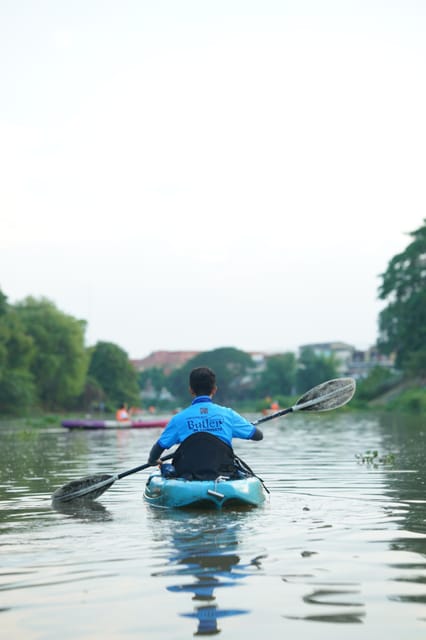
- Sunset timing on the Mae Ping, with the sky shifting right as you’re paddling
- Warorot Market (Kad Luang) as a guided taste of Chiang Mai’s old-city market energy
- Five to six kilometers of paddling—long enough to feel like a real outing, not so long you regret shoes
- Bridges and bird-nests overhead during busy traffic, plus lots of noisy birds at dusk
- City-light scenery along the return—restaurants, hotels, and bars glow by the banks
- Small-group feel (max 10) with a guide who helps with the rhythm of the trip
Sunset kayaking on the Mae Ping: what the route really feels like
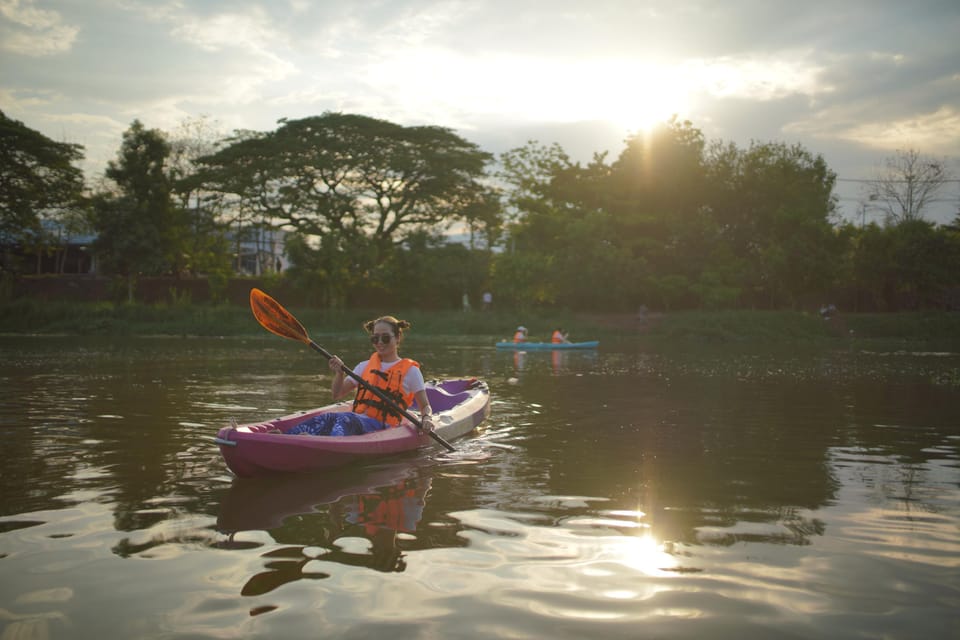
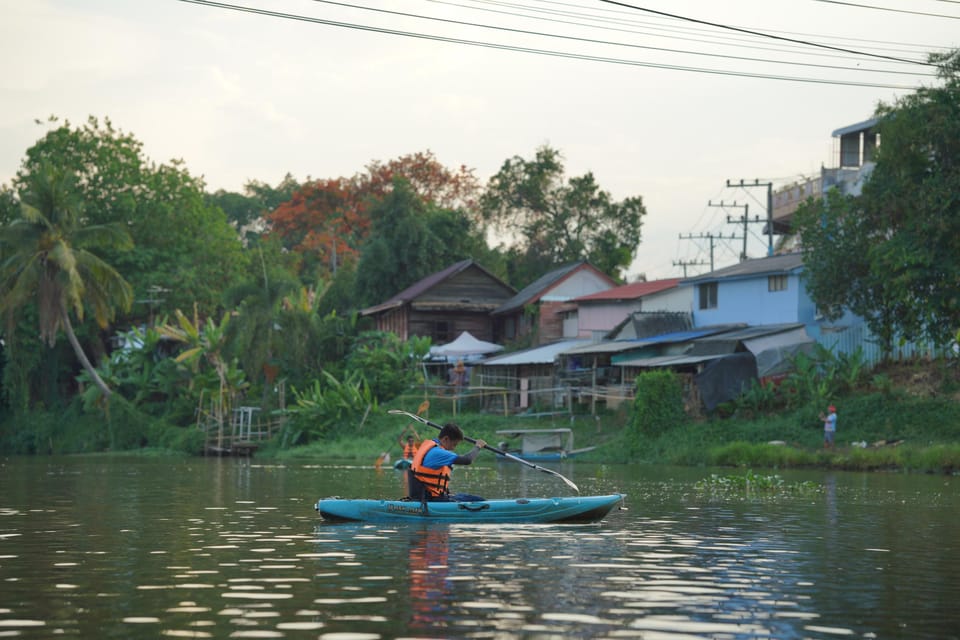
The Mae Ping is a working river, not a postcard river. That’s what makes it interesting. You’ll notice the mix: homes along the water, the movement of the city nearby, and that evening shift where everything slows down just enough for you to see it clearly.
Your main paddling is about 5–6 kilometers, and the timing matters. You start in the late afternoon and keep going toward night, so you’re not stuck watching the sun from a dock. Instead, you watch it change as you pass under bridges and drift into the warmer colors of sunset.
The best part for most people is the mood at dusk. One guide-led moment you’ll feel is the switch from day activity to evening air—birds getting louder, light turning gold, and the river turning into a long, quiet hallway through the city. It’s scenic, yes, but it’s also one of the more relaxed ways to see Chiang Mai from water.
Getting there: pickup timing, short drive, and first impressions at the port
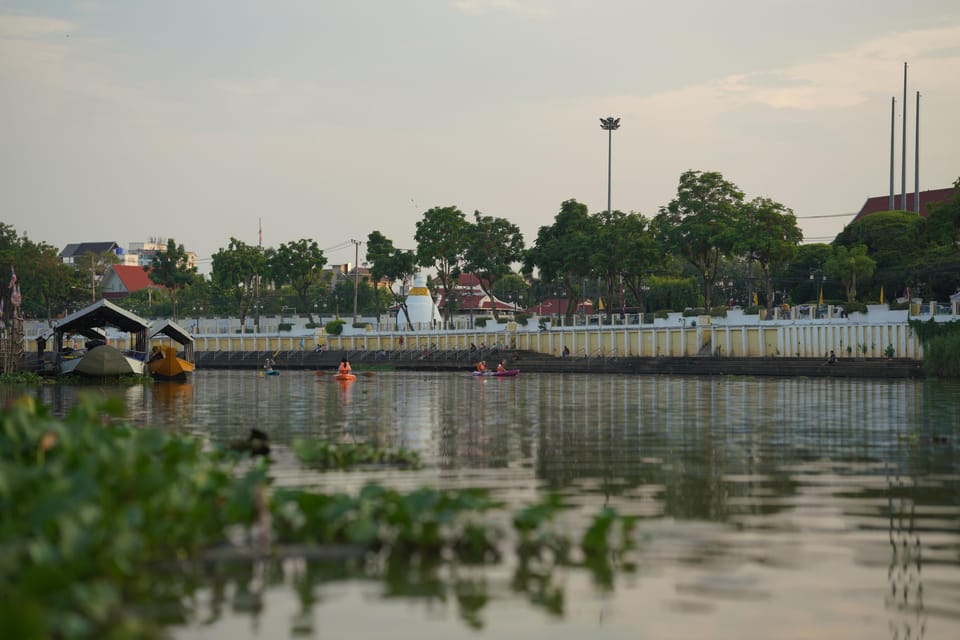
The experience starts with pickup from your accommodation in Chiang Mai, typically around 16:30–17:00. The drive is short—about 20–30 minutes—which is a big deal if you hate spending your afternoon stuck in traffic and waiting around.
Once you arrive at the port, you get a quick orientation. Expect a simple rundown of what you’ll do on the water and how to handle the kayak safely. You’ll get your equipment too—kayak and life jacket—so you’re not scrambling to find gear or arguing about sizes.
A small but helpful detail: this is set up for groups where everyone can stay together. You’re not going off alone. With English-speaking guides and a small group capped at 10, you’ll usually get the kind of attention that keeps beginners from feeling lost.
If you’re a total newbie, this matters more than people think. On the water, confidence comes from tiny corrections—how to hold your paddle, how to angle in turns, and what to do if you get your oar snagged. I like that the guides seem used to different comfort levels.
Kad Luang (Warorot Market) during golden hour: the market stop that makes the tour human
Before you spend the night paddling, you get a guided stop at Warorot Market, locally known as Kad Luang. This is one of Chiang Mai’s biggest old markets, and it’s famous for the way it feels like the city’s everyday life is right there on the street.
This isn’t a quick walk-by. Your guide helps you see what’s around and why it’s worth paying attention to. You’ll also get a break from the river vibe—perfect if you want your evening to include both water views and street-level culture.
Here’s what I think makes this stop valuable: it gives you context. When you’re later on the Mae Ping, you’re not just watching water. You’re seeing a city that’s already alive around you—shops, food, and daily movement. The market stop makes the river feel less random.
And it’s timed well. The evening light helps make the market feel less hectic than it might earlier in the day, while still keeping the energy of a real place.
Kayaking about two hours: paddling 5–6 km with bridges, birds, and city lights
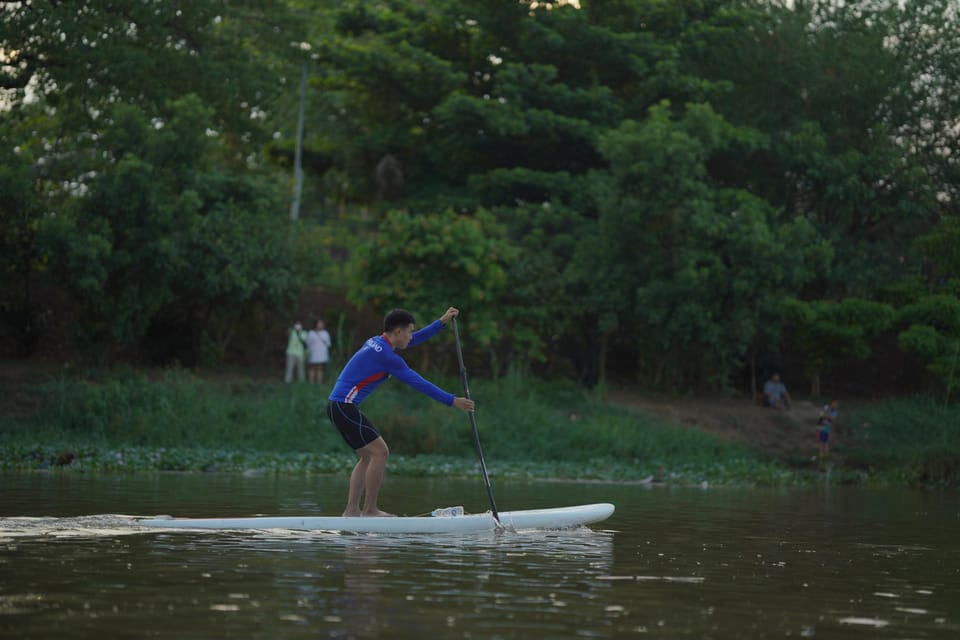
Your kayaking portion is about 2 hours, finishing around 19:30, with transfer back roughly around 20:00. That schedule is long enough to earn the sunset, but short enough to stay easy for most fitness levels.
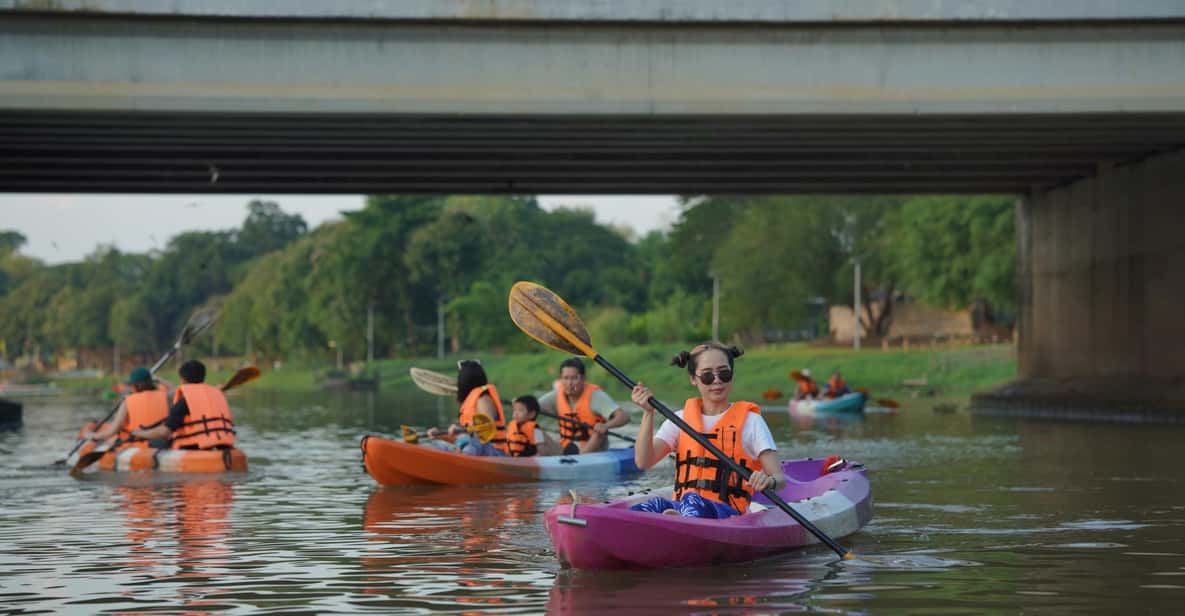
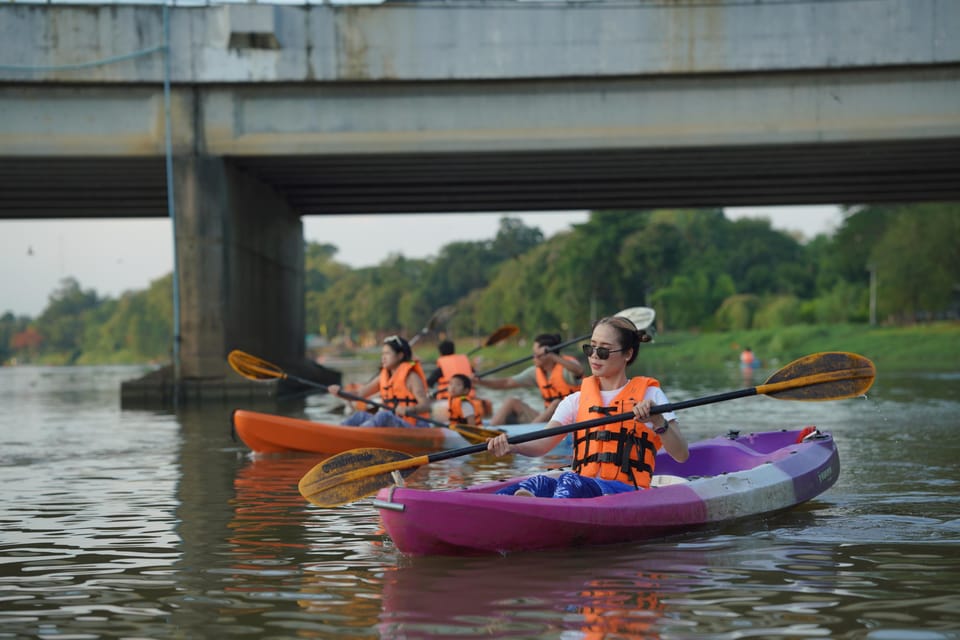
During the ride, you’ll move through the city zone along the river. You’re not hiking to a secluded launch point. Instead, you’ll pass areas filled with colorful restaurants, hotels, and bars, and you’ll cross three to four big bridges.
One of those details I love is the bird stuff. Guides note the bird activity around the bridge areas—there are bird-nests in the structure zones, and the birds can get pretty loud as dusk arrives. It’s one of those moments where your brain goes from sightseeing to pure noticing.
Also, you’ll likely stop thinking in straight-line distances and start thinking in landmarks. Bridges break up the river visually, so you feel progress even when you’re not counting kilometers. If you’re the kind of person who needs structure, this helps.
Single or double kayaks are available. If you want more control and easy conversation, a double can help. If you prefer independence or just don’t want to coordinate strokes, a single is great.
And yes, there’s some humor baked into it. Even with guidance, paddling can throw small surprises—like an oar getting tangled briefly in fishing gear. The main point is that you’re in good hands when something minor happens.
What “sunset across to night” looks like on the water
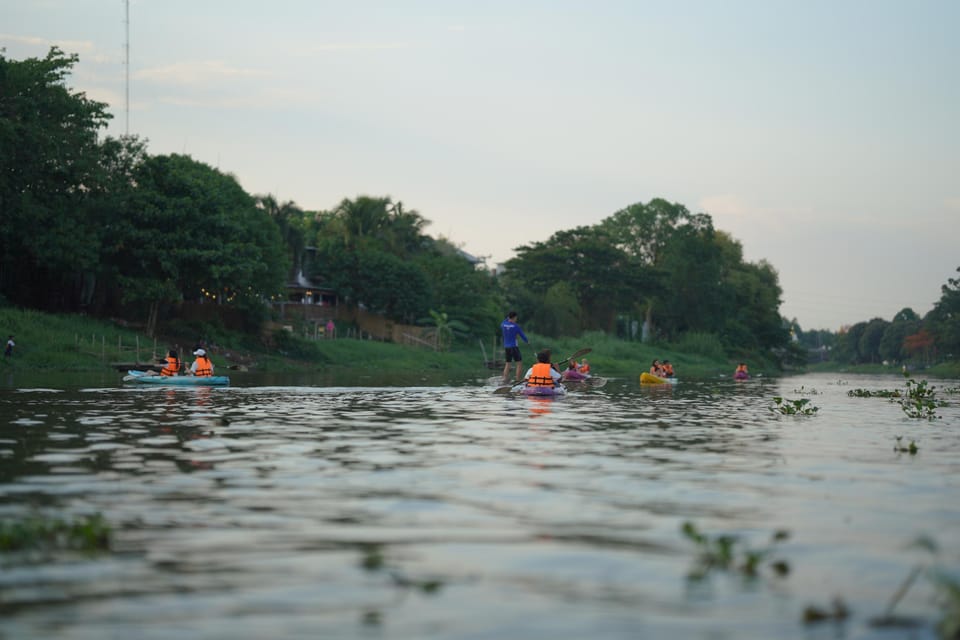
The “wow” moment is the transition. Sunset on the Mae Ping isn’t just a pretty sky; it changes how the river sounds and how the city lights show up.
First you get that slowing-down feeling as the sun lowers. Then the light shifts across the river toward darker tones, and gradually the city glow starts to stand out. By the time you’re heading into night, you’re not just looking at a horizon—you’re watching lights reflect and blur along the water.
If you want something peaceful, this is one of those rare activities that still feels calm even though it’s happening in the middle of a city. You’re on the water, but you’re not stuck in a tourist boat lane. You’re paddling through real river space.
Also, sunset is a natural photo enhancer. Guides take pictures and help you set up shots, so you don’t have to do everything with one hand while paddling with the other. That’s the kind of practical service that makes the experience feel smoother.
Comfort, safety, and the reality of weather on a river
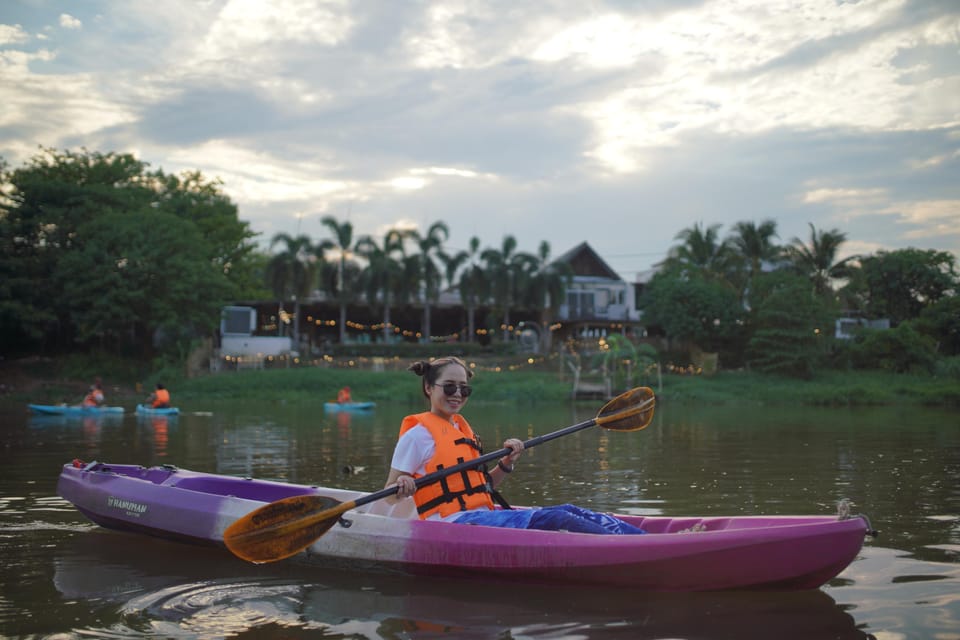
This trip is listed as wheelchair accessible, but kayaking itself can still have practical challenges for transfers. If you or someone in your group uses a wheelchair, I’d treat this as a “check specifics” situation rather than assuming it’s identical to a walking tour.
For most people, the comfort level is high. You get life jackets, and kayaks are set up for easy use. One nice theme from guide interactions: they’re patient and helpful, especially when someone is new to kayaking.
Weather matters. On days with recent heavy rain, the river can run stronger, and the paddling may feel more adventurous than you expected. That doesn’t automatically ruin the trip, but it’s a good heads-up if you’re hoping for slow-and-smooth only.
As for water quality: because it’s an urban river, you might encounter spots that look unappealing. I’d plan your expectations around that. This is not a pristine, remote wilderness paddle.
Who this sunset Mae Ping kayak tour suits (and who should skip it)
I’d recommend it if you want an evening activity that doesn’t feel like a chore. This is a great fit for:
- Couples looking for something calmer than a night market crawl
- Solo travelers who like a guide and don’t want to figure out logistics
- First-timers who want a structured, supportive introduction to kayaking
- People who want city views from a different angle
I’d think twice if:
- You’re extremely sensitive to what you might see floating or on the water in an urban river
- You’re expecting a fully “nature-only” experience
- You’re traveling with very young children—this activity is not suitable for children under 2 years
Fitness-wise, you’re paddling about 5–6 kilometers over roughly two hours. That’s manageable for many people, but you still want to be comfortable using your arms for sustained paddling.
Price and value: what $24 buys you in Chiang Mai
At $24 per person for about 3 hours, the value mostly comes from what’s included. You’re getting:
- Round-trip hotel transfer
- Kayak + life jacket
- Drinking water
- Insurance
- English-speaking guides (plus an English audio guide option)
- A small-group format (max 10)
When you add up the typical costs of gear, transport, and a guide, this starts to make sense. One smart comparison is that renting kayaks at the dock without a tour may cost less, but then you’re on your own for getting there, timing, and having someone coordinate the flow of the evening.
So I see this as a good pick if you want convenience and structure. If you enjoy planning your own route and don’t mind figuring out where to launch, you could do it more cheaply. But if you want a smooth start to finish, the included transfer and guidance are the reason the price feels fair.
Practical tips to make your sunset kayak smoother
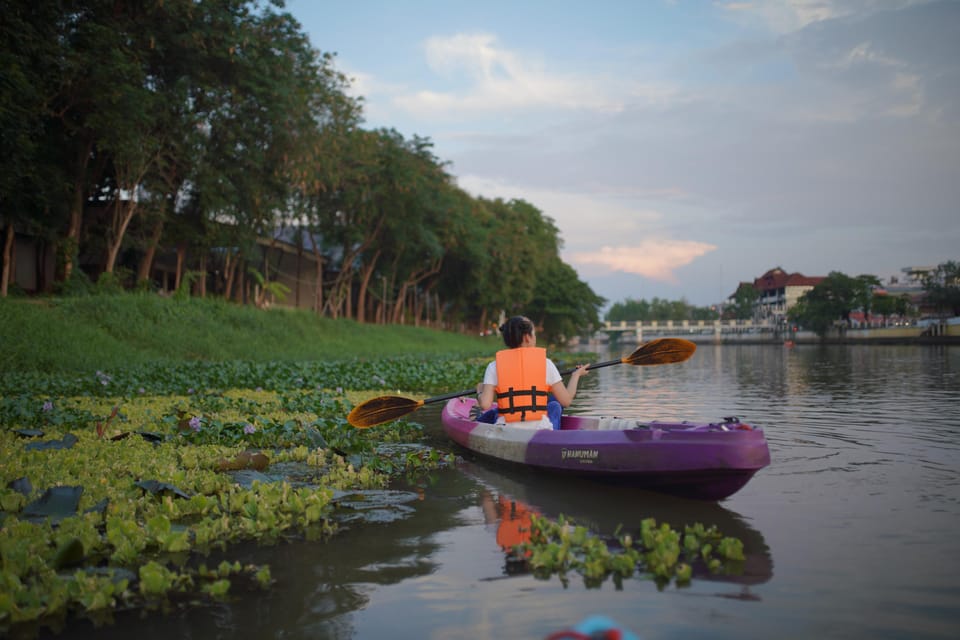
Bring what the tour suggests: sunglasses, sun hat, and sunscreen. Late afternoon to evening sun can still hit hard, and you’ll want eye protection with water reflection.
Also think about how you’ll handle photos. Since guides help with picture-taking, you don’t need to turn your entire attention into a camera project. Just be ready to stop paddling briefly when the guide signals.
If you’re in the mood for a calm evening, aim to treat this as a slow activity, not a race. That mindset helps you enjoy the bridges and birds without stressing about your stroke count.
Lastly, pick the kayak type that fits how you want to paddle. If you want to focus more on scenery and less on coordination, a single might feel simpler. If you’d rather talk and share the paddling rhythm, a double can be a fun way to stay connected.
Should you book this Mae Ping sunset kayaking with Kad Luang?
Yes, if you want an easy evening plan with real payoff. This is a well-paced mix of sunset kayaking on the Mae Ping and a guided stop at Warorot Market (Kad Luang). It’s structured enough for first-timers, but scenic enough for repeat Chiang Mai visitors.
I’d skip it only if you’re unwilling to accept urban river realities—variable water conditions, and sometimes a stronger current after rain. If you can handle that, you’ll likely come away with exactly what the best evenings in Chiang Mai do: a city view you can’t get from the street.
FAQ
What time are you picked up in Chiang Mai?
Pickup is scheduled between 16:30 and 17:00, followed by a short drive of about 20–30 minutes to the port.
How long is the kayaking portion?
You kayak for about 2 hours, with the experience running until roughly 19:30 and returning to Chiang Mai around 20:00.
How far do you kayak on the Mae Ping River?
The route covers about 5–6 kilometers on the Mae Ping River.
Are there single and double kayaks?
Yes. The activity offers single or double kayaks, depending on what you choose.
What is included in the price?
The price includes round-trip transfer from your hotel, kayak and life jacket, English-speaking guides, drinking water, and insurance.
What should I bring?
Bring sunglasses, a sun hat, and sunscreen. The tour also provides equipment and water.