REVIEW · CHIANG MAI
Chiang Mai – Doi Inthanon Full day Tour
Book on Viator →Operated by WanderSiam · Bookable on Viator
Two waterfalls in one day. This full-day Chiang Mai trip is built to get you from town to Doi Inthanon without the hassle, and the small-group cap (up to 10 in the tour pitch) keeps things calmer than big bus days. I like that it also handles the heavy lifting with hotel pickup and an English-speaking guide, but you should plan on paying the national park and pagoda entrance fees in cash (not included).
Expect a long-but-manageable day: about 9 to 10 hours with a mix of nature and culture. You’ll hit Wachirathan Falls, Sirithan Falls, the King and Queen Twin Stupas, plus a short walk on the Ang Ka Nature Trail and a visit to Ban Mae Klang Luang Karen village.
Because Doi Inthanon sits high, weather matters. Bring a raincoat or poncho for rain or shine, and in the cooler months (November to February) pack long pants and a light jacket.
In This Review
- Key points at a glance
- Why Doi Inthanon works best as a day tour from Chiang Mai
- The morning start: pickup, drive time, and how to plan your day
- Wachirathan Falls: the first big waterfall hit
- Sirithan Falls: another waterfall, a slightly different feel
- Royal Twin Stupas: King and Queen pagodas with atmosphere
- Doi Inthanon: the Roof of Thailand stop and your highest-point moment
- Ang Ka Nature Trail: easy walking that actually suits most people
- Ban Mae Klang Luang Karen village: culture with context
- Guides and timing: what makes the experience feel good (or occasionally rushed)
- Price and value: what $45.31 includes and what you should budget
- Should you book this Doi Inthanon full-day tour?
- FAQ
- How long is the Chiang Mai to Doi Inthanon full-day tour?
- What time does the tour start, and where is the meeting point?
- What’s included in the tour price?
- What extra fees should I expect to pay in cash?
- Is there walking on this tour?
- What should I wear or bring for weather and the pagodas?
Key points at a glance
- Wachirathan Falls + Sirithan Falls for two major waterfall moments without tough trekking
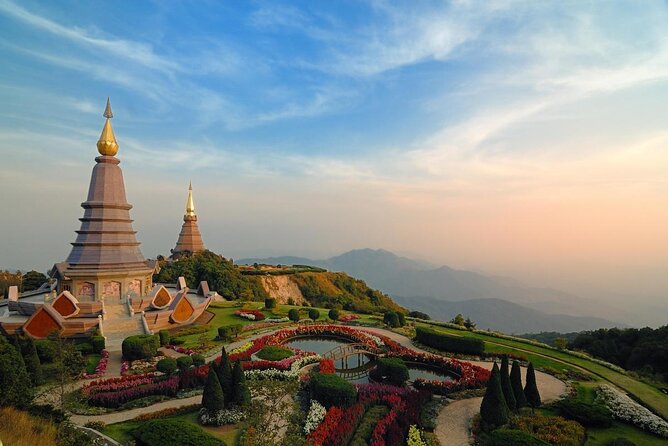
- Royal Twin Stupas for the King and Queen Chedis, with time to wander and take photos
- Ang Ka Nature Trail using a short, easy wooden platform path
- Ban Mae Klang Luang Karen village visit that’s more than a quick photo stop
- Hotel pickup in Chiang Mai downtown plus an English-speaking guide and one bottle of water
- Group size stays small when it runs at full capacity (up to 10), though the operator notes a max of 30 travelers
Why Doi Inthanon works best as a day tour from Chiang Mai
Doi Inthanon can be a pain to DIY. Once you’re out of Chiang Mai, you’re dealing with winding roads, timing between viewpoints, and the extra effort of figuring out what to see first. This tour is designed for the “I have one day” reality.
What I like most is the way it strings together the big hits with minimal effort on your legs. The waterfall stops are positioned for easy access, the nature walk is short, and most of the day is spent on the move between highlights rather than waiting for you to figure out transport.
You also get a guide who can explain what you’re seeing. In the tour feedback, guide names like Tik, Jane, Margaret, KungNang, Kaytee, and Thich show up a lot. That matters because at places like the Twin Royal Stupas, it’s the context that makes the photos feel meaningful, not random.
The one tradeoff: this is still a full-day schedule. If you hate structured itineraries or you want long, slow hangs at every viewpoint, you may feel rushed when the day has to keep flowing.
You can also read our reviews of more tours and experiences in Chiang Mai



The morning start: pickup, drive time, and how to plan your day
You start early, around 7:30 am, with pickup from your hotel in Chiang Mai downtown. The tour meets at Tha Phae Gate and ends back at the same meeting point. Plan for a full day out of town—this isn’t a quick half-day escape.
The payoff is that the mountain experience feels separate from the city. Even people who aren’t big on temples tend to enjoy the shift: you go from Chiang Mai’s streets into cooler air, forest edges, and higher-altitude views.
In the reviews, a common theme is that the ride is comfortable. The tour includes air-conditioned transportation, and the day moves efficiently between stops. Still, it’s a drive to elevation. Bring something to do during the ride (offline music or a book), and keep your water handy.
Also note the small “bring-your-own practicality” list:
- Wear shoes you’re happy to stand in for photos.
- If you’re sensitive to cold, bring a layer. Doi Inthanon can be chilly in the winter months (November to February).
- If rain is on the forecast, bring a raincoat or poncho. This tour runs rain or shine.
Wachirathan Falls: the first big waterfall hit
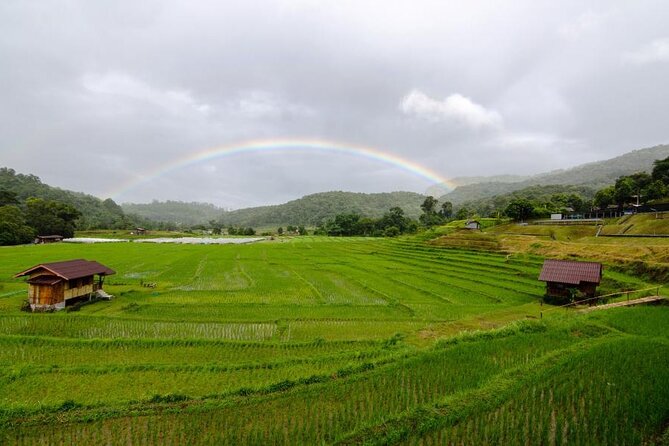
Wachirathan Falls is usually the moment where the day starts to feel real. The falls drop from a strong height inside Doi Inthanon National Park, and it’s a classic “stop, look, and take photos” location.
The best part for many people: it doesn’t demand an ordeal. The tour is built around easy access from the road, so you can enjoy the waterfall without committing to long hikes. Even the phrasing around the walk options suggests short, approachable strolls rather than trekking.
You’ll want to budget enough time to look around, not just snap one quick shot. Waterfalls change minute to minute with mist and cloud cover, and high-altitude weather can shift fast. If you’re traveling in the rainy season, you might not get crisp skies at every viewpoint—but you’ll often get dramatic waterfall spray, which can look great in photos.
One more practical note: waterfalls can be slippery. Watch your footing near slick surfaces, even if you don’t plan to walk far.
Sirithan Falls: another waterfall, a slightly different feel
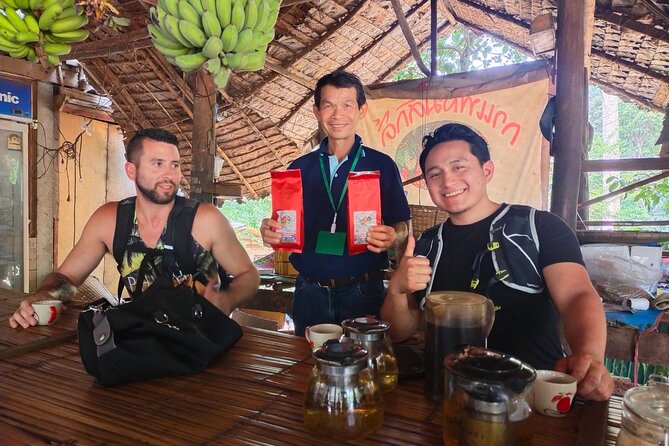
After Wachirathan, Sirithan Falls brings a different scene: water cascading down a dramatic rock cliff as it drops and then joins the Mae Klang River below. It’s surrounded by dense greenery, so the atmosphere tends to feel more “forest canyon” than wide open.
Like the first waterfall stop, this is designed for easy viewing. The goal isn’t to test your endurance. It’s to stack two major waterfall experiences into one day without wasting hours.
This is also where the tour’s value shows. If you tried to piece both waterfalls together yourself, you’d spend extra time sorting transport and deciding routes. Here, the schedule handles the sequencing for you.
In real-world terms, this is one of the easiest ways to get that Northern Thailand nature hit in a single day: cool air, wet rocks, green slopes, and photos that don’t look like the same “waterfall from one angle” everywhere.
Royal Twin Stupas: King and Queen pagodas with atmosphere
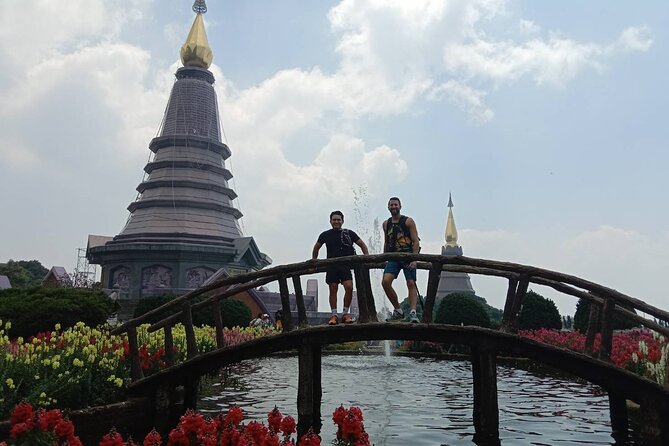
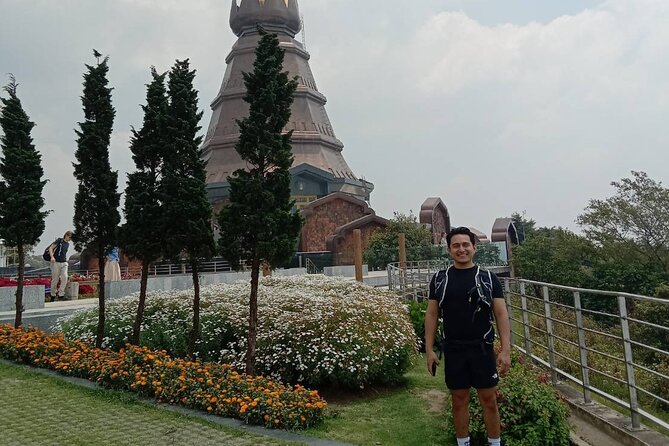
The Twin Royal Stupas—the King and Queen Chedis—are a major cultural anchor of the day. You’ll visit Phra Maha Dhatu Nabha Metaneedol (the King’s chedi) and Nabhapol Bhumisiri (the Queen’s chedi). These are built to honor the late King Bhumibol Adulyadej and Queen Sirikit.
This stop is often described as the star attraction, and it’s easy to see why. The pagodas sit with garden surroundings, viewpoints, and photo-ready angles. In reviews, people mention that the gardens can look spectacular and that the pagodas feel like a highlight even when the weather is cloudy.
Do plan for clouds, especially if you’re visiting in summer or rainy months. One review notes that clear views at the twin temples were reduced due to weather, but the visit was still enjoyable. So treat this as a “scenery plus cultural meaning” stop, not just a photo mission.
Cost-wise, remember this matters for your budget: the Twin Pagodas entrance fee is THB 100 per person and is not included. Also, dress appropriately. This is a religious site—cover shoulders and knees, and avoid flip-flops.






Doi Inthanon: the Roof of Thailand stop and your highest-point moment
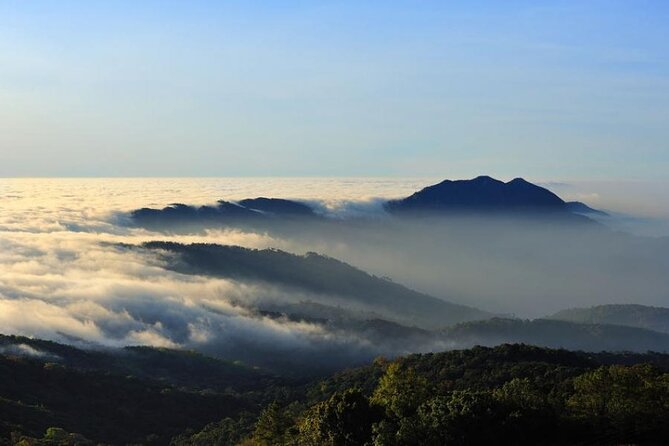
This is where you get the headline: Doi Inthanon is known as the Roof of Thailand, and the park’s highest point rises to 2,565 meters.
The tour includes time to visit Doi Inthanon itself. The cool climate reputation isn’t just marketing; the higher elevation can feel noticeably different from Chiang Mai. If you’re hoping for crisp mountain air and a break from city heat, this part of the day delivers.
There’s also an important reality check: at altitude, the sky is changeable. If the day turns cloudy, you may not get the same wide-sky views you hoped for. That said, mountain forests still look great, and the sense of getting “up there” is the point.
Timing-wise, you’re not spending hours at just one location. This tour stacks multiple stops, so the summit experience is a chance to reach the top, take photos, and move on while your day still has energy.
One more practical detail: national park fees apply here. The Doi Inthanon National Park entrance fee is THB 300 per person and is not included, so bring cash.
Ang Ka Nature Trail: easy walking that actually suits most people
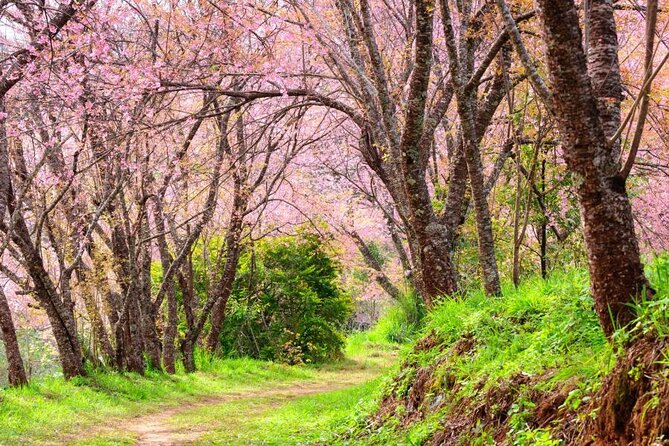
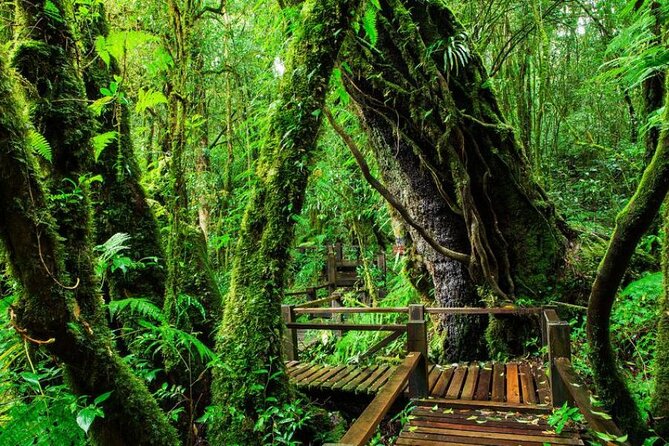
After the main high-point and viewpoint time, the itinerary includes the Ang Ka Nature Trail. This is described as a short and easy nature walk with a wooden platform path, which makes a big difference if you don’t want to deal with muddy trails or steep footing.
This stop is valuable because it gives you a break from “drive-stop-photo.” You get to slow down and notice plants and forest life at high altitude. Since the trail is on an elevated boardwalk style path, it can be easier to manage even if you’re traveling with a tighter schedule or you’d rather keep walking light.
If you want nature without turning the day into a strenuous hike, this is the sweet spot. You can also use this time to shake out your legs after the car ride and waterfalls.
If rain hits, a wooden path can still feel slick. Keep your step steady and go at your pace. The goal is the forest experience, not a sprint.
Ban Mae Klang Luang Karen village: culture with context
The day also includes a visit to Ban Mae Klang Luang, a Karen village named after the Mae Klang River. This is one of the culture stops that many people remember because it’s tied to daily life and local environment, not just a quick look.
You’ll spend about 3 hours here, which is longer than a lot of village stops on similar tours. That extra time matters. It gives you enough breathing room to walk around, see how homes and fields fit into the mountain landscape, and get a sense of what people do and how the community relates to the surrounding forest.
In the tour feedback, people like the way guides explain local culture and lifestyles. If you’re someone who cares about context, you’ll probably appreciate that the guide’s role isn’t only pointing out sites; it includes cultural explanation and practical knowledge.
At the same time, do keep expectations realistic: this is still a planned stop inside a full-day schedule. You won’t live here for a week, but the time allocation is solid for a day trip.
Guides and timing: what makes the experience feel good (or occasionally rushed)
A big part of this tour’s strength is the guide. The tour feedback repeatedly calls out guides like Tik, Jane, KungNang, Kaytee, Thich, Leo, Malli, and Saman for being friendly, attentive, and good at explaining what you’re seeing.
That’s not a small detail. On Doi Inthanon, you’re dealing with two worlds: nature sites and sacred architecture. Without guide context, the places can feel like a checklist. With guide context, the stops start to connect.
Group size is another factor. The tour is pitched as up to 10 travelers to keep crowds down, but the operator also notes a maximum of 30 travelers. Either way, it’s not a tiny private experience for most dates. It can still feel relaxed, especially if your guide keeps walking pace steady and builds in wandering time.
Timing can be the only rough edge. Some feedback mentions that certain stops—especially around the Twin Pagodas—can feel like they don’t last as long as you’d want if you love lingering. Another note mentions that lunch can be late (one review described lunch around 3 pm after a short market stop). That’s the nature of a full day: if one part runs long, another part may feel compressed.
So I’d go in with a simple mindset:
- You’re here to see a lot in one day.
- You’ll get good time for photo moments and easy walking.
- You might not get hours at every single viewpoint.
Price and value: what $45.31 includes and what you should budget
At $45.31 per person, the base value is solid for a day trip that includes:
- Hotel pickup and drop-off in Chiang Mai downtown
- English-speaking guide
- Air-conditioned vehicle
- One bottle of drinking water per person
That’s a lot of “real costs” bundled in. You’re not paying for your own transport, fuel logistics, or guide time.
But you must budget the day’s cash extras:
- Doi Inthanon National Park entrance fee: THB 300 per person
- Twin Pagodas entrance fee: THB 100 per person
- Lunch is not included
So your total cost is the advertised price plus a cash fee amount plus whatever you pay for lunch. If you don’t want to fuss with cash, plan ahead. Bring bills you can hand over easily, and keep a small buffer for any snack stops.
There’s one more “value expectation” to manage. While water is included, one rating suggests a case where bottled water wasn’t provided exactly as expected. That’s not the overall pattern, but it’s a reminder to stay alert. If you have a strong need for water during a long drive, ask early and make sure you’ve got it for your day.
Should you book this Doi Inthanon full-day tour?
Book it if you want a one-day hit of Northern Thailand that balances waterfalls, viewpoints, an easy nature walk, and a Karen village visit. This tour fits best if you’d rather spend your energy looking and learning than solving transport problems.
Pass or look for a slower alternative if you dislike structured schedules, hate being moved along between stops, or you want lots of quiet time at one location. A full day means some parts may feel brief compared with what you’d choose solo.
If you do book, here’s your best move: pack for mountain weather, bring cash for the THB 300 park fee and THB 100 pagoda fee, and go into it knowing the payoff is variety. You’ll finish the day with two waterfalls, the Royal Twin Stupas, and that Roof of Thailand moment without turning your vacation into a logistics project.
FAQ
How long is the Chiang Mai to Doi Inthanon full-day tour?
The tour runs about 9 to 10 hours.
What time does the tour start, and where is the meeting point?
It starts at 7:30 am. The meeting point is Tha Phae Gate on Tha Phae Road in Chiang Mai, and the tour ends back at the meeting point.
What’s included in the tour price?
Included are hotel pickup and drop-off in Chiang Mai downtown, an English-speaking guide, one bottle of drinking water per person, and air-conditioned transportation.
What extra fees should I expect to pay in cash?
You’ll need to pay entrance fees for Doi Inthanon National Park (THB 300 per person) and the Twin Royal Stupas (THB 100 per person). Lunch is also not included.
Is there walking on this tour?
Yes, but it’s light. There’s a short, easy Ang Ka Nature Trail using a wooden platform path.
What should I wear or bring for weather and the pagodas?
Bring a raincoat or poncho since the tour runs rain or shine. In the winter months (November to February), it can be chilly, so pack long pants and a sweater or jacket. For the Twin Pagodas, dress respectfully and avoid flip-flops, revealing tops, and clothing that exposes shoulders or knees.