REVIEW · CHIANG MAI
Chiang Mai: Doi Suthep Temple & Hmong Village Tour
Book on GetYourGuide →Operated by Joinusthai · Bookable on GetYourGuide
Chiang Mai has a best-on-a-day-tour temple. This Wat Phrathat Doi Suthep stop is the headline, from the golden pagoda to the climb (or cable car) up past the Naga-decorated staircase. The second big win is the viewpoint at about 3,520 feet, where the city suddenly makes sense.
You’ll also get a guided walk through a Hmong hill tribe village, with time to look at clothing and traditional crafts. The main tradeoff to consider is that the village portion is fairly short, and shopping can feel more sales-focused than slow and wandering.
In This Review
- Key things to know before you go
- Pickup and pacing: how the 4 hours are structured
- Drop-off points
- Wat Phra That Doi Suthep: Naga stairs, cable car, and gold that feels real
- What your guide adds (and what you can ask for)
- The viewpoint at 3,520 feet: where Chiang Mai makes sense
- The Hmong hill tribe village: culture, clothes, crafts, and time limits
- Optional museum ticket (20 Baht)
- Shopping pace and guide tactics: keeping control of your experience
- Value check: why this tour fits around $22
- Practical tips that make the day easier
- Who should book this Doi Suthep and Hmong village tour
- Should you book this tour?
- FAQ
- What time will I be picked up?
- How do I get to Wat Phrathat Doi Suthep: cable car or stairs?
- How long is the temple and the village visit?
- Is the Hmong village museum ticket included?
- What’s included in the price?
- What should I bring and wear?
- Can I cancel for a refund?
Key things to know before you go
Golden pagoda + Lanna details: The top-level pagoda is in classic Lanna architecture, with engraved gold plates and four ornamental umbrellas.
306 steps with a Naga staircase: You can choose the climb, following the mythical dragon-headed serpent theme up the stairs.
Cable car is part of the ticket: If stairs aren’t your thing, you’ll still reach the temple area without the full climb.
Big-city views from high up: The viewpoint sits around 1,056 meters / 3,520 feet, so you’re looking over Chiang Mai from a mountain perspective.
Hmong village visit includes shopping time: Expect opportunities to buy textiles, ornaments, and handicrafts, plus an optional 20 Baht museum ticket.
A tight 4-hour flow: You’ll move from hill temple to village to return fairly quickly, so plan your priorities early.
Pickup and pacing: how the 4 hours are structured
This tour is built for one morning that covers two distinct worlds: a major Buddhist temple complex and a hill tribe village visit. You’ll start with hotel pickup in the morning, usually between 8:00 and 8:30 am (Night Bazaar and Old Town), 8:30 and 9:00 am (Santitham and Nimman Haemin). It’s a good setup if you want to get out before the day gets hot and busy.
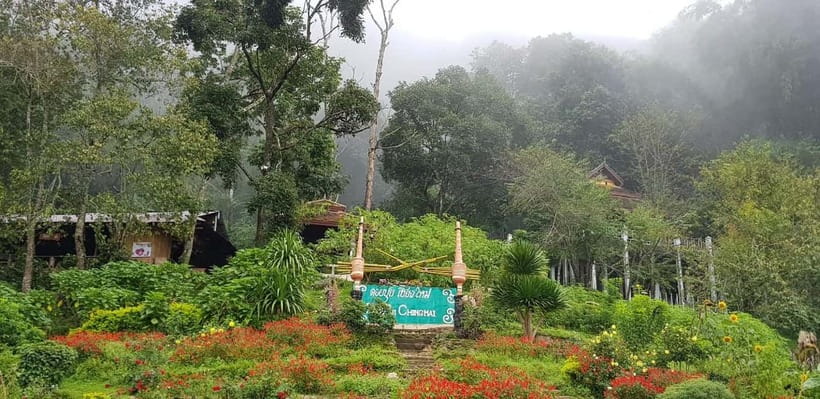
Once you’re in the van, you’ll spend about an hour driving through the rolling hills outside Chiang Mai. That travel time matters because it signals what this day is trying to do: slow down a little compared with a purely city-based morning, and give you a change of scenery before you hit the temple.
At the temple, you’ll get a guided visit for about 1 hour. After that, the tour shifts to the Hmong village for around 40 minutes, then you head back for the final drive with drop-offs in the downtown area. Total tour time is listed at 4 hours, so you’re not signing up for a long, meandering day. If you hate rushing, this is the one moment to mentally prepare for.
You can also read our reviews of more tours and experiences in Chiang Mai.



Drop-off points
The tour uses multiple downtown drop-off locations, including McDonald’s, Chiang Mai and another McDonald’s listed in Korean (맥도날드 임호텔-타패점). Expect to be back in town relatively quickly.
Wat Phra That Doi Suthep: Naga stairs, cable car, and gold that feels real
Wat Phra That Doi Suthep is the kind of temple that earns its reputation fast. You’ll see it through two different “routes” to the top, and either way you arrive with the same dramatic payoff.
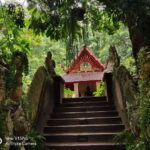
From the bottom, you can take the cable car up, or you can climb the 306 steps. The stairs aren’t just decorative. They’re lined with an impressive Naga motif: a mythical dragon-headed serpent theme that snakes down the staircase. If you choose the climb, you’ll likely feel like you’re walking through a living legend, not just scaling a hill.
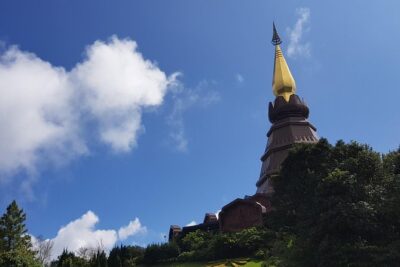
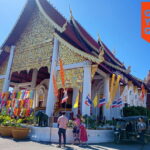
At the summit, the temple centers on a golden pagoda in Lanna architecture style. The pagoda is described as covered with engraved gold plates, and it’s flanked by four ornamental umbrellas. These details matter because they’re easy to miss if you only glance while moving. With a guide, you should be able to slow down and look at what you’re actually seeing: not one “gold thing,” but a whole set of design rules and symbolism.
What your guide adds (and what you can ask for)
A licensed English guide handles the temple portion. In at least some cases, guides like Taya are known for explaining the site in a way that helps you connect the physical details to the meaning. If you care about understanding what you’re looking at—why the architecture looks like it does, or what the Naga theme is doing—this guided hour is where you get your money’s worth.
If you’re arriving at the viewpoint and want extra time for photos, ask early. Don’t wait until you’re already on the stairs or already at the top.
The viewpoint at 3,520 feet: where Chiang Mai makes sense
The tour doesn’t just offer temple photos. It also builds in one of the best rewards of Doi Suthep: the panoramic view from the mountain top, listed at about 3,520 feet (1,056 meters).
From up here, you get a different mental map of Chiang Mai. Instead of street-by-street navigation, you see the city as a whole—spreading out in layers, with hills and the sense of distance doing some of the “big picture” work for you. If your travel style is mostly about landmarks and photos, you’ll still be satisfied. But even if you’d rather learn than shoot, the viewpoint helps explain why this temple location became such an important spiritual stop.
This is also the moment to check the weather. If the sky is hazy, you might not get crisp edges. If it’s clear, you’ll get a cleaner “layers of city” look. Either way, it’s a worthwhile pause in the schedule.

The Hmong hill tribe village: culture, clothes, crafts, and time limits
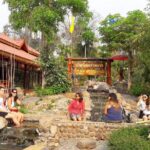
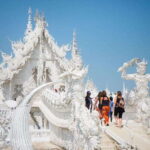
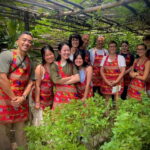
After the temple, the tour continues to a Hmong hill tribe village for a guided visit lasting about 40 minutes. This is where the tour changes tone—less about stone and gold, more about everyday life and visible traditions.
You’ll have a chance to see residents’ colorful clothing, learn about their traditional way of life, and browse items such as textiles, ornaments, and handicrafts. You can often bargain if you want to buy something small or handcrafted. The shopping part is real, and the guide will guide you toward purchases if that’s what you’re after.
Here’s the tradeoff: forty minutes is not long for a careful, relaxed village walk plus shopping. Some people find they get enough to understand the setting but not enough time to slow down at every stall or visit the most interesting areas at their own pace. If you want to shop, decide what you want before you go. A quick plan saves you from the “I should have asked earlier” feeling.
Optional museum ticket (20 Baht)
The village visit includes an optional museum ticket for 20 Baht. If you’re curious about the interpretation side—how the village presents its story—this can add value. If your focus is more on crafts and community life, you can skip it and use the time for browsing.
Shopping pace and guide tactics: keeping control of your experience
The village segment includes opportunities to purchase local handicrafts, and the overall setup can feel slightly sales-oriented. That doesn’t mean it’s bad. It just means you should stay in charge of your comfort level.
A useful approach: treat shopping as something you do on your terms, not something you get dragged into. If you want to browse longer, ask for a bit more time early in the village visit, before the group starts compressing toward the checkout or the next stop. Some guides have been described as moving quickly or staying close to shoppers to direct them toward certain shops, so your best move is to communicate your pace right away.
On the other hand, you’ll also get good moments. One traveler shared an example of a guide being kind and helping with access when an issue came up related to entry costs. That tells you guides can also be practical and helpful when the day doesn’t go perfectly.
So aim for a balanced mindset: go in expecting shopping, and also expect your guide’s behavior to shape how relaxed it feels.
Value check: why this tour fits around $22
At about $22 per person for a 4-hour tour, you’re paying for four things: morning pickup/drop-off in downtown, entry and cable car for Wat Phra That Doi Suthep, a licensed English guide, and travel accident insurance.
It’s a good value if you’d otherwise struggle to coordinate transport to the temple and keep the timing tight. The temple itself is the expensive part in both time and logistics—getting up there, paying entrance, figuring out cable car options—this tour handles that for you.
What you might pay extra for:
- Personal expenses (food, snacks, souvenirs)
- Optional 20 Baht museum ticket at the village
What’s included is the part you’d regret missing: the temple ticket and the cable car, plus the guide. Without those, you’d likely spend more time figuring out logistics and less time seeing the highlights.
Also, the tour is listed as wheelchair accessible. That’s good to know. At the same time, the activity notes that non-folding wheelchairs aren’t allowed, so if you’re traveling with a chair, plan to double-check what type you have.
Practical tips that make the day easier
This is an outdoors-and-steps kind of itinerary. You’ll want to show up ready for both temple walking and hillside weather.
Bring:
- Comfortable shoes (even if you take the cable car, you still walk)
- Water (you’re out in the morning, then moving again)
- Sunscreen (temples still mean sun exposure)
- Camera
Dress smart:
- The tour notes that short skirts and sleeveless shirts aren’t allowed. For temple visits, plan on shoulders and legs that feel respectful and practical.
Leave behind:
- Pets
- Luggage or large bags (keep it light)
And if you’re traveling with kids:
- Unaccompanied minors aren’t allowed, so make sure you’re within the rule set for your group.
Who should book this Doi Suthep and Hmong village tour
This one fits best if you want:
- A one-morning temple plus culture combo
- A guided experience that helps you understand what you’re seeing at the temple
- Convenience with pickup and managed timing
- Some shopping flexibility at the village, but not a full day dedicated to it
It’s not ideal if you:
- Hate any time pressure and want long, quiet village wandering
- Only want “no-sales” cultural experiences
- Need lots of extra time at every stop to browse slowly without group momentum
Should you book this tour?
I’d book it if your goal is a clean hit of Chiang Mai’s signature temple experience plus a brief, guided cultural meeting at a hill tribe village, all without having to plan transport.
Skip it or look for a longer alternative if your top priority is slow shopping, deep village time, or a long temple linger. Since the schedule is built around a tight 4-hour structure, you’re choosing this for focus, not for extended wandering.
If you do book, go in with one clear plan: at the temple, ask your guide to point out what you should look for, and at the village, decide ahead of time whether you’re buying something and how long you want to browse. That’s the difference between feeling rushed and feeling in control.
FAQ
What time will I be picked up?
Pickup starts in the morning and depends on your area: 8:00–8:30 am for Night Bazaar and Old Town, and 8:30–9:00 am for Santitham and Nimman Haemin. The exact meeting point can vary by the option booked.
How do I get to Wat Phrathat Doi Suthep: cable car or stairs?
From the bottom, you can take the cable car to reach the top, or you can climb 306 steps. The temple ticket and cable car are included.
How long is the temple and the village visit?
The temple stop includes a guided visit for about 1 hour, and the Hmong village guided visit is about 40 minutes.
Is the Hmong village museum ticket included?
An additional 20 Baht museum ticket at the Hmong hill tribe village is optional.
What’s included in the price?
The tour includes hotel pickup and drop-off within downtown, Wat Phrathat Doi Suthep ticket & cable car, a licensed English tour guide, and travel accident insurance.
What should I bring and wear?
Bring comfortable shoes, camera, sunscreen, and water. Avoid short skirts and sleeveless shirts, since those aren’t allowed on the tour.
Can I cancel for a refund?
Yes. You can cancel up to 24 hours in advance for a full refund.
![Private tour] Perfect day! Sticky waterfall + ChiangDao Cave + Wat BandenTemple - Price and value: why it can feel fair at $119.97](https://cd.discoveringchiangmai.com/wp-content/uploads/private-tour-perfect-day-sticky-waterfall-chiangdao-cave-wat-bandentemple-400x267.jpg)