REVIEW · CHIANG MAI
Full Day Chiang Rai 3 Temples White, Blue,Big Bhudha Temples
Book on Viator →Operated by Trips Chiang Mai · Bookable on Viator
Three temples, one long day in Chiang Rai. This tour is interesting because it strings together very different Thai Buddhist sights in a single small-group outing, with hotel pickup, a hot-spring break, and the biggest temple entry costs handled for you (like Wat Rong Khun and Wat Huay Pla Kang). I also like the buffet lunch on a fixed schedule, which matters when you’re moving for 11–12 hours. The main drawback is simple: you’ll spend a lot of time on the road, so bring patience for the drive between stops.
A big plus is the way the day is run by an English-speaking guide in a group that stays relatively manageable (up to 24 people). You might even get a guide like Eddy or M&M—both names have shown up in past groups, and the common thread is clear explanations plus a friendly, easy pace. Also, this outing depends on good weather, so if skies are bad, plans can change.
In This Review
- Key highlights worth knowing before you go
- How the 11–12 Hour Chiang Rai circuit really feels
- Pickup, vans, and group size: comfort matters on this route
- Mae Khachan Hot Spring: a short soak that breaks the day
- Wat Rong Khun (White Temple): the “outside wow” comes first
- Karen Long Neck Village: what you can expect in 30 minutes
- Buffet lunch: the unsung hero of a long temple day
- Wat Rong Suea Ten (Blue Temple): murals, blue-and-gold, and donations
- Wat Huay Pla Kang: the 25-meter Guan Yin viewpoint is the big physical moment
- Price and value: does $46.79 add up for this day?
- Guide quality and timing: what you should look for on the day
- Who this Chiang Rai tour is best for (and who should skip it)
- Should you book this 3-temple Chiang Rai day trip?
- FAQ
- How long is the full day Chiang Rai temples tour?
- Do you get picked up from your hotel in Chiang Mai?
- Is lunch included, or do I need to find food myself?
- Which temple entrance fees are included?
- Do I have to visit the Long Neck Karen Village?
- Is the hot spring stop included?
- What’s the group size and vehicle type?
- Are donations or gratuities included?
Key highlights worth knowing before you go
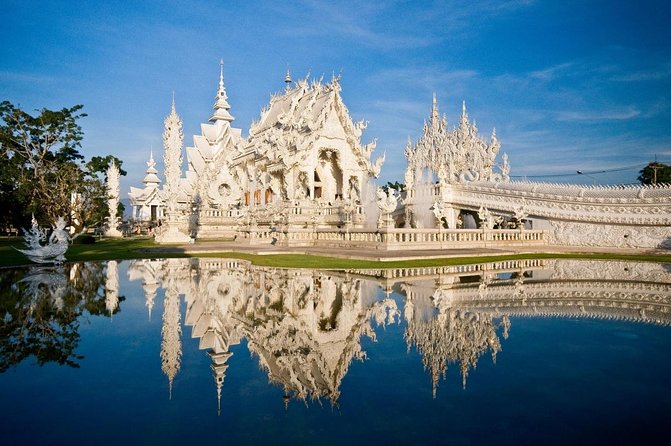
- Wat Rong Khun (White Temple) admission is included, and you’ll have time to take in the ornate outside carvings before going inside.
- Mae Khachan Hot Spring is a quick mineral soak break for tired feet (admission listed as free).
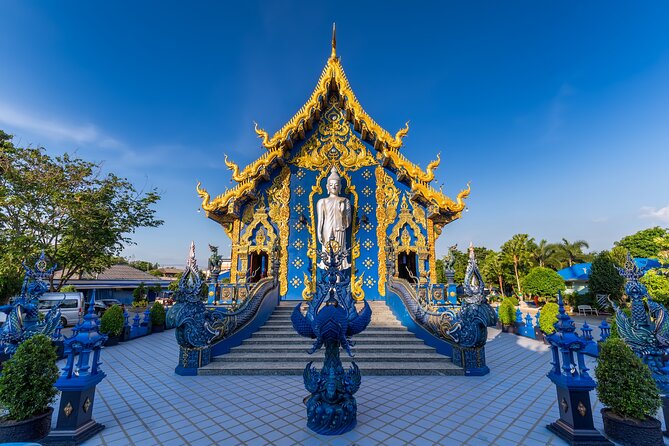
- Wat Rong Suea Ten (Blue Temple) focuses on bold blue-and-gold design and murals, with a note that donations aren’t included.
- Wat Huay Pla Kang + 25-meter Guan Yin viewpoint: the elevator ticket is included, and you get panoramic views from the top.
- Long Neck Karen Village is a short stop (about 30 minutes) and can be optional depending on the selected option.
How the 11–12 Hour Chiang Rai circuit really feels
This is a full-day trip that starts early in Chiang Mai, with pickup around 7:00–7:30am. Then the van heads out for the scenic drive to Chiang Rai—expect a long stretch of sitting before your first major temple moment. The schedule is built like this: a morning travel + hot-spring reset, then a run of temples and one village stop, then a late-afternoon return to Chiang Mai.
Good news: it’s organized as a small-group tour with an air-conditioned vehicle, so you’re not coordinating a bunch of separate taxis and admission lines. The route is also set up to include a buffet lunch at a local restaurant, so you’re not stuck hunting for food mid-rotation.
The trade-off is time. Even when things go smoothly, you should plan for a day where you’ll be in and out of the vehicle multiple times. If you’re someone who hates long drives, this will feel like a “temples marathon” more than a leisurely stroll.
You can also read our reviews of more tours and experiences in Chiang Mai



Pickup, vans, and group size: comfort matters on this route
The tour caps at 24 travelers, and the operator typically uses a 12-seat van. During high season, they may switch to a 42-seat minibus—still air-conditioned, but you may feel the group gets larger.
In practice, this affects two things:
- How often you can quickly reorganize for departures from each stop.
- How smoothly your guide can manage timing (especially around the village visit and when people need restrooms).
If you’re bringing a suitcase, there’s a key note: there’s an extra 500 THB per bag charge, and the driver can refuse boarding if it’s not paid. So if you’re traveling with lots of luggage, it’s worth telling the team ahead of time so they can reserve space.
For families: if you’re traveling with a child aged 0–2, the info says the trip includes road time that may be winding, and extra seating can cost 500 THB.
Mae Khachan Hot Spring: a short soak that breaks the day
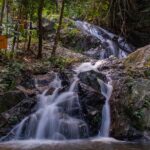
Right after the morning drive, you get a break at Mae Khachan Hot Spring, with about 20 minutes scheduled. The water is described as mineral-rich, including sulfur, and it’s positioned as having therapeutic effects—more like a foot-soak reset than a full spa session.
This stop is strategically placed before the main temple sequence, so it helps you stay comfortable later in the day. You don’t need to treat it as a long activity. Think of it as a quick “take the edge off” moment for your legs and back before more walking and stair climbing.
Because the stop is short, come ready to relax efficiently. If you plan to soak your feet, wear something easy to slip on/off.
Wat Rong Khun (White Temple): the “outside wow” comes first
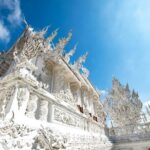
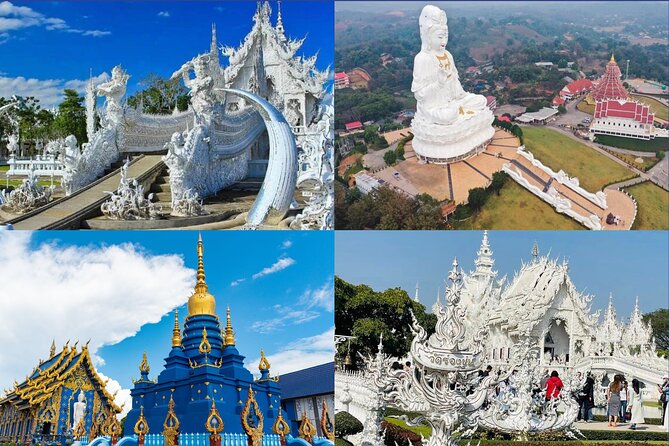
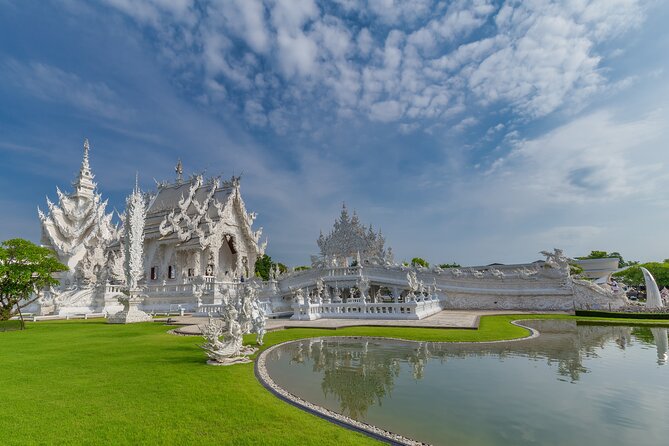
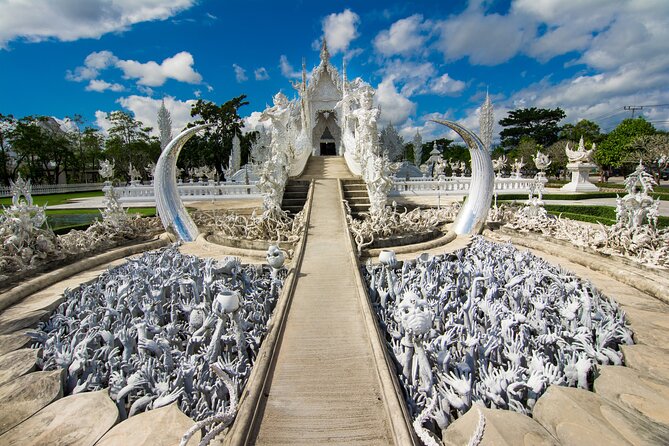
Then you move into Chiang Rai’s temple zone, starting with Wat Rong Khun (White Temple). This is one of the most visually distinctive Thai temples you’ll see: the architecture is white and the outside is decorated with elaborate carvings and designs created by Thai artists.
The schedule includes about one hour here, and the flow is practical: spend time taking in the outside details first, then go inside to continue exploring. The White Temple entry is listed as included, which is a real value in a tour like this since you’d otherwise be juggling separate tickets.
A drawback to know: because it’s one of the main attractions, don’t expect a quiet visit. Even with a tour group, you should be ready to share the space while you look around.
Karen Long Neck Village: what you can expect in 30 minutes
Next is a cultural stop: the Longneck Karen Village. This part is about 30 minutes, and it’s described as a place to learn about traditions, daily life, and craftsmanship. There’s also an important note on purpose: part of the admission fee supports community needs such as healthcare.
Whether you do this stop depends on what you selected. The admission fee is listed as included if you choose option A; otherwise, you may have to wait at a coffee shop outside the village area for around 30 minutes if the group transport is still shared.
This is not a long, slow cultural immersion. It’s more like a focused introduction. If you want deeper learning, you’ll need extra time in Chiang Rai beyond this day trip. Still, if you’re curious and like brief, structured cultural stops between major temples, this fits the day.



Buffet lunch: the unsung hero of a long temple day
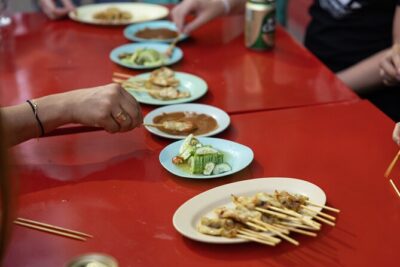
At 12:00pm, the tour includes a buffet Thai lunch. The food choice is a big deal because it’s timed to keep the day moving; you’re not relying on whatever restaurant happens to be near the next temple.
If the restaurant is closed, you’ll be offered a set menu instead. Either way, the goal is the same: feed you with minimal hassle so you can keep going.
One more practical point: long temple days are easier when you don’t skip meals. Here, lunch is built in, which is exactly what you want for an 11–12 hour schedule.
Wat Rong Suea Ten (Blue Temple): murals, blue-and-gold, and donations
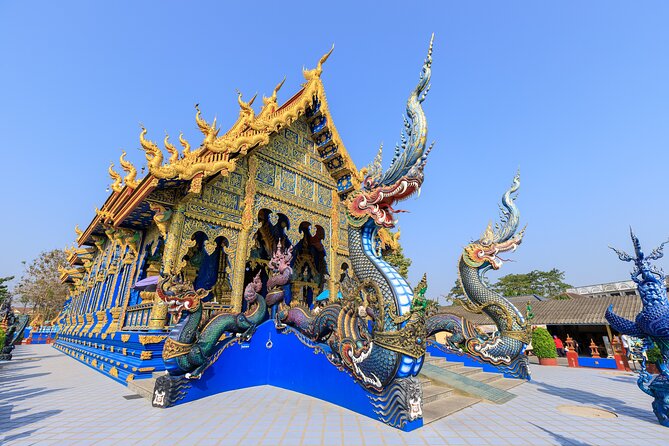
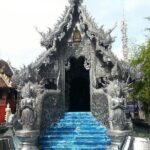
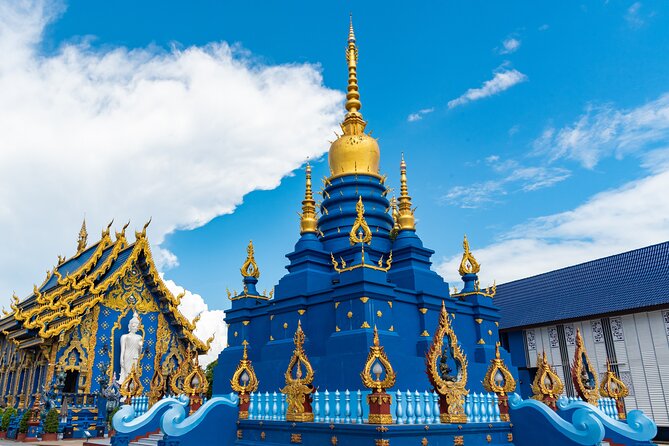
After lunch, you head to Wat Rong Suea Ten, also known as the Blue Temple. This temple is defined by its blue and gold design, plus murals depicting scenes connected to local mythology and Buddhism.
The visit is set for around one hour, giving you enough time to walk, look closely, and absorb the artwork without feeling rushed.
One important cost detail: donations at the Blue Temple are not included. The tour lists admission ticket free, but donations are common in temples. If you want to participate respectfully, bring some small cash. If you’d rather not, you can still visit—just be aware of that donation expectation.
Wat Huay Pla Kang: the 25-meter Guan Yin viewpoint is the big physical moment
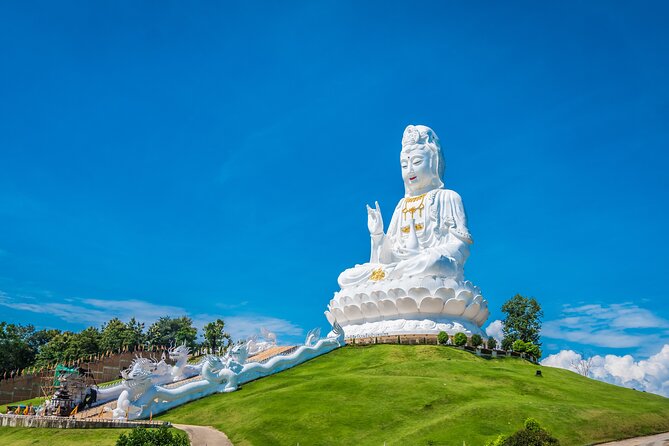
The next and final temple stop before the ride back is Wat Huay Pla Kang, sometimes described as the Red Temple in the tour materials, and it includes a major attraction: a 25-meter Guan Yin statue viewpoint.
Here’s what makes this stop practical and exciting:
- You can climb to an observation viewpoint inside the area.
- The tour includes the elevator ticket for the viewpoint, so you’re not stuck doing all the effort the hard way.
- The top of the dragon pagoda offers panoramic views (the tour notes views across the surrounding area, though it doesn’t spell out the exact range).
The visit runs about 1 hour 10 minutes, which is a good amount of time for anyone who wants to take photos and also actually pause for the view.
The only consideration: this is your most active temple moment. If you’re worried about stairs or climbing, the elevator help is key, but you’ll still want comfortable footwear and a slower pace.
Price and value: does $46.79 add up for this day?
At $46.79 per person, this tour can be a good value if you hate planning. Here’s why: you’re paying for a full-day structure with hotel pickup and round-trip transport, plus multiple major stops packed into one itinerary.
Included costs (the parts that usually cost extra on DIY days) include:
- White Temple entry
- Huay Pla Kang viewpoint elevator ticket
- Buffet lunch
- Long Neck Karen Village admission fee if you pick option A
- A hot spring stop with admission listed free
- An air-conditioned vehicle and an English-speaking guide
Not included items to keep in mind:
- Donations at the Blue Temple
- Gratuities
- The Karen village stop may be optional depending on your selected option
If you were to do this on your own, you’d likely spend more on transport and separate ticketing across multiple locations in one day. The real question is whether you’re okay with the long drive time. For many first-timers, the convenience outweighs the fatigue.
Guide quality and timing: what you should look for on the day
A few details from past experiences point to what makes this tour work well:
- Guides like Eddy have been praised for strong explanations during the trip.
- Guides like M&M have been praised for being funny, sweet, and organized, with attention to small needs like water and restroom breaks.
You can use this to judge your day. If you feel the guide is moving the group efficiently between stops and keeping you comfortable on the ride, the whole schedule will feel easier. If you’re the type who gets annoyed by timing, pick a seat early, stay hydrated, and treat the temple visits like stations rather than a relaxed walking tour.
Also, one review included a report of a van accident after a motorbike cut in. I can’t predict safety on any road trip, but the safest mindset is a calm one: let the driver do their job, keep your phone secure, and don’t assume everything will be perfect just because you’re on a tour.
Who this Chiang Rai tour is best for (and who should skip it)
This tour is a strong fit if:
- You’re short on time in Northern Thailand and want three standout temples in one day.
- You like structured days with an itinerary that handles transport and major entries.
- You enjoy art and architecture enough to stay focused for hours.
It may be a weaker fit if:
- You hate long road time and would rather explore at your own speed.
- You want a deeper, longer cultural conversation at the village stop (this is a short visit).
- You want a low-effort day physically; Wat Huay Pla Kang involves a viewpoint climb, even with the elevator support.
Should you book this 3-temple Chiang Rai day trip?
If you want an efficient, well-paced day trip from Chiang Mai that delivers eye-catching temples plus a hot-spring break and a real lunch, I’d say this is worth booking. The best value is in the included pieces—White Temple entry, Huay Pla Kang elevator ticket, and lunch—combined with transport that keeps you from planning every transfer.
Book it especially if you’re traveling with limited time and you’d rather let someone else handle the schedule. Skip it if you’re extremely sensitive to long drives or you’re looking for a slow, flexible exploration style.
If you decide to go, do yourself a favor: plan for a long day, bring comfortable shoes for temple walking, and be ready for the Blue Temple donation culture with a small amount of cash if you choose to participate.
FAQ
How long is the full day Chiang Rai temples tour?
It runs about 11 to 12 hours.
Do you get picked up from your hotel in Chiang Mai?
Yes. The tour includes round-trip transfers and pickup from your location.
Is lunch included, or do I need to find food myself?
Lunch is included. You’ll have a buffet Thai lunch at a local restaurant.
Which temple entrance fees are included?
The tour materials list entry fee for Wat Rong Khun (White Temple) and an elevator ticket for the viewpoint at Wat Huay Pla Kang as included. The Blue Temple donation is not included (and admission is listed as free).
Do I have to visit the Long Neck Karen Village?
It depends on the option you choose. The village admission fee is included if you select option A; otherwise you may wait nearby for about 30 minutes.
Is the hot spring stop included?
Yes. There’s a stop at Mae Khachan Hot Spring with admission listed as free, and it’s scheduled for about 20 minutes.
What’s the group size and vehicle type?
The tour maximum is 24 travelers. They normally use a 12-seat van, but in high season they may use a 42-seat minibus.
Are donations or gratuities included?
No. Donations at the Blue Temple are not included, and gratuities aren’t included.