REVIEW · CHIANG MAI
Chiang Mai Temples Visit Walking Tour with Ex-Monk Guide Part 1
Book on Viator →Operated by Chiang Mai City Temple Visit Walking Tour With Ex-Monk Tourist Guide (Part 1) · Bookable on Viator
A temple walk with a former monk. This 3.5-hour Chiang Mai walk strings together the city’s most meaningful temple stops, with a licensed guide who connects the sights to Buddhism and Lanna culture.
I love the clear explanations that make statues, rooms, and courtyard layouts feel like a story, not just sightseeing. I also love the easy walking pace, since you’re not bouncing across town all day.
One thing to plan for: entrance fees are not included at every stop, so your final spend may be a bit higher than the $25.96 ticket.
Key highlights worth knowing
- Former-monk perspective: you get Buddhism context from someone who lived it, not just studied it
- Close-in old city route: the walking is light because the temples are reasonably near each other
- Wat Phra Singh + Wat Chedi Luang included in the big moments (with extra entrance fees for those specific sites)
- Lanna-style architecture focus: teakwood ordination hall and Lanna stupa details get explained in plain language
- Small group size: up to 20 travelers means less chaos and more Q&A
- Common guide name to request: Cartoon / Katoon shows up repeatedly in feedback
In This Review
- An ex-monk guide: what changes when you learn Buddhism through practice
- Price and value: why $25.96 is decent, even with extra entrance fees
- Meeting at Three Kings Monument: start smart, start on time
- Stop 1: Three Kings Monument as the tour’s orientation hub
- Stop 2: Wat Sadeu Muang and the city pillar tradition
- Stop 3: Wat Phra Singh—14th-century temple power and Lion Buddha details
- Stop 4: Wat Phan Tao and the teakwood ordination hall (Wihan)
- Stop 5: Wat Chedi Luang Varavihara—Chiang Mai’s largest stupa moment
- What the walking feels like in real life (and why that matters)
- Group size and guide quality: smaller usually means better questions
- Practical etiquette: how to behave so temples feel respectful, not awkward
- Who should book this walking tour, and who might skip it
- Should you book this Chiang Mai temple tour?
- FAQ
- How long is the Chiang Mai Temples Visit Walking Tour (Part 1)?
- Where does the tour start?
- What time does the tour begin?
- Is the entrance fee included?
- What’s included in the price?
- What’s the maximum group size?
- What if the weather is bad or I need to cancel?
An ex-monk guide: what changes when you learn Buddhism through practice
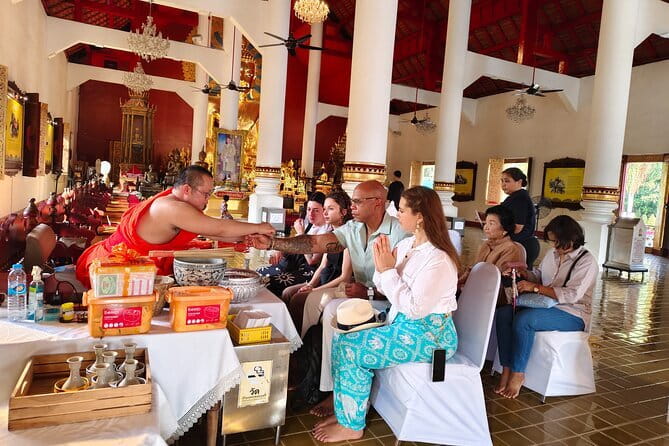
A lot of temple tours stop at facts. This one goes further—because the guide is a former monk, and that changes the tone. You’ll hear explanations that sound lived-in: not preachy, but grounded in how people actually think and behave around these sites.
You’ll also notice the guide aims at understanding, not performance. The goal is to help you look at what you’re seeing—lion Buddha imagery, ordination hall design, stupa scale—and connect it to beliefs and local meaning. That’s the difference between taking photos and building real context you can carry with you.
And the best part for your day: you’re not stuck in long lectures. The tour is paced to match the architecture—move, look, listen, ask, and walk on.
Price and value: why $25.96 is decent, even with extra entrance fees
The tour costs $25.96 per person, and includes a guide who speaks either English or Chinese and holds a TAT license. For Chiang Mai, that’s a solid setup: you’re paying for interpretation, not just a checklist.
Two temple stops explicitly say admission is not included: Wat Phra Singh and Wat Chedi Luang Varavihara. So yes, your total budget will likely be more than $25.96. Still, the pricing feels fair because those are major sites in the old city, and the guide’s explanations tend to matter most at the larger, more complex temples.
Think of it like this: you’re buying guided reading glasses for the places you’d otherwise skim. If you like learning how things fit together—Buddhism, local history, and why temples look the way they do—this ticket holds its value.
You can also read our reviews of more walking tours in Chiang Mai

Meeting at Three Kings Monument: start smart, start on time
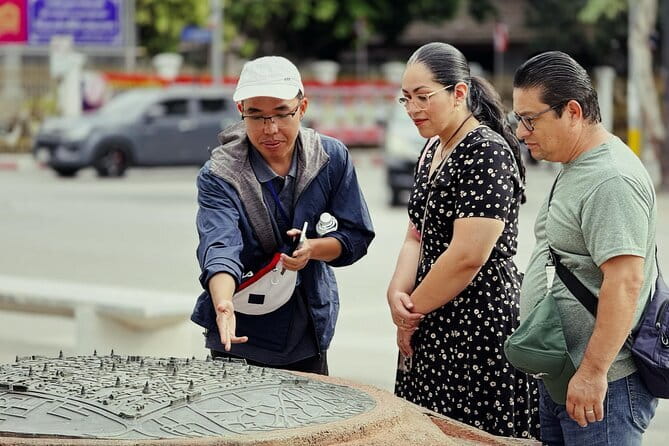
You meet at Three Kings Monument at 9:00 am. The guide starts with a quick introduction before you begin walking. That first briefing matters more than it sounds—because it sets the lens you’ll use for the rest of the route.
This is also the end point. You’ll finish back at the same place, which keeps your planning simple.
One more practical note: the meeting point is described as near public transportation, so you can show up without hunting for a taxi pickup.
Stop 1: Three Kings Monument as the tour’s orientation hub
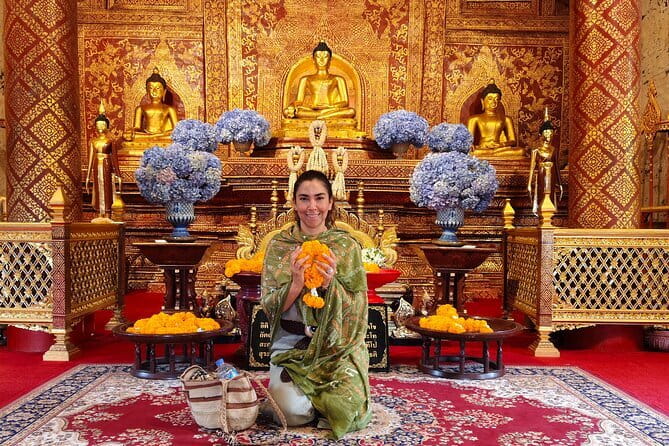
Even though Three Kings Monument is mainly the start, it’s part of the experience. The guide uses it to frame what you’re about to see, and that helps the temples make sense faster once you’re walking between them.
You’ll also get a sense of tone right away—how the guide will explain Buddhism and architecture. If you’re the type who likes a little structure before wandering, you’ll appreciate this.
Stop 2: Wat Sadeu Muang and the city pillar tradition
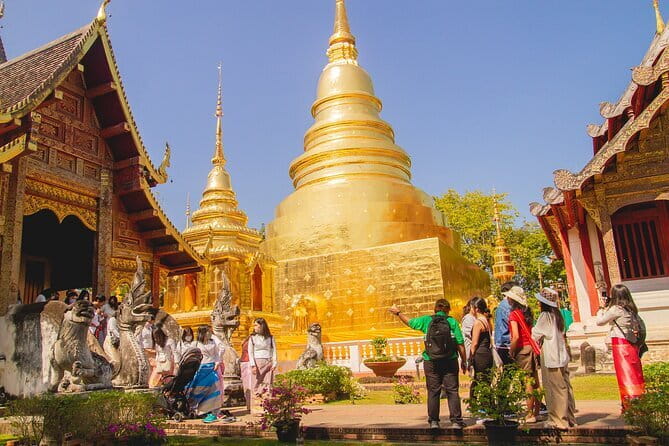
Next up is Wat Sadeu Muang, where you start visiting the Inthakhin temple, tied to the city pillar tradition. The city pillar story is one of those local threads that makes Chiang Mai feel like more than a backdrop for temples—it’s rooted in how communities imagine protection, order, and spiritual grounding.
This stop is about 30 minutes. It’s a good length for newcomers because it gives you time to absorb details without feeling rushed. Also, the admission is free here, so it’s an easy win early in the morning.
What I like about this part: it teaches you how to notice symbolic meaning in a place you might otherwise treat like scenery.
Stop 3: Wat Phra Singh—14th-century temple power and Lion Buddha details
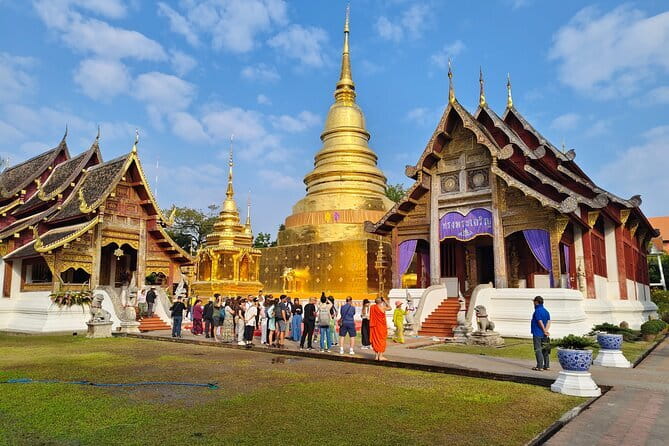
Wat Phra Singh is one of Chiang Mai’s showpiece temples, and it gets 45 minutes on the walk. The standout details described for this stop include a 14th-century build, a mosaic-inlaid sanctuary, a large Lion Buddha statue, and a gilded pagoda.
Admission is not included for this stop, so bring extra money or plan to pay on arrival. But the trade-off is worth it if you like watching the guide connect art to meaning.
Here’s what you’ll want to do during your time inside: take a slow look at the sanctuary and the main Buddha imagery. The guide’s former-monk perspective tends to turn “wow, that’s pretty” into “oh, that’s why it looks this way.” That’s the kind of detail that makes the photos feel less random afterward.
If you’re easily overwhelmed, don’t panic. Wat Phra Singh is more complex than the earlier stop, but the tour keeps moving in a structured way.
You can also read our reviews of more guided tours in Chiang Mai

Stop 4: Wat Phan Tao and the teakwood ordination hall (Wihan)
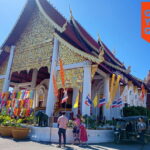
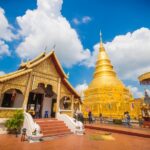
Wat Phan Tao comes next for 30 minutes, and it’s a great “architecture nerd” stop if you enjoy craftsmanship. The temple is known for its Lanna-style ordination hall (Wihan), and the key point here is that it’s made of teakwood.
The tour also ties this hall to royalty: it was used as a throne hall during the reign of King Mahotara Prateth. That connection helps you read the space as more than a worship room. It’s a building that also held political and ceremonial power.
Admission for this stop is free, which makes it an excellent mid-walk break. You’ll still get a focused explanation, so you’re not just walking through empty corridors.
This is one of the stops where good pacing matters. You get enough time to look around, but you won’t feel trapped inside.
Stop 5: Wat Chedi Luang Varavihara—Chiang Mai’s largest stupa moment
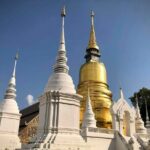
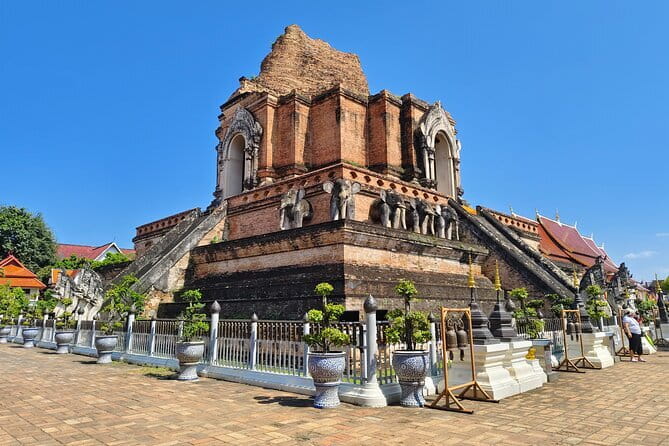
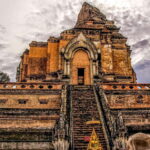
The final temple stop is Wat Chedi Luang Varavihara, with 45 minutes. This place is known for the largest stupa in Chiang Mai, and the tour emphasizes how you can get up close to the Lanna-style design as you walk around the compound.
Admission is not included here, so again, budget for that.
If you want the biggest “temple wow” payoff of the tour, this is it. The guide’s job is to help you understand scale and ornamentation—how stupa size, layout, and style work together to create spiritual atmosphere. When the explanations line up with what you can actually see, it stops being just impressive and starts being meaningful.
Also, because this is the last stop before you return, it’s a good time to ask any questions you’ve saved up. The guide’s tone in the tour style is typically friendly and patient, and it’s the kind of place where questions are genuinely relevant.
What the walking feels like in real life (and why that matters)
The tour is about 3 hours 30 minutes total. The route is described as not very far between stops, which is a big deal in Chiang Mai, where heat can turn “a short walk” into a minor ordeal.
This tour is best when you want movement without exhaustion. You’ll be on foot, but the schedule leaves room for viewing and explanations. And it’s a Part 1 focus—meaning the day is designed to concentrate on core old-city temple highlights instead of trying to cover everything.
Wear something you can walk in comfortably. You’re moving more than you’d expect if you’re picturing a “sit and learn” tour.
Group size and guide quality: smaller usually means better questions
There’s a maximum of 20 travelers, and that’s a sweet spot. You’re less likely to get stuck behind the person who thinks every photo needs a full photo shoot.
Guide quality is the whole point here. The feedback points to Cartoon / Katoon by name, with strong notes about clear English, courtesy, and detailed explanations about Buddhism, temple background, and culture. People also appreciated that the guide is attentive and kind—one mention included waiting for a late arrival—so the tour doesn’t feel rushed or cold.
If you care about depth—why things are built the way they are—this tour structure supports that.
Practical etiquette: how to behave so temples feel respectful, not awkward
You’re visiting active religious sites, so dress and behavior matter. The tour doesn’t list a specific dress code in the details provided, but in practice you should assume you’ll be expected to cover shoulders and knees and keep your posture respectful around Buddha images.
For photos: bring your patience. Temples are not photo studios. But the guide is reportedly helpful with taking photos, so you’re not stuck asking strangers or fumbling your way through awkward angles.
If you’re wearing a hat, plan for it to come off when appropriate for viewing areas. Simple respect goes a long way, and it usually improves how willing people are to help you.
Who should book this walking tour, and who might skip it
This tour suits you if you want:
- A guided explanation of Buddhism and temple meaning, not just sightseeing
- An easy-to-follow walk through old city Chiang Mai
- A guide with a former monk perspective (Cartoon / Katoon gets repeatedly mentioned)
- A small-group vibe with up to 20 people
You might consider skipping or adjusting if:
- You hate paying extra for entrance fees at major sites like Wat Phra Singh and Wat Chedi Luang
- You’re looking for a longer, higher-tempo “see everything” day instead of a focused set of stops
- Weather is poor on your travel day (this experience requires good weather)
Should you book this Chiang Mai temple tour?
Book it if you want your temple time to make sense. The value isn’t only the low price—it’s the guide’s ability to connect what you’re looking at to the principles behind Buddhism and the local Lanna context. The walking pace also makes it beginner-friendly.
Skip it only if you’re strictly budget-only and don’t want to pay extra entrances, or if you need a fully indoors tour type. Otherwise, this Part 1 route is a smart first stop in Chiang Mai for building the right mindset before you explore more temples on your own.
If you do book: I’d request the guide Cartoon / Katoon style, arrive a few minutes early, and keep a bit of spare cash for the paid sites. Then you’ll get the best kind of day—one that feels calm, educational, and genuinely Chiang Mai.
FAQ
How long is the Chiang Mai Temples Visit Walking Tour (Part 1)?
The duration is about 3 hours 30 minutes.
Where does the tour start?
The tour starts at Three Kings Monument (QXRP+3WX, Prapokklao Road, Tambon Si Phum, Amphoe Mueang Chiang Mai, Chang Wat Chiang Mai 50200, Thailand).
What time does the tour begin?
The start time is 9:00 am.
Is the entrance fee included?
No. Entrance fees are not included for the tour.
What’s included in the price?
The price includes an English or Chinese-speaking guide holding a TAT license.
What’s the maximum group size?
The tour has a maximum of 20 travelers.
What if the weather is bad or I need to cancel?
You can cancel for a full refund up to 24 hours before the experience starts. The tour requires good weather, and if it’s canceled due to poor weather you’ll be offered a different date or a full refund.