REVIEW · CHIANG MAI
Visit Chiang Rai Temples and Lalitta Cafe from Chiang Mai
Book on Viator →Operated by Aventura Tailandia · Bookable on Viator
Chiang Rai temples are best seen early and in comfort. This trip brings you to Wat Rong Khun (White Temple) with its shimmering contemporary look, then pairs it with Lalitta Café—a garden-and-waterfall break that’s made for photos. The one catch: it’s a long day on the road, and time in Chiang Rai can feel tight.
I like that the day is built around the big-name sights with lunch included and entrance fees handled for the temples. It runs with an air-conditioned van, pickup is offered, and the group size tops out at 12, which keeps it from turning into a chaotic cattle car.
You start at 7:00 am and roll north to Chiang Rai, hitting a quick hot-spring reset, then main temples in a focused order: White Temple, Goddess of Mercy viewpoint, Lalitta Café, Blue Temple, and an optional Longneck Karen village stop. If you want structure and convenience more than slow travel, this works well.
In This Review
- Key things to know before you go
- Price and what you truly get for $45.50
- Morning pickup: plan for an early start and real travel time
- Mae Khachan Hot Spring: a quick reset that’s actually useful
- Wat Rong Khun (White Temple): where contemporary art meets pilgrimage energy
- Wat Huay Pla Kang: the Goddess of Mercy and a real climb
- Lalitta Café: the garden-and-waterfall break that turns into photo time
- Wat Rong Suea Ten (Blue Temple): color, gold details, and a connection to the White Temple
- Longneck Karen village: optional culture stop with a shopping reality
- Timing and pacing: why some days feel smooth and others feel rushed
- Who this tour fits best (and who should reconsider)
- Should you book Chiang Rai Temples and Lalitta Café from Chiang Mai?
- FAQ
- FAQ
- How long is the Chiang Rai temples and Lalitta Café day trip?
- What time does the tour start in Chiang Mai?
- What’s included in the price?
- Do I have to pay extra for Lalitta Café?
- Is the Longneck Karen village stop included?
- Do I need cash, or will the ticket cover everything?
- What group size is this tour limited to?
Key things to know before you go
- Long road day: expect lots of bus time because Chiang Rai is far from Chiang Mai.
- Temples first, coffee break next: you get the best photo chances before the day gets crowded.
- Cash needed for Lalitta Café: admission is 60 baht, and it’s discounted from what you order.
- Lunch and water are covered: water is available in the van and at lunch.
- Longneck Karen village is optional: it costs extra (300 THB) and includes shopping time.
- Small group (max 12): easier pacing than big group tours.
Price and what you truly get for $45.50
At $45.50 per person, this tour is priced like a practical day-trip package: you’re paying for transport, a guided schedule, temple entrance fees, and lunch. That matters because the Chiang Rai sights here aren’t just “look from outside” stops—you’re actually going inside and up to viewpoints.
You still have two add-ons you should plan for:
- Lalitta Café admission is 60 baht in cash (and it gets discounted from your cafe purchase).
- The Longneck Karen village stop costs 300 THB per person and is optional.
There’s also no mention of alcohol included. Soft drinks/coffee/tea/juices aren’t part of the basic package either, so if you’re a big drinker, budget extra.
In plain terms: if you want an organized day with most of the costs already handled, this is decent value. If you hate paying extra once you’re already on the clock, you’ll feel those add-ons more.
You can also read our reviews of more tours and experiences in Chiang Mai.


Morning pickup: plan for an early start and real travel time
The tour starts at 7:00 am from Chiang Mai. You’ll spend a big chunk of the day in the van, because Chiang Rai is a multi-hour drive each way.
I’m flagging this because timing is where these day trips live or die. Some people have had smoother pickups; others report late or messy pickup flow. The best move is simple: confirm your pickup details ahead of time, be ready early, and keep your phone charged in case you need to coordinate.
Also, note the driving style can be fast. If you’re motion-sensitive or just prefer calmer driving, it helps to be upfront on day one and ask for a seat plan that keeps you comfortable.
Mae Khachan Hot Spring: a quick reset that’s actually useful
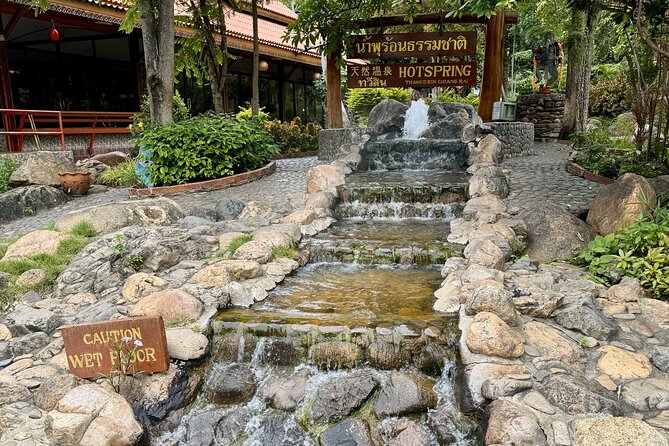
Before the temple marathon, you stop at Mae Khachan Hot Spring. The key feature here is the short reset—about 30 minutes—plus a foot bath to loosen up after the drive.
This is the kind of stop that makes the rest of the day easier. You’re not soaking for hours; you’re just getting your feet unstiffened so the later walking and climbing feel less brutal.
Admission here is free, which is a nice bonus considering the main temples have paid entry. If you’re prone to feeling sore during travel days, I’d treat this as part of your comfort strategy, not a filler stop.
Wat Rong Khun (White Temple): where contemporary art meets pilgrimage energy
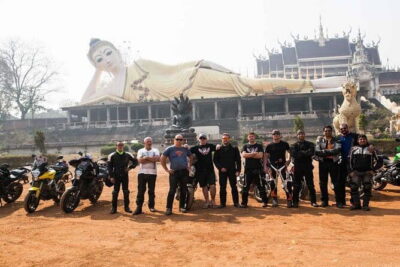
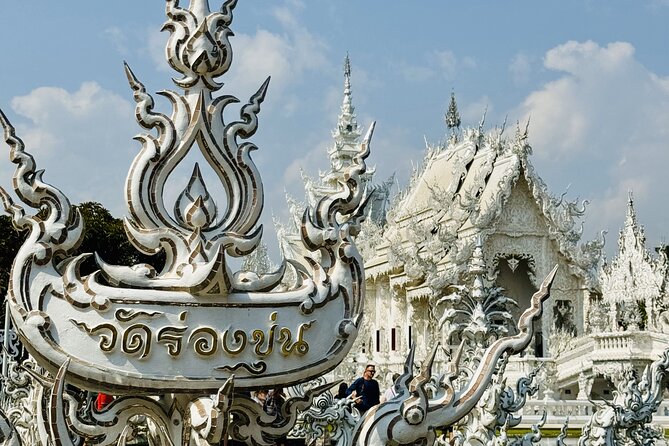
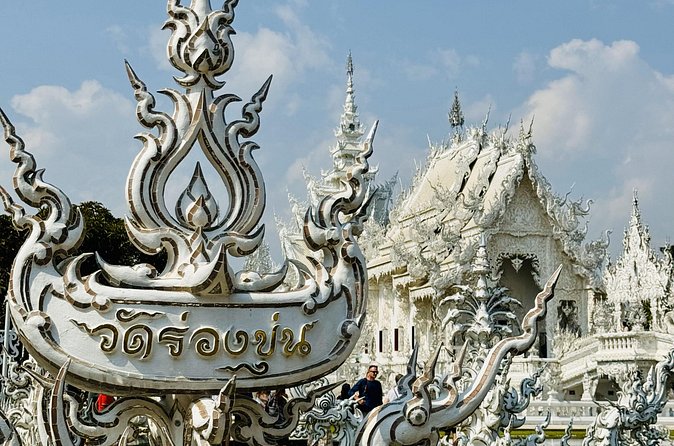
Wat Rong Khun is the reason most people sign up. It’s one of Thailand’s most photographed temples, and it has that unreal, storybook look—mostly dazzling white with crystal-like detail.
What I find especially interesting is that it’s not just “old temple, pretty stones.” It’s a contemporary art temple created by Chalermchai Kositpipat. That gives the visit a different vibe than the classic Thai temple style you might expect. It also helps to know what you’re seeing: you’re looking at a modern artistic vision presented as a temple space.
You get about 1 hour here, with entrance included. That’s enough time to walk the grounds, see the main structures, and take the photos you came for without feeling totally rushed—assuming the driving and pickup go smoothly.
The practical tip: wear shoes you can walk in confidently. Even if the walk isn’t huge, there’s enough uneven ground around temple areas that you’ll be glad you didn’t choose slippery sandals.
Wat Huay Pla Kang: the Goddess of Mercy and a real climb
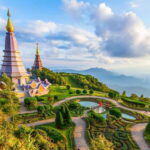
Next up is Wat Huay Pla Kang, known for a massive statue of the Goddess of Mercy. The detail that helps you not get confused is the scale and the fact it’s Thai-and-Chinese in design, which can make it feel like a hybrid visual experience.
A standout here is the access: you climb up to the statue’s head area by elevator. That means you get the viewpoint without turning the visit into a full-on stair workout.
You’ll have about 1 hour, entrance included. This is a good stop for two reasons:
- It breaks the pace between the big photographic temple (White Temple) and the next colorful highlight.
- The viewpoint focus gives your brain a “breather moment” between temple details.
If you’re traveling with older family members or you don’t love long stair climbs, this is a smart inclusion because it’s designed for easier access to the main feature.

Lalitta Café: the garden-and-waterfall break that turns into photo time
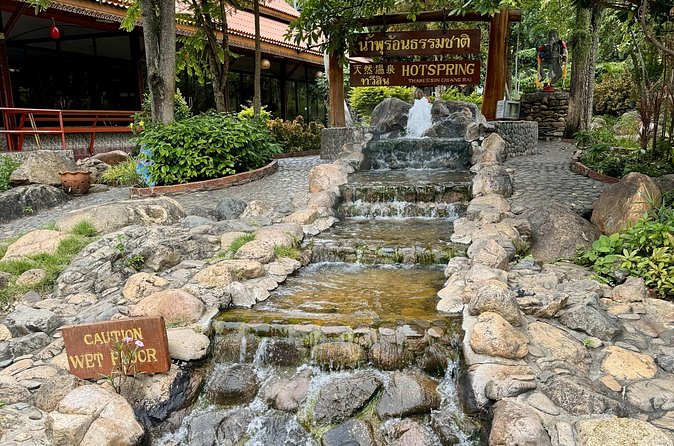
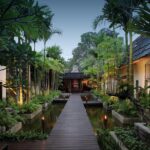
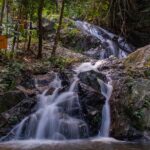
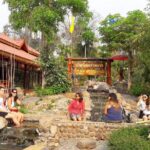
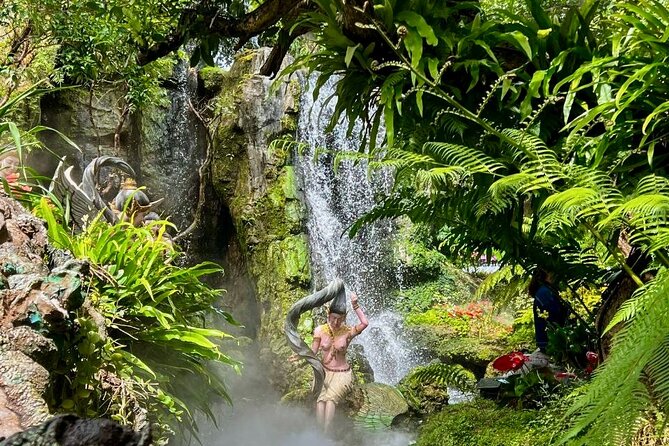
Lalitta Café is famous for a reason: it’s a planned garden scene with lots of plants and flowers, plus a waterfall that adds sound and freshness. The whole place is basically set up for taking photos in different corners—paths, greenery, and that waterfall backdrop.
You get about 20 minutes here. That’s short, but it’s enough time to:
- walk through the garden area,
- grab your photos,
- and have a drink or snack.
Admission is required in cash: 60 baht, and that admission is discounted from what you order. So don’t show up thinking you can skip the entry fee; you can’t. But it also means you’re not paying in total twice—you’re paying the entry, then it reduces what you spend inside.
What to watch: the cafe is a “stop” more than a “sit and linger” experience on this tour. If you love long coffee breaks, plan to come back later on your own.
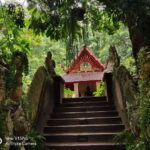
Wat Rong Suea Ten (Blue Temple): color, gold details, and a connection to the White Temple
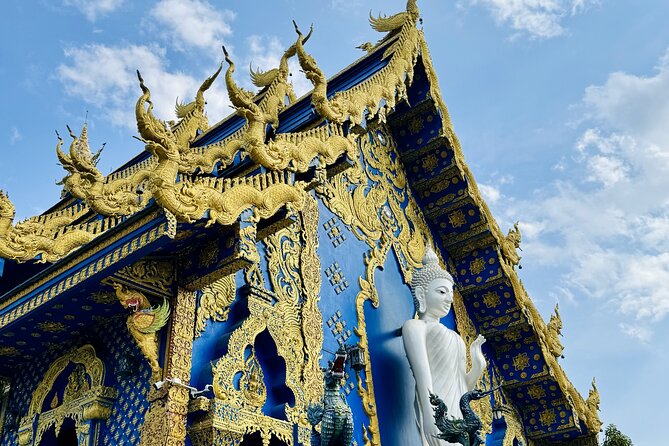
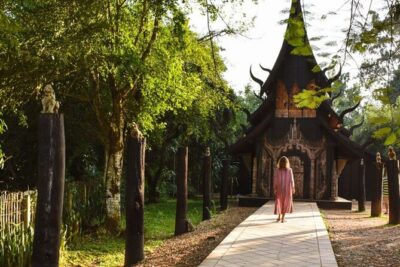
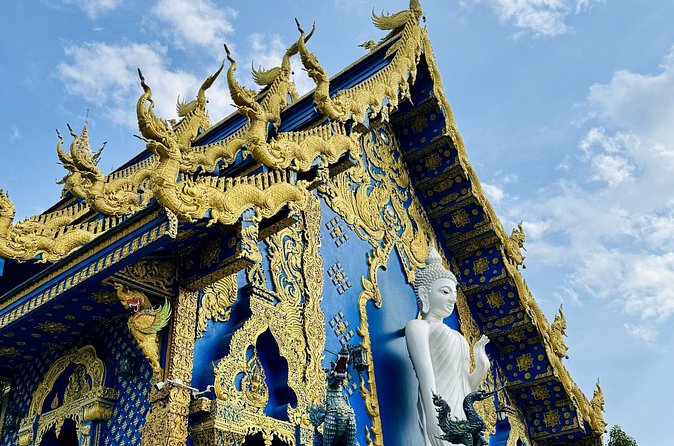
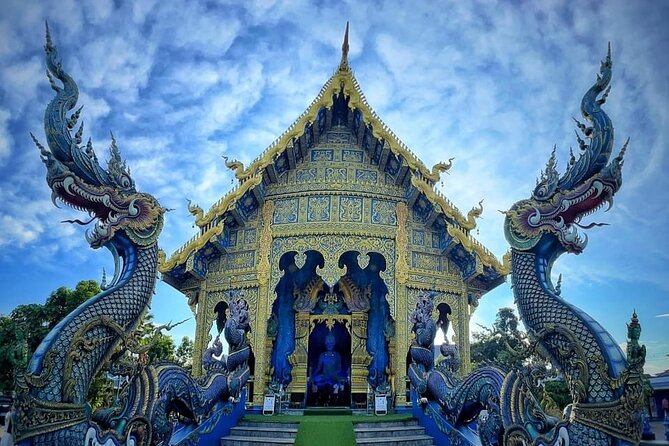
After Lalitta Café, the itinerary brings you to Wat Rong Suea Ten, often called the Blue Temple. It’s known for striking blue tones paired with golden details that look particularly good when the sun hits them.
This temple also connects back to the White Temple world. It was designed by an apprentice to Chalermchai Kositpipat—so if you liked the White Temple’s contemporary artistic direction, you’ll likely enjoy how the Blue Temple echoes that creative lineage.
You’ll have about 1 hour, entrance included. This is a great final temple stop because it keeps the visual variety high. You’ve already seen white and the big statue viewpoint; the Blue Temple gives you a different “color language” to process.
Practical note: if you’re serious about photos, aim to spend your first minutes scouting angles rather than immediately standing in the first spot you like.
Longneck Karen village: optional culture stop with a shopping reality
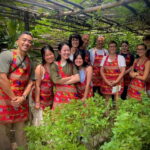
This stop is optional and costs extra: 300 THB per person. The structure is about visiting a Karen village area, learning about traditions and crafts, and seeing the brass rings worn on necks as a cultural symbol.
Here’s the balanced take. This kind of stop often has a lot of shop time attached to it, and it can feel like the experience is split between cultural insight and commerce. If you want a quick look plus crafts, it can be worthwhile. If you want deep personal storytelling, you might wish you had more time to connect with the people directly.
You’ll have about 30 minutes, so it’s not the kind of visit where you can ask endless questions or go beyond the surface.
My advice: if you choose to go, go with respect and a mindset of learning rather than collecting photos. Ask questions when you can and focus on the crafts and cultural explanations, not only the spectacle.
Timing and pacing: why some days feel smooth and others feel rushed
This is where your expectations need to match the reality of day trips. The day is designed as a “greatest hits” route, so each major temple gets around an hour. That’s fine when things run on schedule.
But when pickup is delayed or the drive is heavy, the day can compress. Some people have experienced long pickup delays and limited temple time because the travel chunk grows. And yes, the road ride can be long—think multi-hour blocks in both directions.
So I’d plan for this as a day trip for people who like structure. If you prefer to wander slowly, sit longer at each site, or take lots of breaks, you’ll likely enjoy a more flexible approach (like traveling on your own or choosing fewer stops).
Who this tour fits best (and who should reconsider)
I’d recommend this tour to you if:
- You want a simple way to see Chiang Rai’s key temples without planning routes and entry tickets.
- You like photo-friendly temple visits with a set schedule.
- You value included lunch and temple entry costs.
- You prefer a small group up to 12.
I’d reconsider if:
- You hate long van days and early starts.
- You need lots of quiet downtime between stops.
- You’re very sensitive to fast driving or uncomfortable with early-morning pickup uncertainty.
If you’re traveling with someone who can handle a hectic itinerary, this can be a fun, efficient day. If your idea of a vacation is relaxed pacing, you might feel “on a train schedule” all day.
Should you book Chiang Rai Temples and Lalitta Café from Chiang Mai?
Book it if you want an organized, value-oriented day trip with temple entrances handled, lunch included, and a famous photo break at Lalitta Café. It’s especially appealing if you don’t want to spend your Chiang Rai time figuring things out.
Skip or rethink it if you want deep cultural time or slow temple wandering. Also skip it if you’re strongly bothered by travel time, because this isn’t a quick hop—it’s an all-day commitment.
One more practical suggestion: choose your priorities before you go. The White Temple and Blue Temple are the big visual targets, Wat Huay Pla Kang adds a viewpoint feature, Lalitta Café is the quick garden-and-waterfall pause, and the Longneck Karen stop is optional with an extra cost. If those match what you want from the day, you’ll likely feel good about the purchase.
FAQ
FAQ
How long is the Chiang Rai temples and Lalitta Café day trip?
It runs about 11 to 12 hours.
What time does the tour start in Chiang Mai?
Pickup starts at 7:00 am.
What’s included in the price?
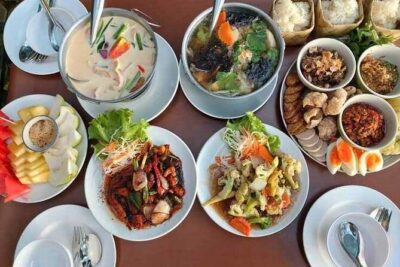
The tour includes an air-conditioned vehicle, lunch, water available in the van and at lunch, and entrance fees to the temples.
Do I have to pay extra for Lalitta Café?
Yes. Lalitta Café admission costs 60 baht and is required in cash. That admission is then discounted from what you buy or consume at the café.
Is the Longneck Karen village stop included?
No, it’s optional. The village admission is 300 THB per person and is not included in the tour price.
Do I need cash, or will the ticket cover everything?
You’ll need cash for Lalitta Café admission. The tour also provides mobile tickets.
What group size is this tour limited to?
The maximum group size is 12 travelers.