REVIEW · CHIANG MAI
Chiang Mai: Authentic Cooking Class with Market & Farm Visit
Book on GetYourGuide →Operated by Grandma's Home Cooking School · Bookable on GetYourGuide
Few days in Chiang Mai feel this personal. This hands-on cooking day mixes a market ingredient walk and Grandma’s organic farm with step-by-step Thai cooking at your own station.
I especially love the way the class teaches flavors, not just recipes. The instructors break down Thai basics like curry paste, herb choices, and how dishes should taste, so you can cook it again later.
One thing to consider: you’ll want comfortable shoes and a sun hat, because you’ll do real walking around the farm and you may pick some ingredients depending on what’s ready.
In This Review
- Key moments that make this class worth your time
- A farm-to-kitchen day at Grandma’s Home Cooking School
- Market walk: learning Thai ingredients you can actually find again
- Grandma’s organic farm: chickens, eggs, herbs, and mushroom hunting
- Open-air kitchen stations: cook Thai classics step by step
- Mango sticky rice and the coconut milk twist (only on certain days)
- Khao Soi and curry paste: the Chiang Mai flavors that stick
- How instructors handle gluten-free, halal, and vegetarian cooking
- Transportation and timing: plan for a real day out of your hotel
- What you’ll eat, how much, and why it’s not just a demo
- Price and value: what $34 buys in real skills and a real meal
- Who should book this cooking class in Chiang Mai
- Quick practical prep (so your day stays easy)
- Should you book this Chiang Mai cooking class?
- FAQ
- How long is the cooking experience in Chiang Mai?
- Is hotel pick-up included?
- Do I need cooking experience?
- Can the class handle vegetarian, halal, or dietary allergies?
- Is mango sticky rice included?
- Is coconut milk making included?
Key moments that make this class worth your time
- Grandma’s organic farm: feed and even hug the chickens, then collect fresh eggs
- A real market walk: learn what Thai cooks look for in herbs, vegetables, and sauces
- Your own cooking station: chef-led guidance while you cook Thai classics step by step
- Khao Soi focus: Chiang Mai’s signature curry noodle soup shows up as a highlight
- Full-day coconut milk: learn to make coconut milk the traditional way with a wooden grater
- Diet-friendly options: vegetarian, halal, and gluten-free adaptations when you tell them upfront
A farm-to-kitchen day at Grandma’s Home Cooking School
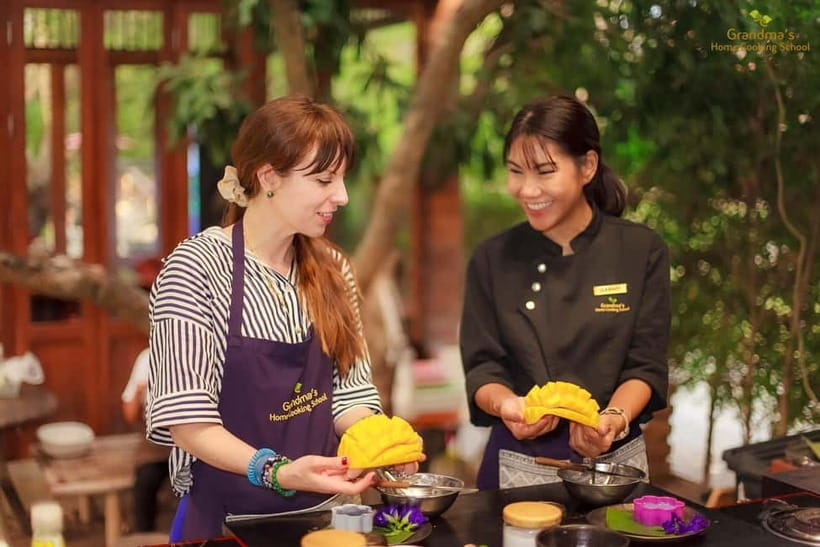
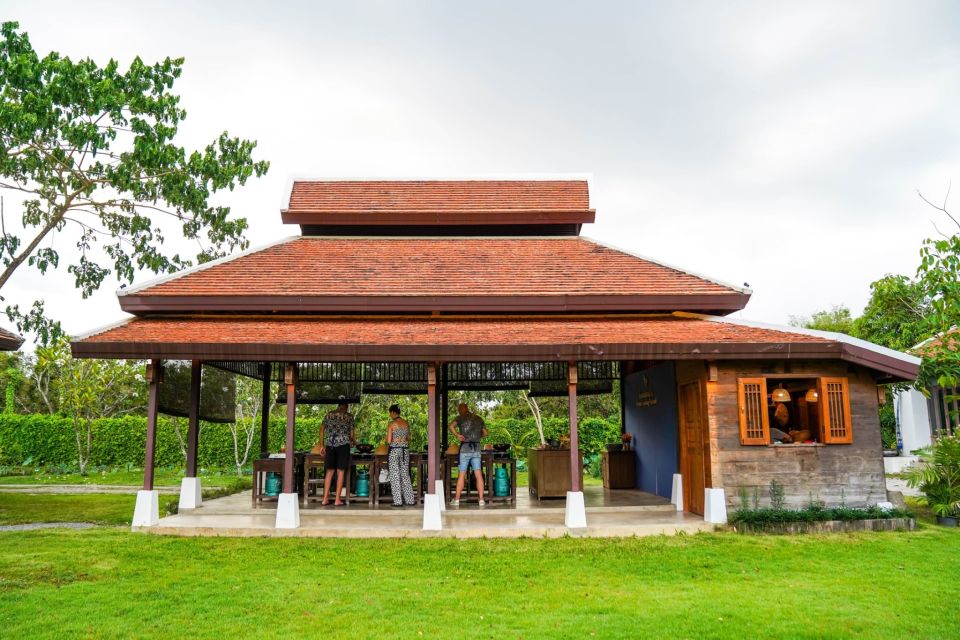
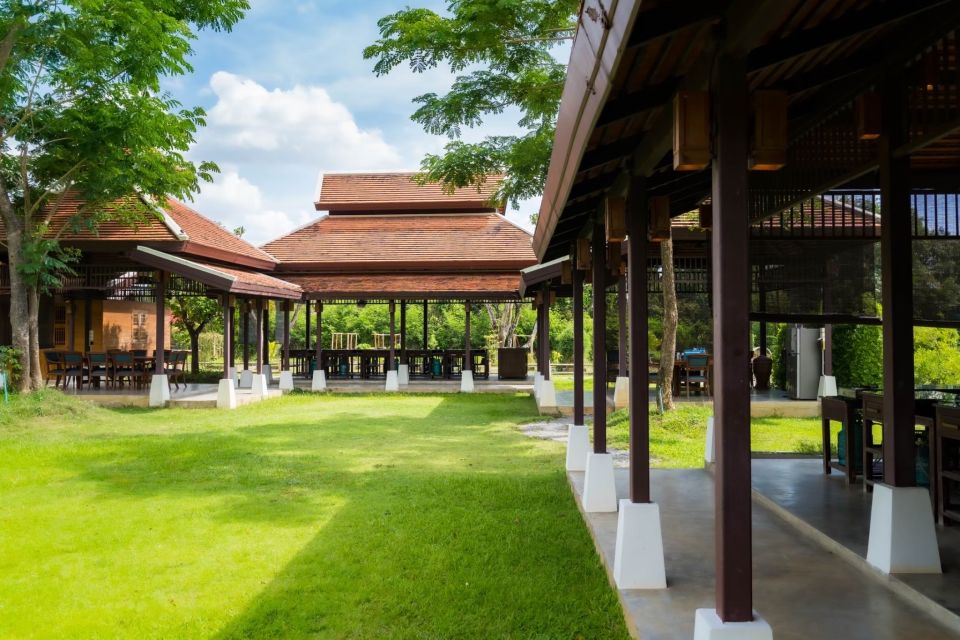
This is the kind of cooking class that makes Chiang Mai food click. You don’t just chop ingredients in a studio. You see where flavors come from first, then you cook them in an open-air kitchen surrounded by the countryside.
The setting helps. The school’s grounds feel like a working home base for cooking and growing, not a tourist trap. And the pace stays practical: each portion of the day has a job to do—ingredients first, then cooking, then eating what you made.
You also get solid structure. You’re picked up by air-conditioned van within 5 km of Chiang Mai’s city center, then you head out to either the market or the farm depending on your session time. In the cooking part, you work at your own station with step-by-step help in small-class style.
And yes, you leave with food skills, not just photos. The class is built around Thai technique and flavor decisions—what to add, when to add it, and what the dish should taste like.
You can also read our reviews of more shopping tours in Chiang Mai
Market walk: learning Thai ingredients you can actually find again
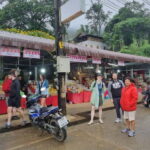
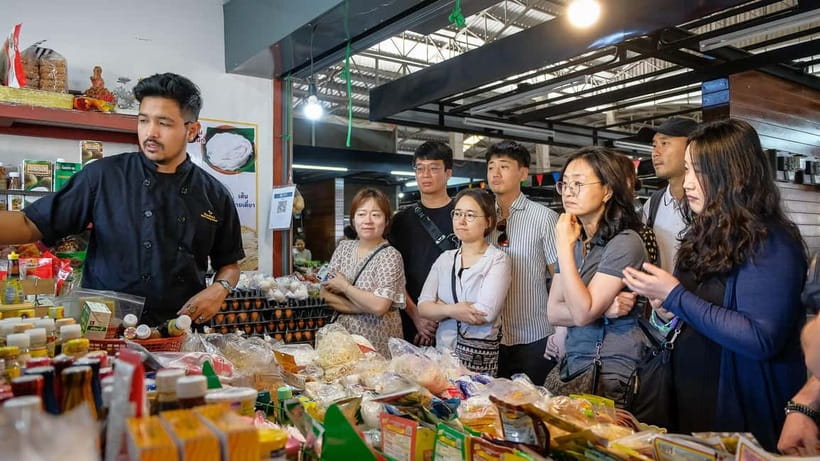
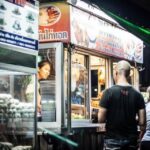
If you do the morning, afternoon, or full-day option, your day starts with a lively local market visit with your instructors. This is more than sightseeing. You’ll learn which ingredients are essential for Thai cooking, and how to recognize them in the real world.
Here’s what this does for you as a cook:
- You learn what Thai cooks use as building blocks (herbs, aromatics, sauces, and fruit/vegetable choices).
- You get a mental shopping list for later. When you’re back home and trying to recreate Thai dishes, this kind of familiarity matters.
You’ll also notice something subtle. The market walk isn’t presented as one “correct” way to shop. It’s more like learning the logic behind Thai flavor—how different ingredients change the final taste, from fresh herbs to the balance in curry and stir-fries.
In the class, each guest chooses the menu at the start before cooking begins, so you can steer your session toward dishes you’ll enjoy. That means you’re not stuck cooking random options you won’t eat.
Grandma’s organic farm: chickens, eggs, herbs, and mushroom hunting
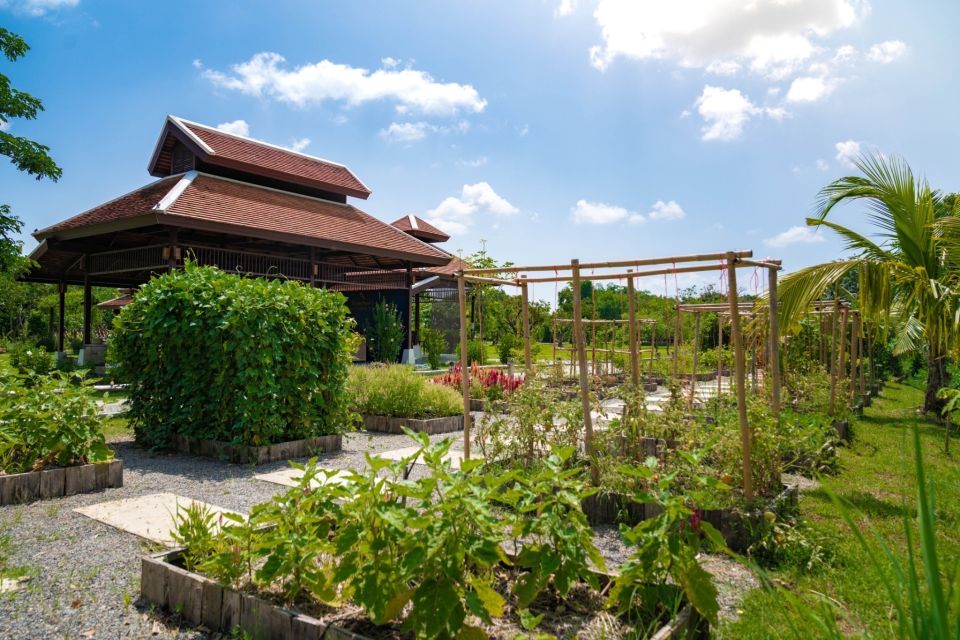
The farm portion is one of the most praised parts for a reason. It’s hands-on, a little goofy in the best way, and it makes Thai ingredients feel real.
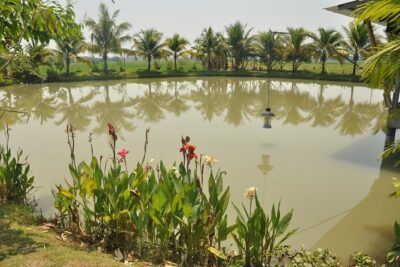
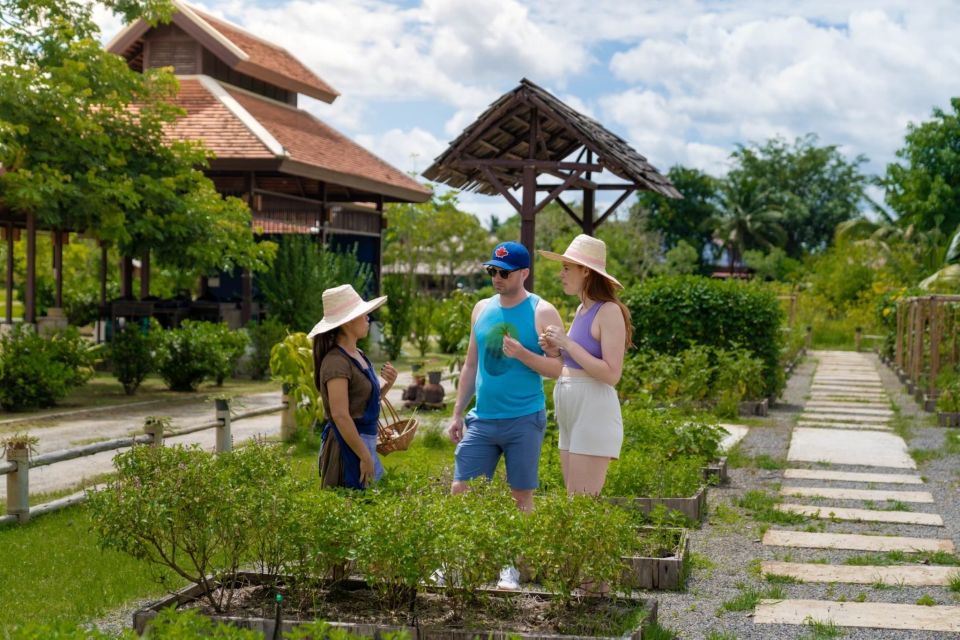
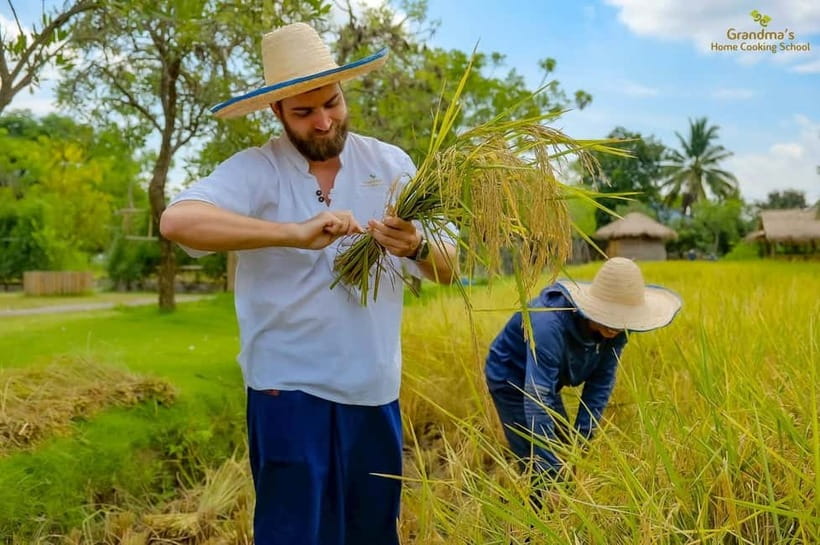
At Grandma’s big organic farm, you’re in the countryside with rice fields around you. The activities are designed to teach in a fun, physical way:
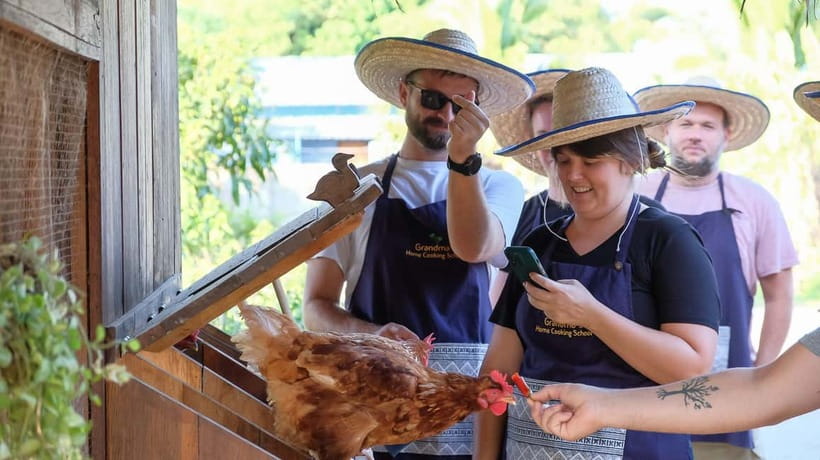
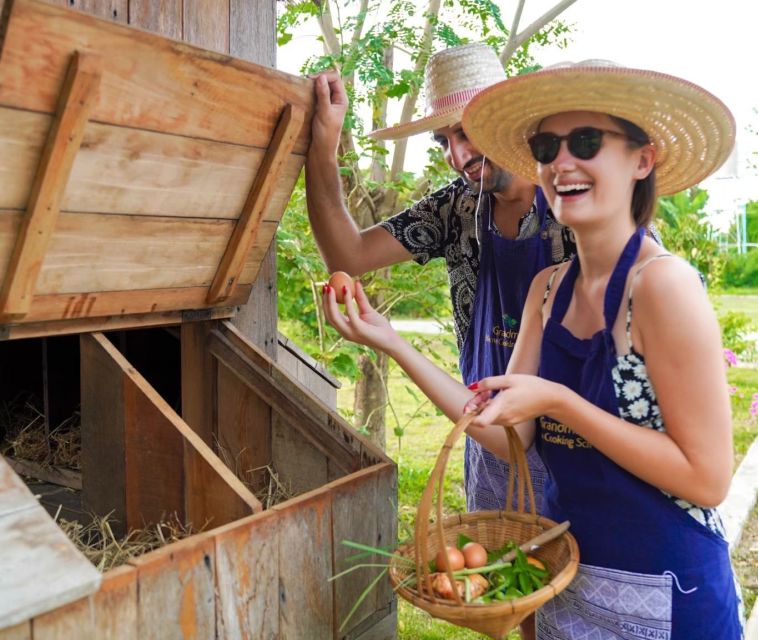
- Feed the chickens
- Collect fresh eggs
- Give them a gentle hug (yes, it’s part of the experience)
- Pick mushrooms from a mushroom hut
- Smell herbs and fruits and learn how they’re used
This matters because Thai cuisine relies heavily on fresh aromatics and herbs. When you can connect a fragrant herb to the dish you’ll cook later, you understand why Thai food tastes the way it does. It stops being mysterious.
You might also harvest vegetables or herbs depending on what’s ready that day. The class keeps it flexible: even if harvesting is limited, you still get the key flavor exposure through tasting and explanations.
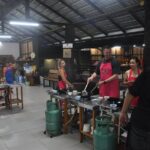
And the farm kitchen setup is a big quality signal. Several people point out that the open-air kitchen area and prep space are clean and well organized, so you’re cooking in comfort rather than chaos.
Open-air kitchen stations: cook Thai classics step by step
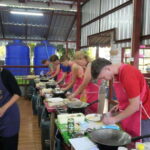
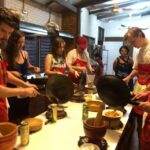
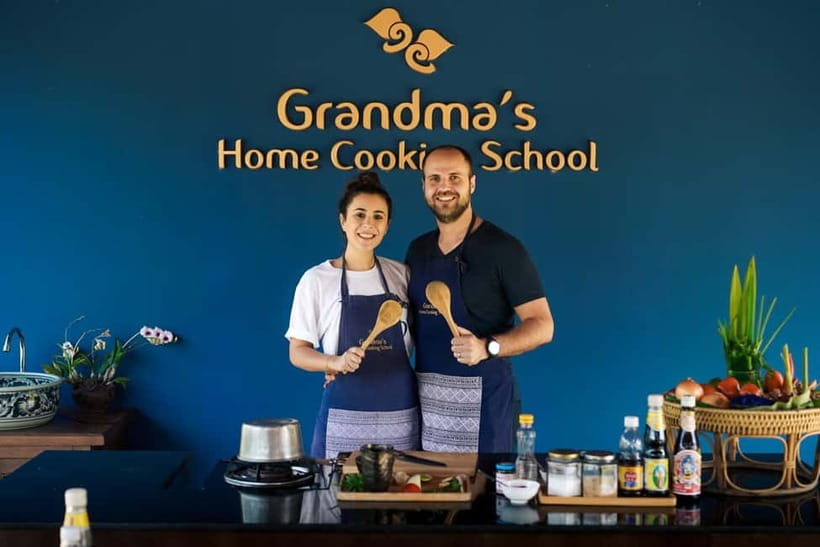
Once cooking time starts, everything gets hands-on. The class uses a format that feels built for confidence: you cook at your own station, and the instructor guides you through the steps.
You’ll cook Thai favorites such as:
- Pad Thai
- Pad Kra Prao
- Green Curry
- Red Curry
- Panang
- Tom Yum
- Tom Kha
- Som Tam
- Spring rolls
You’ll also make curry paste from scratch using a mortar and pestle. That part is a big deal. Store-bought curry paste can work, but learning how paste starts (and how the grind changes texture and flavor) gives you a real foundation for future cooking.
And then there’s the Chiang Mai special: Khao Soi. It’s not just included as a dish name. The class treats it like a highlight, and it’s a great way to connect the cooking to the region you’re actually visiting.
A practical tip: go hungry. People consistently comment that you eat a lot during the class, especially on longer sessions.
Mango sticky rice and the coconut milk twist (only on certain days)
Thai desserts can be tricky to recreate later, so it’s smart that the menu includes mango sticky rice. On morning and afternoon sessions, mango sticky rice is served as part of the experience. On full day and evening sessions, you’ll learn it hands-on as part of cooking.
Then, if you choose the full-day option, you get the extra signature step: making fresh coconut milk the traditional way. That’s done with a wooden grater, which makes the process feel more like craftsmanship than a quick convenience shortcut.
Why this is worth it:
- Coconut milk texture affects curry body and richness.
- Once you’ve made it yourself, you understand how Thai cooks chase balance—creamy but not heavy, rich but not bland.
If you care about authenticity and technique, the full-day option is the one that gives you the most “from scratch” feeling.
You can also read our reviews of more tours and experiences in Chiang Mai


Khao Soi and curry paste: the Chiang Mai flavors that stick
A lot of Thai cooking classes teach you how to assemble dishes. This one spends time on the flavors that define Chiang Mai cooking.
Khao Soi is the standout example. It’s a curry noodle soup that feels like Chiang Mai’s culinary signature, and the class experience is geared toward getting you comfortable with the core curry flavors first, then translating them to the final dish.
Curry paste from scratch also makes the day more memorable. The mortar-and-pestle part isn’t just for theater. It’s where you learn how ingredients behave when they’re crushed and combined, and that changes how you think about seasoning.
If you’ve ever tried to cook Thai food later and felt like something was missing, this is where the missing piece often lives: the base. When your base is right, the rest of the dish tends to fall into place.
How instructors handle gluten-free, halal, and vegetarian cooking
This is one of the most practical strengths of the school. The class offers vegetarian and halal options, and it can adjust ingredients for dietary needs when you tell them upfront.
Several guides are mentioned with strong allergy-handling skills in the feedback you shared, including support for gluten intolerance. The key is timing: each guest chooses their menu before cooking begins, and dietary notes should be shared before the class starts so the kitchen can prepare accordingly.
What this means for you:
- You won’t have to guess your way through what’s safe.
- You can still cook the dishes that fit your needs, rather than watching others eat.
This is also where the “family” vibe helps. The instructors aren’t just teaching technique; they’re steering the whole day so you can participate fully.
Transportation and timing: plan for a real day out of your hotel
You get hotel pick-up and drop-off in an air-conditioned van within 5 km of Chiang Mai city center. If you’re outside that range, you’ll meet at a nearby point or there may be a small extra charge.
One detail to note: the pickup time is listed around 3:30 PM to 4:00 PM for at least one session format. So don’t assume every class starts the same way. Check your specific session time and plan to be ready at the lobby.
Why logistics matter here: the class is long enough that you should treat it like a full outing, not a quick afternoon activity. Comfortable shoes are a must for the farm walk, and a sun hat helps because you’ll be outside.
The transport quality is repeatedly praised, which usually means fewer late-start headaches and a smoother return to your hotel.
What you’ll eat, how much, and why it’s not just a demo
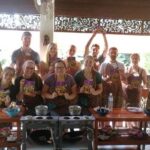
You’ll cook multiple dishes and then sit down to share the feast you made. Portions can surprise you, even if you cook with confidence at home.
On shorter sessions, you’ll still end up with a meal you can feel. People describe leaving full and happy, and longer sessions naturally give you more food because you cook more dishes and include more steps like curry paste or extra desserts depending on the schedule.
There’s also a small “bonus” effect: the class makes you taste while you go. That helps you learn what correct balance feels like. Instead of only hearing instructions, you can check yourself as you cook.
Some people also note a photographer on-site with free photos provided. That’s not something you should count on as a guarantee, but if it’s available during your session, take the photos. They’re a useful reminder of techniques and dish presentation.
Price and value: what $34 buys in real skills and a real meal
At about $34 per person (depending on the session), this class looks like a bargain when you compare it to what you’d pay for a market tour plus a serious cooking workshop.
Here’s where the value comes from:
- Market ingredient walk + farm activities + cooking class at your station
- A menu that can include multiple Thai classics plus Khao Soi
- Step-by-step instruction, not just watching someone else cook
- Digital recipe e-book you can use later
- Welcome drink and herbal drink during the class, plus unlimited drinking water
Most cooking classes charge for instruction. This one charges for the full experience: learning ingredients, handling fresh produce, cooking multiple dishes, then eating what you made in a setting that feels authentic to the countryside.
If you’re only in Chiang Mai briefly, this is one of the better “bang for your day” choices because it teaches technique and gives you a concrete set of dishes to recreate.
Who should book this cooking class in Chiang Mai
This experience is a strong match if you want:
- Real Thai cooking fundamentals, especially curry and noodle dishes like Khao Soi
- A market and farm connection, not only a kitchen lesson
- A social day that still gives you hands-on time at your own station
- Food education you can use back home
It’s also good for families, because the farm and cooking grounds can be a fun backdrop. Just note that children under 10 are considered visitors and won’t have their own station unless booked at the adult price, though they can join with parents.
If you’re the type who likes to learn by doing, you’ll likely enjoy this more than a restaurant meal where you just observe.
Quick practical prep (so your day stays easy)
Bring:
- Comfortable shoes (farm walking is real)
- Sun hat (outdoor time)
Decide:
- If you want gluten-free, vegetarian, or halal, tell the school before class starts so adjustments can be made.
Eat strategy:
- Don’t show up stuffed. You’ll cook and then eat a full meal afterward.
Should you book this Chiang Mai cooking class?
Yes, if you want a day that teaches Thai flavor logic, not just one-off recipes. The market walk and organic farm activities give the ingredients context, and the kitchen stations make sure you actually cook, not just watch. The inclusion of Khao Soi and options like curry paste from scratch make it especially strong for people who want to recreate Chiang Mai food later.
Consider skipping or choosing a different session if you dislike farm walking, heat, or being outdoors. Otherwise, this is one of the more complete cooking experiences in Chiang Mai for the money, with consistently high marks for instructors, organization, and the sheer amount of delicious food.
FAQ
How long is the cooking experience in Chiang Mai?
The duration ranges from about 210 minutes up to 7 hours, depending on which session you choose (morning, afternoon, evening, or full day).
Is hotel pick-up included?
Yes. Pick-up and drop-off in an air-conditioned van are included for hotels within 5 km of Chiang Mai city center.
Do I need cooking experience?
No. The instructors guide you step by step, and you’ll cook at your own station.
Can the class handle vegetarian, halal, or dietary allergies?
Yes. Vegetarian and halal options are available, and you can request gluten-free or allergy adjustments before the class starts.
Is mango sticky rice included?
Yes. Mango sticky rice is served in the morning and afternoon sessions. In full day and evening sessions, it’s taught as part of the cooking.
Is coconut milk making included?
Making fresh coconut milk using a traditional coconut grater is included with the full-day option only.