
REVIEW · CHIANG MAI
Completed Thai Silk Class Experience
Book on Viator →Operated by GoWithJoe · Bookable on Viator
Silk looks simple until you try the steps. This 6-hour Chiang Mai class turns Thai silk production into hands-on learning. You’ll see the whole workflow, from natural tie-dye through spinning and cross weaving, then you’ll leave with something you made yourself.
Two things I’d prioritize: the included lunch (so you’re not hunting food mid-class), and the chance to create a handmade take-home souvenir. The main watch-out is that it depends on good weather, so plan for a possible date change.
In This Review
- Thai Silk Basics With Real Hands-On Craft Time
- Key Things I’d Pay Attention To Before You Go
- Why This Chiang Mai Silk Class Feels Like Real Work, Not a Demo
- Pickup, Timing, and the 9:00 to 15:00 Rhythm
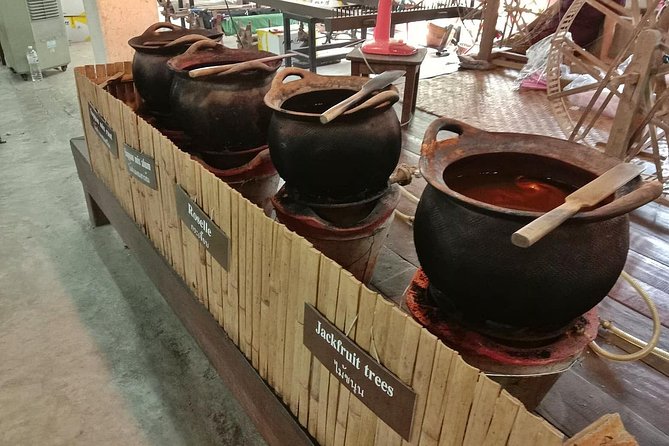
- Natural Tie-Dye: Learning Color the Practical Way
- Silk Thread Spinning: From Thread Basics to Understanding the Material
- Cross Weaving: Making Something You Can Actually Recognize
- Lunch Break That Keeps the Day Moving
- The Take-Home Handmade Souvenir: What You’re Really Buying
- Price and Value: Is $124.23 Worth It?
- Who This Class Suits (and Who Might Skip It)
- Practical Tips for a Smooth Craft Morning
- FAQ
- FAQ
- How long is the Thai silk class in Chiang Mai?
- What time does the class start?
- Is hotel pickup and drop-off included?
- What’s included in the price?
- What will I make during the class?
- How large is the group?
- Does the class require good weather?
- Is lunch provided?
- What items are not included?
- What’s the cancellation window for a full refund?
- Should You Book This Thai Silk Class in Chiang Mai?
Thai Silk Basics With Real Hands-On Craft Time
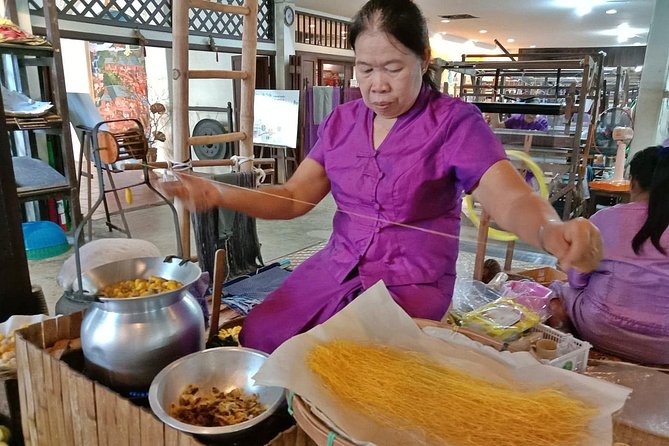
In a small group capped at 10 people, the pace feels human, not rushed. I like that the class focuses on fundamentals, not just watching a finished product roll past your eyes. You’ll cover natural tie-dye, silk thread spinning, and cross weaving, then turn your learning into a personal handmade item.
One more practical consideration: you’re choosing a workshop experience, so you’ll want to be ready for a full morning-to-early-afternoon block rather than a quick stop-and-snap kind of outing.
Key Things I’d Pay Attention To Before You Go
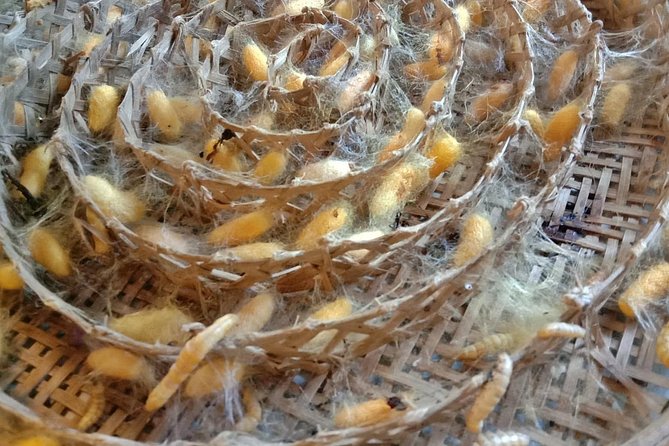
- Small group size (max 10) keeps the class interactive
- Learn all stages: natural tie-dye, spinning, then cross weaving
- Hotel pickup and drop-off reduces the hassle in Chiang Mai
- You make your own product to take home as a real souvenir
- Lunch included helps you stay focused during the hands-on parts
- Good weather matters, since the experience requires it
You can also read our reviews of more tours and experiences in Chiang Mai



Why This Chiang Mai Silk Class Feels Like Real Work, Not a Demo
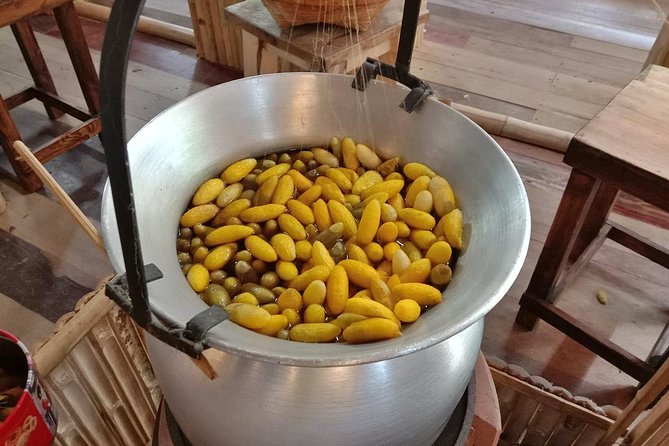
A silk class can go two ways: mostly talk, or genuinely craft-focused. This one leans craft-focused. The structure is built around the complete textile production sequence, so you’re not learning facts in a vacuum. You’re learning what changes from step to step—color work first, then thread creation, then weaving.
What I like most is that the class treats silk as a process. Natural tie-dye isn’t just a color trick; it’s the starting point. Spinning silk thread is the next link in the chain. Then cross weaving is where the work becomes visible as fabric and pattern. That order matters because it helps you understand what each stage is for, and why the materials and techniques need to match.
The review detail that stands out here: the workshop has a big show-floor feel, with plenty to look at for anyone who wants to browse. And you’ll get friendly demonstrations from the people doing the work, including women who weave and spin. That combination—structured learning plus real maker time—tends to be the difference between feeling like you attended a class and feeling like you participated in making something.
Pickup, Timing, and the 9:00 to 15:00 Rhythm
The class starts at 9:00 am and runs about 6 hours. That timing is good if you want an activity that doesn’t swallow your whole day, but still gives you enough time to go step-by-step without constantly thinking about the clock.
Hotel pickup and drop-off are offered, which is a big value point in Chiang Mai. The city can be easy to navigate, but a workshop day is easier when you’re not planning transport while also trying to pay attention to instructions.
Also, you’ll be traveling in an air-conditioned vehicle. That matters in Thailand’s heat, especially in the morning when you might already be walking around before the class begins.
Finally, there’s a mobile ticket involved, which is one less thing to misplace. If you’re the type who hates paper tickets, you’ll appreciate that small convenience.
Natural Tie-Dye: Learning Color the Practical Way
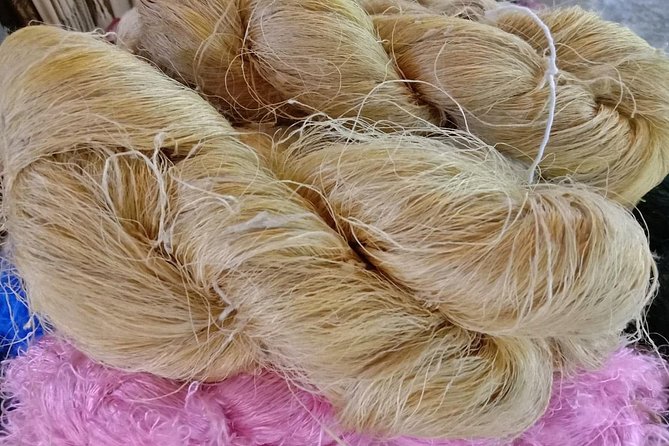
Natural tie-dye is listed as a core part of the experience, and that’s not a throwaway segment. The class is built to teach the basics of working with silk, and tie-dye is usually the first place you’ll see the connection between materials, preparation, and the final look.
Here’s what this usually means for your brain: instead of thinking only about the end result, you’re learning how the process affects the fabric. Natural dyes behave differently than synthetic ones, and tie-dye outcomes can vary based on how the material is handled. That means your souvenir won’t just be pretty—it’ll also reflect what you actually did during the process.
Tip for getting the most out of this part: watch the demonstrations closely before you start your own work. Tie-dye steps often include small hand positions and timing choices. If you treat it like a paint-by-numbers craft, you’ll miss why people make repeated adjustments.
Silk Thread Spinning: From Thread Basics to Understanding the Material
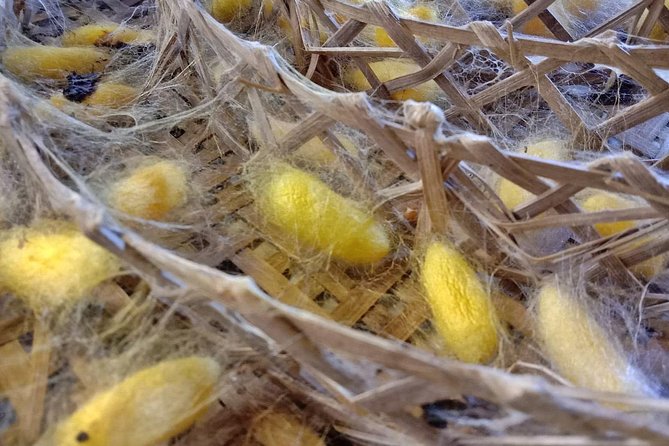
After tie-dye, the class moves into silk thread spinning. This is where many people’s silk assumptions get challenged. You go from seeing silk as a finished fabric to seeing it as usable thread that needs to be made (and made correctly).
Spinning is also a great learning step because it teaches you a different set of skills than you used for dyeing. Instead of focusing on color and pattern, you focus on technique and thread control. It’s also where you’re more likely to feel the workshop’s “real craft” character—because spinning isn’t something you can fake. The instructor’s guidance matters.
The experience emphasizes learning from a local, so you’re not just absorbing generic ideas. You’re picking up method and terminology that comes from people who actually do the work as part of textile production.




Cross Weaving: Making Something You Can Actually Recognize
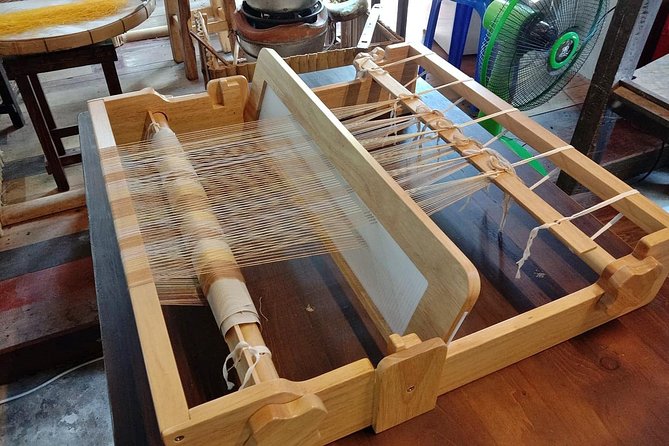
The final major craft skill listed is cross weaving. This part turns everything you learned into something tangible. Even if you’re not leaving as a professional weaver, you’ll understand how cross weaving builds structure and pattern from thread.
This is also where you’ll likely feel most proud, because weaving is visible progress. You can see how the repeated action creates fabric. That’s a key reason people enjoy this class: it’s one thing to understand silk; it’s another thing to create a piece that reflects your own handwork.
The class description also promises that you’ll create a handmade souvenir to take home. That’s not just a marketing line. In a craft class, the best souvenirs are the ones that represent the steps you practiced. Cross weaving is usually the step that makes that possible, because it creates a “finished” feel compared with earlier stages.
Lunch Break That Keeps the Day Moving

An included lunch is part of the plan. In a 6-hour craft day, lunch isn’t just about food—it’s about energy and focus. If you’ve ever tried to do a hands-on activity while hungry, you already know how fast that turns into a bad experience.
With lunch included, you can stay in rhythm. You’re not stuck choosing between getting fed and staying on schedule. That matters when the class includes multiple skill blocks (tie-dye, spinning, weaving) rather than one long demonstration.
If you’re someone who likes to plan ahead: eat a normal breakfast before pickup, because you’ll have a set lunch as part of the experience. Then you can treat the class like the main event, not a side quest.
The Take-Home Handmade Souvenir: What You’re Really Buying
You’re paying for more than instruction. You’re paying for a chance to take home a handmade product that comes from the actual process you learned. The experience specifically notes that you make your own product and take it back as a souvenir.
Value-wise, that changes the math. A workshop ticket can be hard to justify when it feels like a show. Here, your output is the point. If you care about making a souvenir that feels personal—something tied to your hands and your learning—this is the kind of experience that can justify its price.
There’s also a practical angle: you don’t need to spend time bargaining for a silk item at the end of the day. Even if you end up browsing other silk products afterward, you already have a handmade piece to anchor the trip in something real.
Price and Value: Is $124.23 Worth It?
At $124.23 per person, you’re not in the “cheap tour” bracket. But the value looks more reasonable when you stack what you get:
- A full 6-hour small-group class
- Hotel pickup and drop-off
- Air-conditioned vehicle
- Instruction in multiple stages: natural tie-dye, spinning, cross weaving
- Lunch included
- A handmade product you create and take home
Also, the class caps at 10 travelers, which usually means more attention during hands-on steps. When a workshop has a small group limit, you spend less time waiting and more time making.
Another small signal of planning value: the experience is commonly booked around 22 days in advance on average. That can mean it fills up, so if you’re in Chiang Mai for only a few days, don’t wait until the last minute.
Bottom line: I’d see this as a craft-focused experience where the take-home item and instruction time are part of the payment, not an optional bonus.
Who This Class Suits (and Who Might Skip It)
This fits you if you like learning by doing. You want your day to include working with materials, not just watching. It’s also a good match if you’re traveling with someone who likes craft and would rather leave with a meaningful object than a generic shopping stop.
Most people can participate—“most travelers can participate” is stated—so you don’t need to be an expert. But it is still a workshop format, so you should enjoy being at the center of the action rather than taking photos from the sidelines.
You might skip this if you’re short on time in Chiang Mai and only want a quick cultural taste. With a 6-hour duration and pickup included, it’s designed as a main event.
Practical Tips for a Smooth Craft Morning
A few common-sense moves will help you get the most out of your silk class:
- Plan for a full morning and early afternoon. The start time is 9:00 am, and it’s about 6 hours total.
- Dress comfortably for workshop work. Even when the exact texture or mess level isn’t specified, you’ll be doing hands-on craft tasks.
- Stay flexible. The experience requires good weather, so if conditions are off, the organizer may change the date or refund.
- If you’re a first-time buyer of Thai silk, treat this as learning first. Once you understand dyeing, thread, and weaving, shopping silk becomes way less mysterious.
- If you’re the kind of person who likes options, note that the workshop shop area is described as huge, with things for everyone.
FAQ
FAQ
How long is the Thai silk class in Chiang Mai?
It runs for about 6 hours.
What time does the class start?
The start time is 9:00 am.
Is hotel pickup and drop-off included?
Yes, pickup and drop-off are offered for ease.
What’s included in the price?
Lunch, an air-conditioned vehicle, the listed activities, and your own product made are included.
What will I make during the class?
You’ll create a handmade silk souvenir, based on learning natural tie-dye, silk thread spinning, and cross weaving.
How large is the group?
The experience has a maximum of 10 travelers.
Does the class require good weather?
Yes, the experience requires good weather. If it’s canceled due to poor weather, you’ll be offered a different date or a full refund.
Is lunch provided?
Yes, lunch is included.
What items are not included?
Personal expenses are not included.
What’s the cancellation window for a full refund?
You can cancel up to 24 hours in advance of the experience start time for a full refund.
Should You Book This Thai Silk Class in Chiang Mai?
Book it if you want a hands-on souvenir with real craft learning behind it. The best part is the structure: you’re not just touring a silk shop—you’re learning natural tie-dye, silk thread spinning, and cross weaving, then taking home what you made.
Skip it if you only have a small pocket of time or you don’t want a workshop-style day. With a 9:00 am start and about 6 hours, this works best when you can treat it as your main activity.
If your schedule can flex a bit, you’ll also be helped by the weather requirement. In Chiang Mai, that’s normal. Plan for it, and you’ll likely enjoy a day that ends with a souvenir that actually has a story.