REVIEW · CHIANG MAI
Private 3 Day Chiang Mai and Chiang Rai Tour
Book on Viator →Operated by Chiang Mai Tour Center · Bookable on Viator
Sticky waterfalls and temple colors in three days. I love the smooth hotel pickup and air-conditioned Toyota van, and I love that the route mixes a sticky limestone waterfall climb, ethical elephant time, and Chiang Rai’s world-famous blue and white temples.
One possible drawback: this is an active itinerary. Expect stairs, uneven ground, and a cave stop, so bring good shoes and be ready for a few longer stretches on the road.
In This Review
- Key points at a glance
- The big picture: why this 3-day North Thailand mix works
- Day 1 in Chiang Mai: sticky limestone, elephants, hill tribes, and a cave
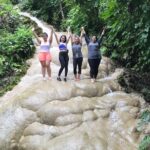
- Buatong Sticky Waterfall: where you climb instead of just watch
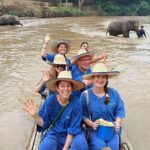
- Doodoi Elephant Home (ethical program): learning the basics first
- Karen Long Neck Village: cultural context with a clear visual tradition
- Chiang Dao Cave: a historical thread and Burmese-style Buddha images
- Day 2 beyond the city: hilltop temples, Doi Tung royalty, Mae Sai shopping, and the Golden Triangle
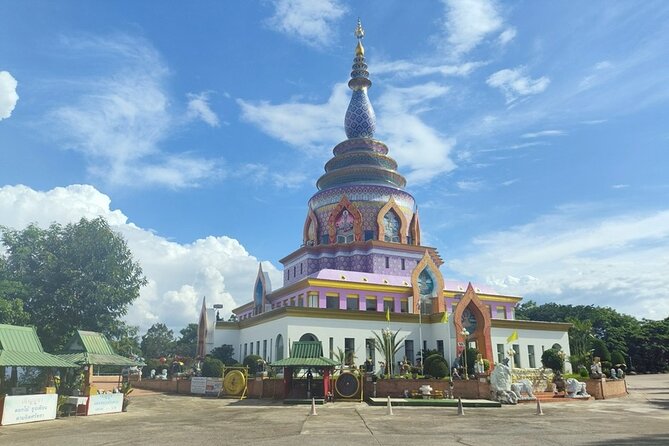
- Wat Thaton: temple time with a hilltop setting
- Doi Tung Royal Villa: Princess Mother’s role and hill tribe development
- Mae Sai: a border trading point with Chinese products
- Golden Triangle: where Thailand, Laos, and Myanmar meet
- Day 3 in Chiang Rai: black house art, blue temple teaching, white temple purity, tea, and hot springs
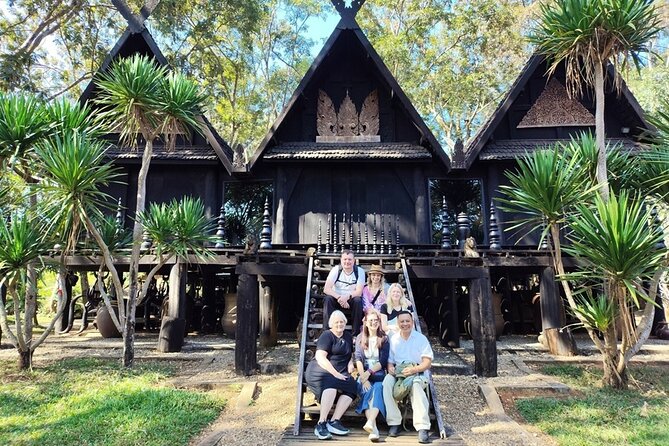
- Baan Dam (Black Museum): art inside a striking black house
- Wat Rong Seur Ten (Blue Temple): Buddha teaching, painted in sky blue
- Singha Park tea plantation: fresh air and a chance to taste
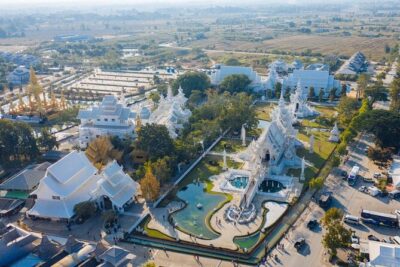
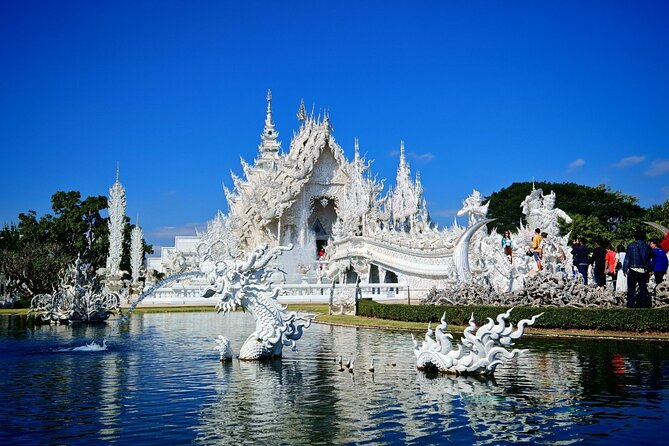
- Wat Rong Khun (White Temple): purity of heart plus contemporary mural work
- Mae Khachan Hot Spring: foot soaking and pools hot enough to boil eggs
- What you’re really buying: private comfort plus problem-free admissions
- The pacing and daily stops: where it can feel long
- Practical advice so the day feels good, not just complete
- Should you book this Chiang Mai and Chiang Rai private 3-day tour?
- FAQ
- How long is the Private 3 Day Chiang Mai and Chiang Rai Tour?
- What time does the tour start?
- Is pickup and drop-off included?
- Is this a private tour?
- What transportation is provided?
- Are entrance fees included?
- Are meals included?
- What language is the guide?
- What is the minimum number of people needed to start?
- How far in advance do I need to cancel for a full refund?
Key points at a glance
- Private, only-your-group touring with pick-up and drop-off from Chiang Mai hotels.
- Sticky Buatong Waterfall climbing where you can walk and climb up the natural limestone.
- Ethical elephant program structure with a briefing and hands-on learning from the chief elephant trainer.
- Three major Chiang Rai temple styles across Blue Temple and White Temple plus the Black House museum.
- Border-area experiences at Mae Sai and the Golden Triangle with Phu Khao Temple viewpoints.
- 3 included lunches and a no-stress setup where all fees and taxes are handled.
The big picture: why this 3-day North Thailand mix works
This private 3-day route is built for people who want a lot of northern Thailand without constantly thinking about tickets, timing, or transport. You cover Chiang Mai and Chiang Rai in one sweep, then spend your energy on actual experiences: climbing the waterfall, learning elephant care basics, walking into caves, and photographing temples that look like they belong in a dream.
I also like the balance of types of stops. You’re not stuck in only temples, and you’re not stuck only in nature. You get hill-tribe culture elements, border-market energy at Mae Sai, and the landmark temple trio in Chiang Rai—Blue, White, and a black-house art stop.
The tour runs with a start time of 8:30 am and uses a Toyota van with air-conditioning, plus drinking water and refreshing towels. That matters because north Thailand can feel hot and bright, especially between morning sightseeing stops.
You can also read our reviews of more private tours in Chiang Mai

Day 1 in Chiang Mai: sticky limestone, elephants, hill tribes, and a cave
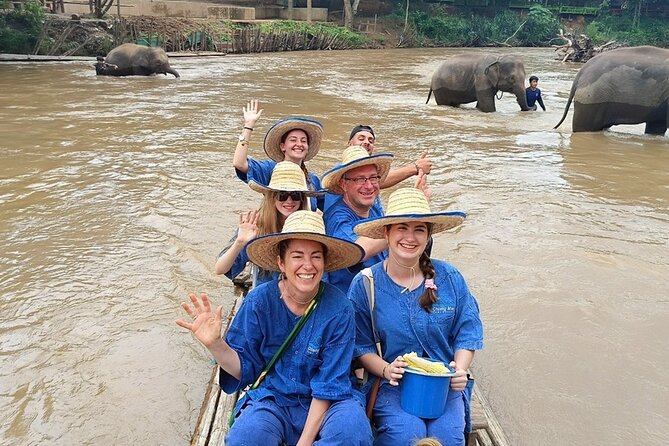
Day 1 is the “wake up and move” day. You start at Buatong Waterfall (Sticky Waterfall), then head into an ethical elephant program, a long-neck hill-tribe village visit, and finish with Chiang Dao Cave.
Buatong Sticky Waterfall: where you climb instead of just watch
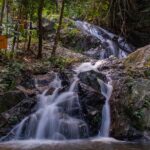
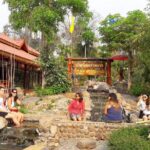
At Buatong, you’re not only standing on a viewing spot. You enjoy walking and climbing the waterfall, because it’s made from natural limestone. The advantage is huge for most visitors: you can work your way up at your own pace, and you still get that dramatic waterfall payoff even if you don’t want a strenuous hike.
It’s also a stop where the “adventure” part feels practical. The tour lists the admission as free for this stop, and the time allocation is about 1 hour. That’s enough to enjoy the climb without turning the day into a full-day trek.
My tip: wear shoes you don’t mind getting slick. Even if the tour provides water and towels, your feet will do the real work here.
Doodoi Elephant Home (ethical program): learning the basics first
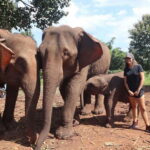
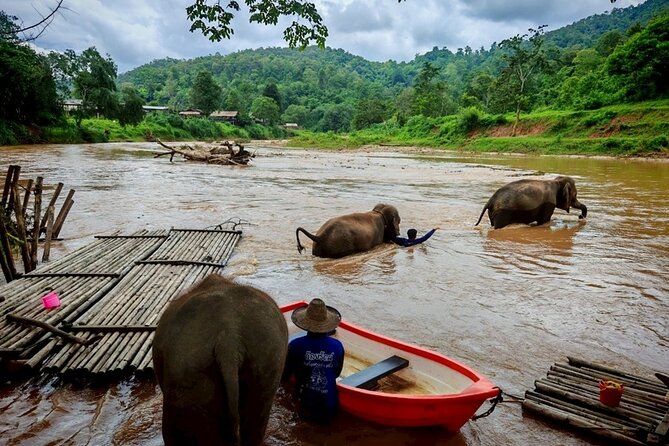
Next is Doodoi Elephant Home Chiang Mai, described as an Elephant Ethical program in the Mae Tang area. The structure matters. You meet the chief elephant trainer and get a briefing on basic elephant handling, then you move into the activity with guidance.
The emotional payoff here is often better when the day is framed as learning and care rather than just watching. This stop also runs longer than the waterfall: it’s listed at about 3 hours. So plan to slow down a bit and treat it like an experience with teaching, not a quick photo stop.
Karen Long Neck Village: cultural context with a clear visual tradition
Then you stop by Karen Long Neck Village. The information shared with you is specific: the long-neck hill tribe ladies wear spiraling brass rings around their necks, which can weigh up to 5 kilograms / 11 pounds. The tour also notes that the community immigrated from Khaya State in Myanmar.
This is one of those experiences where how you approach it matters. Go in with respect, ask questions through your guide, and focus on understanding the tradition as part of a community’s life—not just as a spectacle.
It’s scheduled for about 1 hour, with admission included.
You can also read our reviews of more tours and experiences in Chiang Mai
Chiang Dao Cave: a historical thread and Burmese-style Buddha images
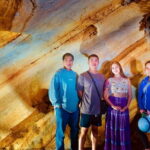
After that, you go to Chiang Dao Cave for about 2 hours. The tour connects the cave to regional history: Burmese soldiers once rested their troops here before attacking Chiang Mai. Inside, you can see Buddha images in Burmese style.
A cave stop is a nice change of pace after outdoor activity. Just remember: caves often mean cooler air, but also uneven walking and the chance of slippery patches. Bring shoes that handle more than just temple floors.
Day 2 beyond the city: hilltop temples, Doi Tung royalty, Mae Sai shopping, and the Golden Triangle
Day 2 is a north-to-border day. You leave the Chiang Dao area, then head toward Thaton, Doi Tung Royal Villa, Mae Sai, and the Golden Triangle.
Wat Thaton: temple time with a hilltop setting
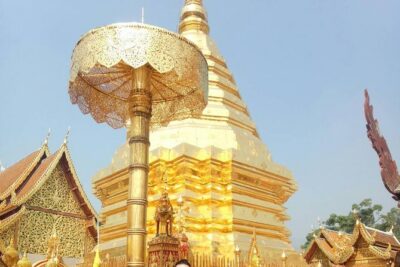
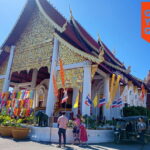
You visit Wat Thaton for about 3 hours. The key detail here is the location: the temple is on the top of the hill, so you should expect a climb and a longer stop than a quick temple photo.
Admission is included, which helps you keep the day smooth.
Doi Tung Royal Villa: Princess Mother’s role and hill tribe development
Next is Doi Tung Royal Villa, connected to the Princess Mother of King Ramam 9th (as listed by the tour). The tour emphasizes that she spent time to look after and develop hill tribes life.
This stop helps you understand why northern Thailand is not just landscapes and temples—it’s also people, policies, and long-term development. It’s scheduled for about 3 hours and has admission included.
If you enjoy learning about how places change, this is one of the more meaningful “context” stops in the plan.
Mae Sai: a border trading point with Chinese products
Then you head to Mae Sai, Thailand’s border area with Myanmar. The tour calls it a commercial trading point where Chinese products are available if you’re interested. There’s also a free stop at a viewpoint, where you can see the border region.
This is where the pace feels more like real life: markets, movement, and the sense that borders aren’t just lines on a map. It’s listed at about 1 hour plus the viewpoint stop.
Golden Triangle: where Thailand, Laos, and Myanmar meet
Finally, you reach the Golden Triangle, the area where the borders meet: Thailand, Laos, and Myanmar. The tour notes it was once an opium trading area. You take pictures from the balcony of Phu Khao Temple, overlooking the border area from a viewpoint setup.
The stop is extremely short in time—listed at about 2 minutes for the “admission ticket free” part—so don’t plan to treat this as a long sightseeing day. Treat it like the photo moment and a quick arrival-and-overview.
Day 3 in Chiang Rai: black house art, blue temple teaching, white temple purity, tea, and hot springs
Day 3 is your Chiang Rai color and culture day. It includes Baan Dam Museum, Wat Rong Seur Ten (Blue Temple), Singha Park for tea, Wat Rong Khun (White Temple), and Mae Khachan Hot Spring.
Baan Dam (Black Museum): art inside a striking black house
The day begins with Baan Dam Museum (Ban Dum), described as a black house with large art collections established by artist Tawan Datchanee. You get about 1 hour here.
I like museum stops like this because they give your brain a break from outdoor walking. It also gives you a “Thai creativity” angle that complements the religious architecture you see later.
Wat Rong Seur Ten (Blue Temple): Buddha teaching, painted in sky blue
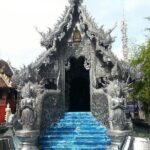
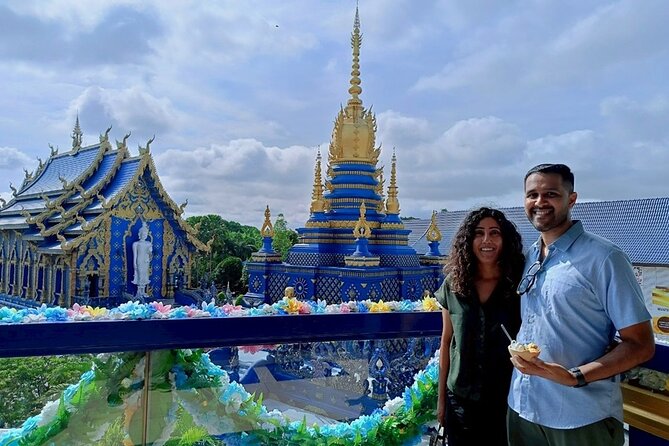
Next is Wat Rong Seur Ten (Blue Temple) for about 1 hour. The tour describes the temple as blue decorated to represent the Buddha teaching spread to many different places around the world, plus the blue sky covering the world.
Blue temples are a strong visual draw, but this one is also thematic. You’re not just looking at color; you’re being guided through what the design is meant to symbolize.
Admission here is listed as free.
Singha Park tea plantation: fresh air and a chance to taste
Then you go to Singha Park, built around a tea plantation and a fresh atmosphere. You can taste tea if you prefer and buy quality tea to take home. Admission is listed as free, with about 1 hour for the stop.
This is a good break between major temple visits. It’s also one of the easier souvenir routes: you’re buying something tied directly to the region, not random items in a market.
My tip: if tea tasting is on the table for your group, try it while you’re there rather than later. It’s part of the point of the stop.
Wat Rong Khun (White Temple): purity of heart plus contemporary mural work
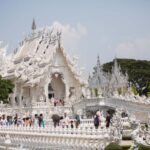
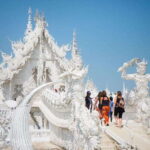
Next is Wat Rong Khun (White Temple) for about 2 hours. This temple is described as signifying purity of the heart. The murals are painted in a contemporary style by artist Chalermchai Kositpipat, who devotes his work to the concept of the temple.
White temples can feel like “instant photo tourism.” The longer time here helps you slow down. You can walk through, look at the details, and get your photos without feeling like you’re rushing.
Admission is listed as included for this stop.
Mae Khachan Hot Spring: foot soaking and pools hot enough to boil eggs
The final stop is Mae Khachan Hot Spring, where you do foot soaking in warm pools believed to help with skin and joints. The tour also notes there’s a separate pool so hot that you can even boil eggs.
The scheduled time is short—about 1 minute for the listed admission free entry—so I’d treat it as a quick reset, not a long spa session.
This is a smart closer for the itinerary. After temples, caves, and a day of border-area walking, your feet deserve the payoff.
What you’re really buying: private comfort plus problem-free admissions
The price for this private tour is $634.89 per person. For many people, the real value is not any single attraction—it’s the “friction” that gets removed.
Here’s what you’re not doing:
- You’re not figuring out transport between Chiang Mai and Chiang Rai stops.
- You’re not managing tickets for multiple sights.
- You’re not coordinating lunch on your own for 3 days.
On this tour, the included basics are clear: private transportation in an air-conditioned Toyota van, English-speaking guide, pickup and drop-off from Chiang Mai hotels, drinking water and refreshing towels, and all fees and taxes. Lunch is included three times, which is a big deal in Thailand north-country days when you might otherwise lose time hunting for a dependable meal.
Price does come with a trade-off. If you’re the type who loves free-wheeling and random side stops, a structured program can feel a bit strict. But the private format usually makes it easier to adjust within reason.
Also note what’s not included: alcoholic beverages, soft drinks, and alcohol drinks. Personal expenses are on you. So if tea tasting, snacks, or drinks feel like part of your travel routine, budget for them.
The pacing and daily stops: where it can feel long
The schedule packs in a lot. You’ll have long stops like 3 hours at the elephant program and 3 hours at Wat Thaton and Doi Tung Royal Villa, plus multiple 1–2 hour attractions.
That’s fine if you like active days and don’t mind road time. It’s less ideal if you want slow, sleepy mornings every day.
The good news: the tour is private. So you’re not managing group logistics, and the guide can steer timing so you’re not spending all day waiting.
Practical advice so the day feels good, not just complete
This route combines caves, limestone surfaces, and temple walking. You’ll be happier if you plan for comfort more than fashion.
- Shoes: closed-toe and grippy. You’ll thank yourself at the sticky waterfall and in cave areas.
- Layering: temple mornings can start cool, and afternoons can warm up fast. A light layer helps.
- Hydration: drinking water is included, but still sip regularly.
- Sun protection: temples and viewpoints can mean bright light. A hat and sunscreen go a long way.
- Money for extras: Mae Sai has shopping energy, and Singha Park offers tea to buy. Drinks beyond lunch are not included.
If you’re traveling with kids, the tour is described as child friendly with an experienced guide. Still, this itinerary is active, so check your family’s tolerance for walking and time on the move.
Should you book this Chiang Mai and Chiang Rai private 3-day tour?
If you want a straightforward way to see both provinces without turning your trip into a transportation puzzle, I think this is a strong pick. The biggest reasons to book are the private van with hotel pickup, the mix of hands-on nature and major temple architecture, and the fact that entrance fees and taxes are handled along with 3 included lunches.
I’d pass or reconsider if you want a very relaxed pace with minimal walking, or if you’re hoping the schedule leaves lots of room for random detours every hour. This plan is designed to be full, not empty.
If your goal is a memorable northern Thailand circuit—waterfall climbing, ethical elephant time, caves, border viewpoints, and the signature Blue and White Temples—this tour gives you a lot of that in just about 3 days, with the logistics taken care of.
FAQ
How long is the Private 3 Day Chiang Mai and Chiang Rai Tour?
The tour duration is listed as approximately 3 days.
What time does the tour start?
The start time is 8:30 am.
Is pickup and drop-off included?
Yes, the tour includes pickup and drop-off from Chiang Mai hotels.
Is this a private tour?
Yes, it’s a private tour/activity, and only your group participates.
What transportation is provided?
The tour uses a private Toyota van with air-conditioning.
Are entrance fees included?
Yes. The tour includes all fees and taxes, and some stops also list free admission tickets.
Are meals included?
Lunch is included for 3 days. Alcoholic beverages and soft drinks are not included.
What language is the guide?
The tour includes an English-speaking guide.
What is the minimum number of people needed to start?
The minimum is 2 persons to start the tour.
How far in advance do I need to cancel for a full refund?
You can cancel up to 6 days in advance of the experience for a full refund.