REVIEW · CHIANG MAI
Chiang Mai: Tuk-Tuk Evening Tour with Temples & Street Foods
Book on GetYourGuide →Operated by TripGuru Thailand · Bookable on GetYourGuide
Night streets feel louder in a tuk-tuk. This tour mixes a private tuk-tuk evening loop with temple time at Wat Suan Dok’s white chedis. I like the balance of history + food, and I especially like that the temple entries are handled for you. One thing to plan for: the temples can have strict dress rules, so bring long pants and cover your shoulders.
A small group (up to 4) keeps things relaxed, not rushed. And the guide quality stands out from names like Cookie, Pim, Leo, Lily, Gnana, and James—each one described as helpful and chatty while you’re moving and eating. The main drawback is that street food isn’t included, so you’ll want cash and a food budget.
In This Review
- Key Points to Know Before You Go
- A Private Tuk-Tuk Night Ride Through Chiang Mai’s Old City
- Wat Suan Dok: White Chedis and a Sri Lankan-Style Golden Pagoda
- Wat Lok Moli’s 14th-Century Lanna Charm and Royal Chedi
- Chang Phuak Gate Night Market: Your First Round of Real Chiang Mai Snacks
- Warorot Market and Ton Lam Yai Flower Market After Dark
- Price and Value: What $64 Buys You in 4 Hours
- Responsible Touring: GSTC Certification, Glass Bottles, and Carbon Offsets
- Small Group, Real Guidance: What the Best Guides Do on This Route
- What to Pack for a Chiang Mai Temple-and-Food Night
- Who Should Book, and Who Should Skip
- Should You Book the Tuk-Tuk Temples and Street Food Tour?
- FAQ
- How long is the Chiang Mai tuk-tuk evening tour?
- What does the tour cost?
- Which temple entrances are included?
- Is street food included in the price?
- Is this a private tour?
- Do you get hotel pickup?
- What languages are the guides?
- What should I wear for temple visits?
- Who is this tour not suitable for?
Key Points to Know Before You Go
- Private tuk-tuk at night for a full Old City feeling without spending the whole evening in traffic
- Wat Suan Dok with its famous white chedis and a 48-meter golden pagoda in Sri Lankan style (entrance included)
- Wat Lok Moli with a massive restored chedi and Lanna-style monastery settings that feel older than the streets
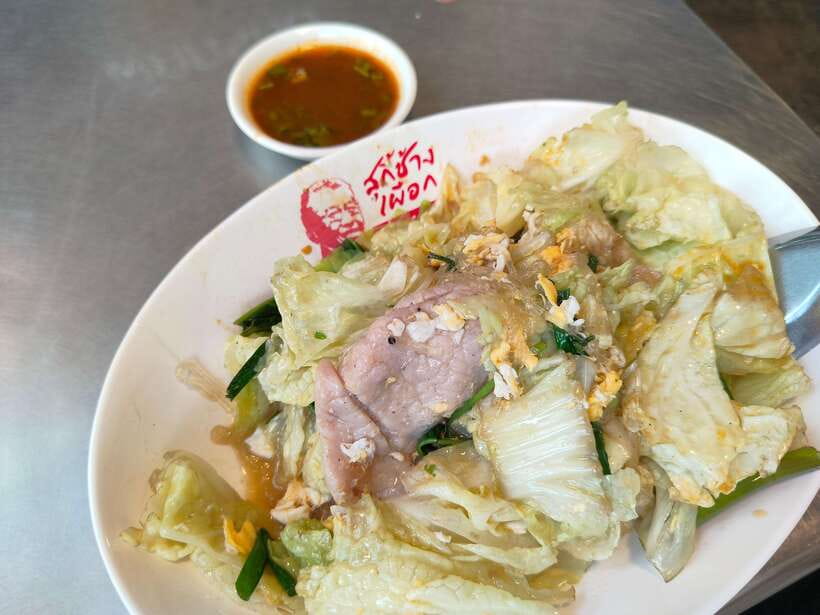
- Chang Phuak Gate Night Market for an easy first round of snacks, with help from your guide
- Warorot Market + Ton Lam Yai Flower Market to broaden the street-scene beyond one block
- GSTC-certified low-impact approach with water provided in glass bottles and carbon offsets per tour
A Private Tuk-Tuk Night Ride Through Chiang Mai’s Old City
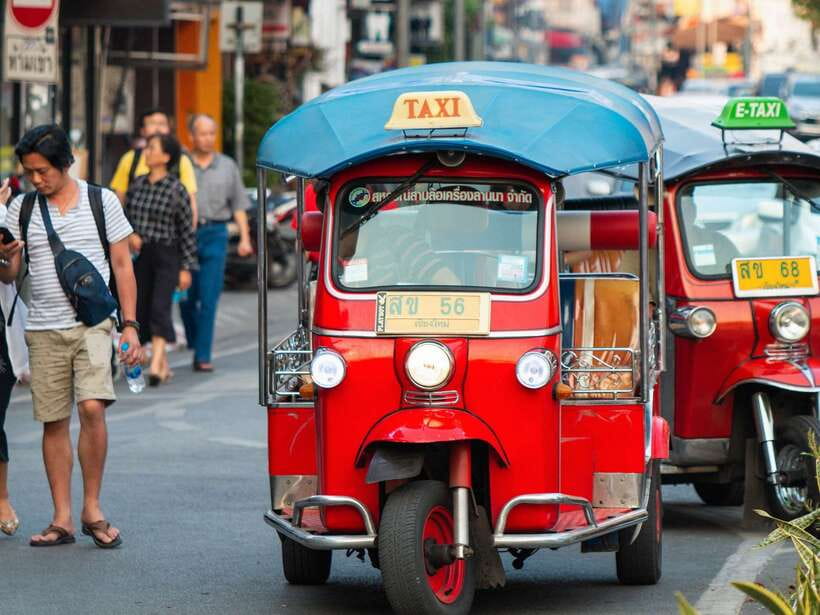
This is built for people who want the night view without over-planning. You start by boarding your tuk-tuk and rolling around Chiang Mai’s Old City area, taking in the walls and moat that frame the historic core. Even if you’ve walked here in daylight, the night angle changes everything: the city feels tighter, warmer, and more alive.
You’ll also learn the political story of the region while you ride. Chiang Mai was the capital of the Lanna Kingdom, then it was taken by the Burmese, and later it regained independence with help from the King of Thonburi. That quick history matters because it explains why the temples you visit feel so central to the city’s identity, not like random stops.
The tuk-tuk itself is usually the easy part. The part you need to think about is comfort. Night driving can mean more vibration and more time in open air, so wear long pants and bring insect repellent. Also, if you’re sensitive to uneven roads, keep your expectations realistic—this is not a smooth city bus.
You can also read our reviews of more evening experiences in Chiang Mai
Wat Suan Dok: White Chedis and a Sri Lankan-Style Golden Pagoda
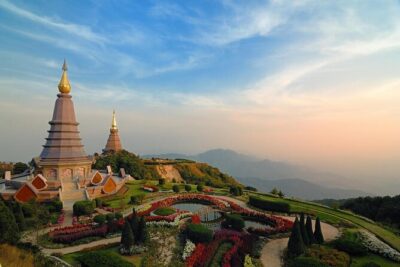
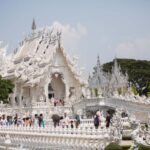
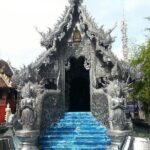
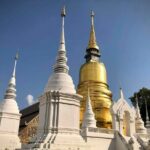
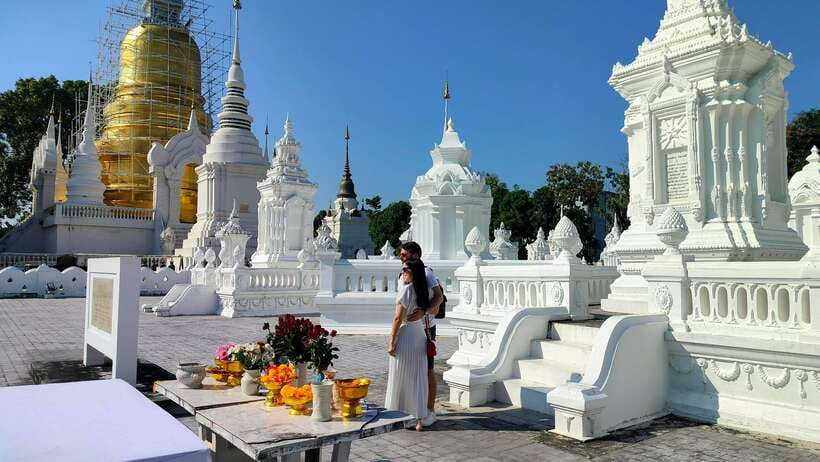
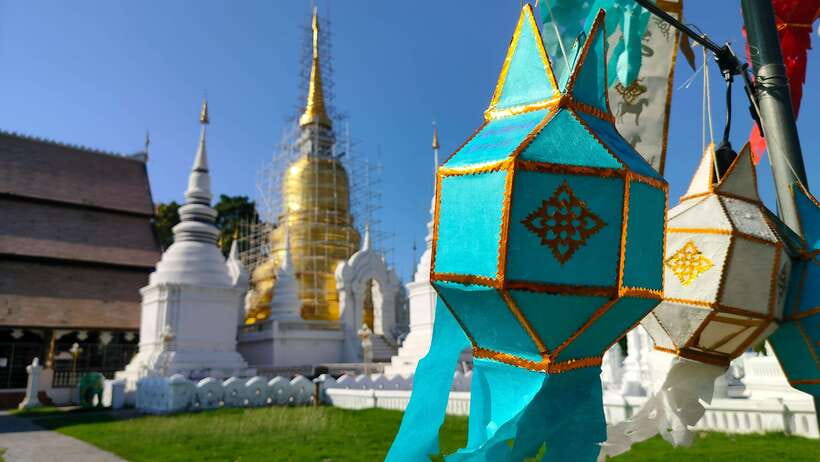
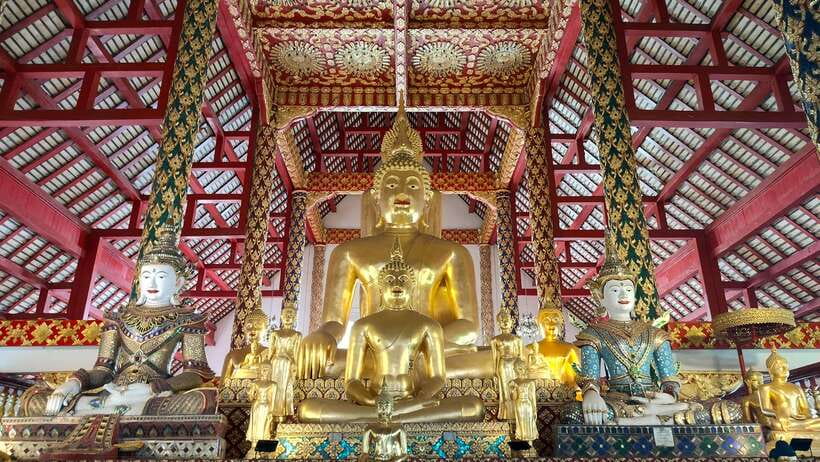
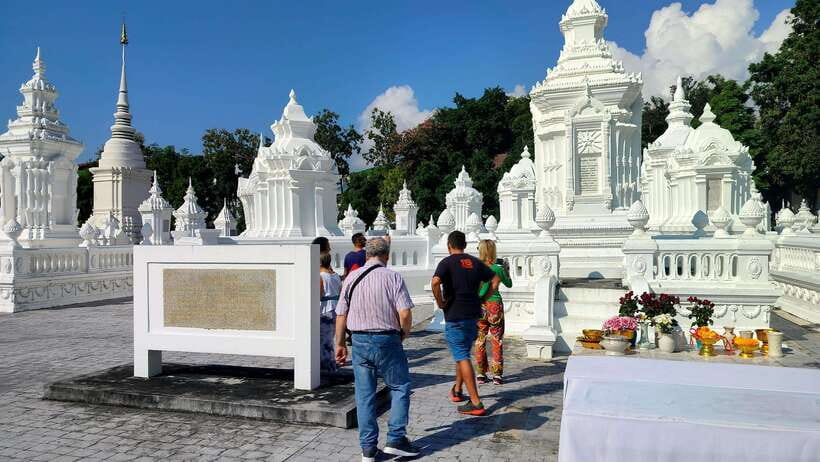
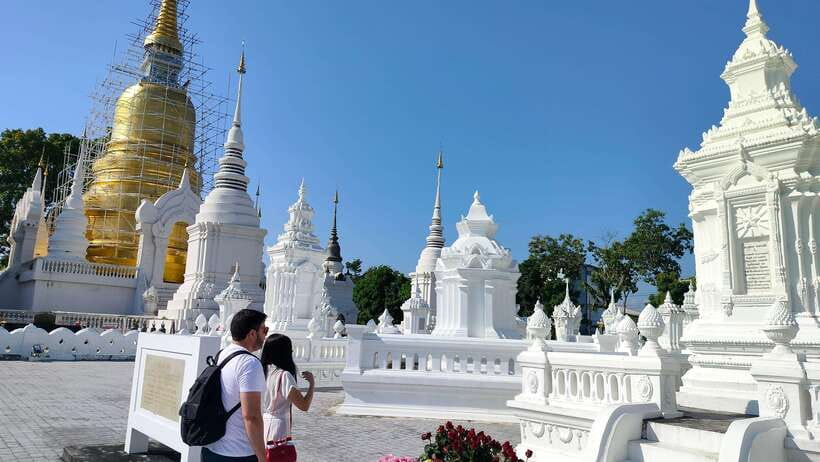
Wat Suan Dok is the kind of place you notice from a distance. The big draw here is its setting of numerous white chedis, which give the temple an almost graphic look against the night sky. You also get a 48-meter golden pagoda built in Sri Lankan style, and it’s one of those visual anchors that makes the time feel worthwhile.
This stop also connects you to temple symbolism, not just architecture. The tour includes a sacred Buddha relic belief tied to the site—said to be the shoulder bone of Buddha himself. Whether you take that literally or simply as part of local religious meaning, it’s the kind of detail a good guide can make you actually pay attention to.
Timing is short but focused—about 30 minutes for the visit. That’s enough for photos, a slow look around, and a basic understanding of what matters most here. If you’re the kind of traveler who wants to read every sign and linger for an hour, you might feel slightly compressed. But if you want a well-paced evening, it works.
Dress code matters at Suan Dok and the other temples. Plan for covered shoulders and knees. That’s why I always pack a scarf and comfy long pants for Chiang Mai temple nights.
Wat Lok Moli’s 14th-Century Lanna Charm and Royal Chedi
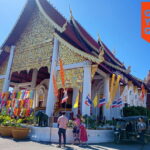
Next you head to Wat Lok Moli, a temple dating to the 14th century. This one leans into the older feel of Chiang Mai’s spiritual heritage, and it’s known for features like a restored chedi with a Buddha image. If Suan Dok hits you with brightness and scale, Lok Moli hits you with age and depth.
There’s also a “royal” connection that makes the place more than just pretty stone. The chedi contains ashes linked to several kings from the Mengrai dynasty. That detail helps you understand why the monastery spaces aren’t just for visitors—they’re tied to generations of leadership and ceremony.
The Lanna-style monastery and teak wood pavilion add another layer, too. Lanna architecture can look subtle until someone points out what to notice—woodwork, structure, and design choices that feel distinct from more modern temple buildings. Your guide is the key here, and the good ones make these quick visits feel interpretive rather than rushed.
You’ll have about 20 minutes at Wat Lok Moli. Again, it’s not designed for an all-night sit. It’s designed for a temple-and-snacks evening where each stop has a job.
Chang Phuak Gate Night Market: Your First Round of Real Chiang Mai Snacks
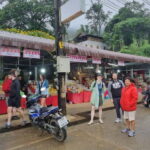
After temple time, you switch gears—tuk-tuk to night market. Chang Phuak Gate Night Market is the first food stop, and it’s the easiest place to start grazing without decision fatigue. You’ll spend around 30 minutes here, walking the open-air lanes while hawkers cook and plate food right in front of you.
This stop works because it’s a guided introduction. Your driver and guide help point you toward favorite local dishes, which matters when you’re staring at a menu of unfamiliar names and photos. If you’re picky about spice, have a plan: ask what’s mild, and don’t be shy about going with something you can recognize.
You should also think about texture and timing. Street food at night can come quickly—great if you’re hungry, annoying if you’re not. Use this first market round to test the vibe. If you love it, then you’ll enjoy the later market stops more.
And yes, bring cash. Street food and additional drinks are not included, so this is where you spend your budget.
Warorot Market and Ton Lam Yai Flower Market After Dark
From Chang Phuak Gate, the tour keeps expanding the street scene. You’ll pass by other local markets such as Warorot Market and Ton Lam Yai Flower Market, with about 30 minutes at Warorot and another 30 minutes at Ton Lam Yai.
Warorot is more of a night-life hub feeling—lots going on, lots of smells, and plenty of action around food stalls. Ton Lam Yai is linked to flowers, which gives a different angle on the same theme: Chiang Mai at night isn’t just food, it’s culture.
This structure is smart. If you only hit one market, you get one mood. Two or three markets let you sample variety—different stalls, different styles, different crowds. You won’t have time to become a food critic, but you can become a confident snacker.
One caution: this part is more walking and less sitting. The tour recommends comfortable shoes and moderate fitness. You’ll want long pants and coverage that still feels breathable under night air.


Price and Value: What $64 Buys You in 4 Hours
At $64 per person for about four hours, the value here is in the combination: private tuk-tuk transport, a live English/Thai guide, two temple entry fees, water, and carbon emissions offset credits. Street food and extra drinks aren’t included, which is the one place where your personal spending can change the final cost.
Think of it like this. You’re paying for convenience and context. The guide compresses the “what should I see first?” problem and adds meaning to the chedis and monastery features. The tuk-tuk compresses transit time, so you actually get multiple stops instead of fighting your way between them.
Is it worth it? For most people, yes—especially if you want night views, don’t want to navigate temples and markets on your own, and prefer a small group. If you’re traveling solo and already confident navigating on foot and local transport, you might find cheaper options. But those alternatives rarely bundle both temple tickets and guided food orientation.
Also, don’t forget what’s included: water is provided, and the tour uses glass bottles as part of its low-impact approach.
Responsible Touring: GSTC Certification, Glass Bottles, and Carbon Offsets
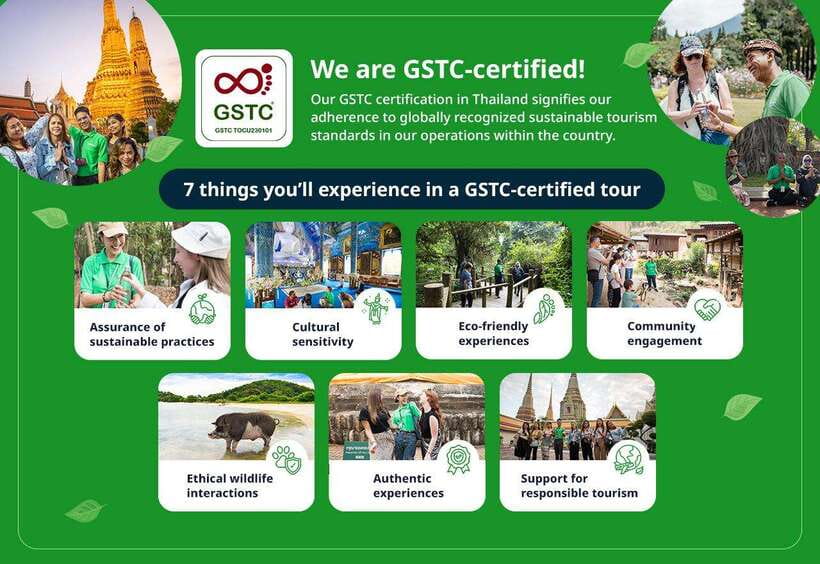
This tour is positioned as a GSTC-certified option with an emphasis on lower impact. You get water and the program includes carbon emissions offset credits per tour. It’s not the same thing as “your travel is carbon neutral,” but it is a clear signal that the operator is thinking about footprint and resource use.
I like this approach for practical reasons. People often worry about what they can do beyond recycling. Here, you’re not asked to do extra work—you simply get the program basics: glass-bottled water and the offset credits included in your tour.
If you care about responsible travel, it’s a nice match. If you don’t, it still doesn’t take away from the fun. You just show up ready to see temples and eat well, while the tour handles those behind-the-scenes pieces.
Small Group, Real Guidance: What the Best Guides Do on This Route
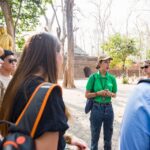
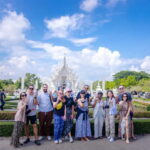
This is a small group tour limited to 4 participants, which changes the tone. You can ask questions without the guide talking to a crowd. It also helps at night markets, where guidance matters because stall choices can feel chaotic at first.
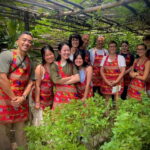
The best part is that guides on this route have a clear pattern: they explain what you’re looking at while you ride and help you choose food without turning it into a hard sales pitch. The guide names that show up in past bookings include Cookie, Pim, Leo, Lily, Gnana, and James. Across those examples, the common theme is friendly, detailed explanations and adapting to what the group needs in each moment.
You’ll get live guidance in English or Thai. If you’re trying to understand the temple symbolism and not just take photos, this kind of commentary is what turns the route from sightseeing into understanding.
What to Pack for a Chiang Mai Temple-and-Food Night
You can keep this simple. Pack for temples and markets at the same time.
Bring:
- Comfortable shoes with grip (night streets can be uneven)
- Long pants and a scarf for dress-code coverage
- Insect repellent
- A camera (temples are photo-friendly)
- Cash for street food and any extra drinks
A scarf is one of those small items that saves your evening. Even if you think you’re dressed right, temples can be strict about shoulders, knees, and other exposed areas.
Also plan on a moderate walking load. You’re doing multiple short stops, not one long museum-style visit.
Who Should Book, and Who Should Skip
This tour fits best if you:
- Want a night ride in Chiang Mai that doesn’t require you to plan transport between stops
- Like temples but also want food time without getting lost
- Prefer small group energy and a guide who helps you choose street snacks
It’s not suitable for everyone. It isn’t recommended for pregnant women, people with mobility impairments, people with heart problems, or people with respiratory issues. That isn’t a judgement call; it’s about how night driving and walking can feel in real life.
If you’re unsure, consider the tuk-tuk ride comfort and the walking involved at the markets. The tour is short visits, but it’s still an active evening.
Should You Book the Tuk-Tuk Temples and Street Food Tour?
I’d book it if you want a smart “see and taste” night in Chiang Mai. It covers iconic temple highlights like Wat Suan Dok and Wat Lok Moli, then keeps you moving into real local market food scenes at Chang Phuak Gate, Warorot, and Ton Lam Yai.
I wouldn’t book it if your top priority is full-depth temple time with lots of quiet or if you dislike spending extra money on food. Also, if dress-code rules would stress you out, do some prep first with long pants and a scarf.
For most people seeking an efficient, guided Chiang Mai night, this is a very practical way to get variety in four hours without chaos.
FAQ
How long is the Chiang Mai tuk-tuk evening tour?
The tour lasts about 4 hours.
What does the tour cost?
The price is $64 per person.
Which temple entrances are included?
Wat Suan Dok and Wat Lok Moli entry fees are included.
Is street food included in the price?
No. Street food and additional drinks are not included.
Is this a private tour?
It’s a small group tour (limited to 4 participants), and it uses private tuk-tuk transportation.
Do you get hotel pickup?
Yes, hotel pickup and drop-off are included from select locations within certain areas of Chiang Mai. If your hotel is outside the free pickup area, you meet at Tha Phae Gate in front of McDonald’s.
What languages are the guides?
The live tour guide speaks English and Thai.
What should I wear for temple visits?
Some sites have strict dress codes. Avoid clothes that expose shoulders, underarms, back, and knees. Long pants and a scarf/cover-up help.
Who is this tour not suitable for?
It’s not suitable for pregnant women, people with mobility impairments, and people with heart problems or respiratory issues.