REVIEW · CHIANG MAI
Off the Map Chiang Mai Jungle Coffee Trek Roast and Brew
Book on Viator →Operated by Chiang Mai Hill-tribe Coffee tour · Bookable on Viator
Coffee tastes different when you help grow it. This Chiang Mai jungle trek pairs Karen Hill Tribe culture with hands-on roast-and-brew steps in Mae Wang National Park. What I like most is the small group feel (maximum 8) and the way the day is paced so you actually get to do the coffee work, not just watch. One consideration: you’ll need moderate fitness for forest paths and uneven ground.
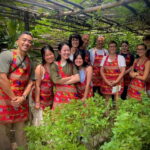
You start with a convenient pick-up near Chiang Mai Old City and then switch from a VIP van to a 4WD mountain ride. The English-speaking coffee expert, Jack (with Jeff), keeps the group moving and helps everyone get time at the roasting and brewing stations. The bonus is context: you’re not only learning coffee technique, you’re learning how it fits into life in the highlands.
After a Karen-style vegetarian lunch, you plant a coffee tree, roast your own green beans, and then practice V60 pour-over brewing. It’s also built around local tourism that supports Hill Tribe communities, but plan for the weather because the activity requires good weather.
In This Review
- Key highlights worth planning around
- Morning Pickup to the Mae Wang area: how the day gets going
- The 4WD mountain ride into the Karen Highlands
- Forest Coffee Walk: seeing coffee plants in the wild
- Participating in stewardship: planting a coffee tree
- Karen-style farm-to-table vegetarian lunch
- Roasting masterclass: turning green beans into your own batch
- V60 brewing workshop: mastering the pour-over method
- Timing, photo stops, and the realities of a full 8–10 hour day
- Supporting Hill Tribe communities: what the structure is really doing
- Price and value: is $123.87 a fair deal?
- Who this Chiang Mai coffee trek fits best (and who should skip)
- Should you book Off the Map Chiang Mai Jungle Coffee Trek?
- FAQ
- How long is the Chiang Mai Jungle Coffee Trek?
- Where does the tour pick up from?
- Is hotel drop-off included?
- How big is the group?
- What is the fitness level required?
- What coffee activities are included?
- Is lunch included, and is it vegetarian?
- What happens if weather is bad?
Key highlights worth planning around
- Small group (max 8): more hands-on time at roasting and brewing
- 4WD into the mountains: you’ll trade roads for remote Karen highlands
- Coffee in its real habitat: walk through areas where coffee grows naturally
- Tree planting: you leave a living coffee start in the mountains
- Real take-home coffee: a bag of the beans you roasted (150 g)
- Vegetarian farm-to-table lunch: Karen-style meal using fresh local ingredients
Morning Pickup to the Mae Wang area: how the day gets going
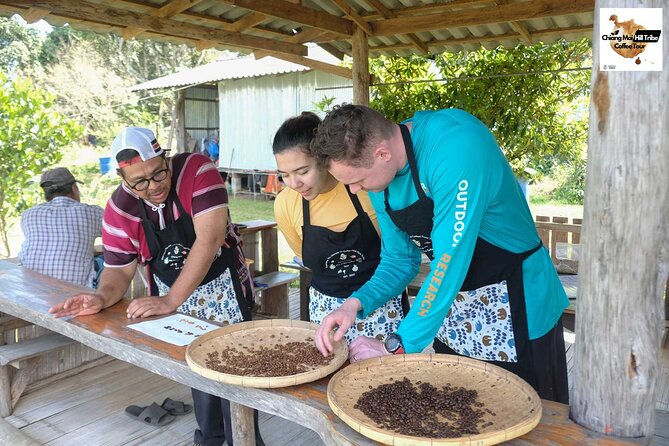
This is an early start, but it’s set up to feel easy. You’re picked up from a hotel within about 3 km of Chiang Mai Old City around 6:50–7:30 AM, with the tour listed to begin at 7:00 AM. From the start, the point is simple: get you out of the city quickly, before the day fills up with tour buses.
Why that matters: the rest of your day is structured around walking and coffee prep. If you start later, you lose daylight for treks, and your roasting and brewing timing can get rushed. Starting early also helps you feel like you’ve left the modern world behind before you ever step onto the mountain trail.
You’ll also notice the tour is designed for a small group. That changes the feel of the day. It’s less like a big group checklist and more like a hands-on workshop that happens to include a trek and village visit.
You can also read our reviews of more hiking tours in Chiang Mai
The 4WD mountain ride into the Karen Highlands
The first push away from roads comes right away. You drive into Mae Wang National Park and move off-road using a 4WD vehicle for the Karen Highlands portion. This is where the day earns its name: you’re not simply visiting a coffee café and calling it a tour.
Practical reality: 4WD rides on mountain roads can be bumpy. If you’re sensitive to motion, take that seriously and sit where you feel most comfortable. Bring any basic comfort items you like for long rides (water, a light layer, and something for sun protection).
Value angle: that mountain transport isn’t just a fun detour. It’s what gets you to a remote setting where coffee is grown as part of daily agricultural life. It also keeps the experience smaller and less crowded than the typical “grab a selfie near a plantation” format.
Forest Coffee Walk: seeing coffee plants in the wild
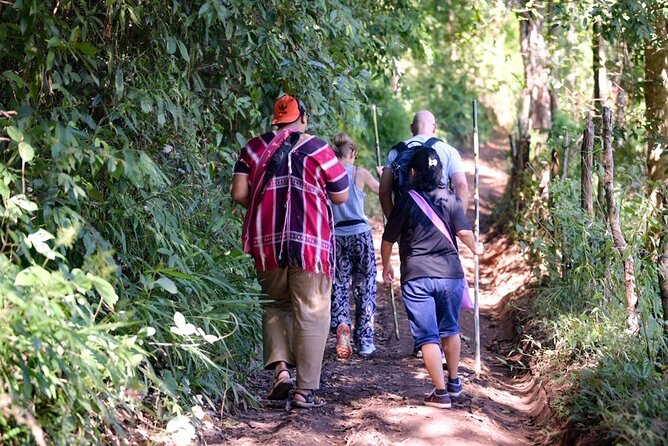
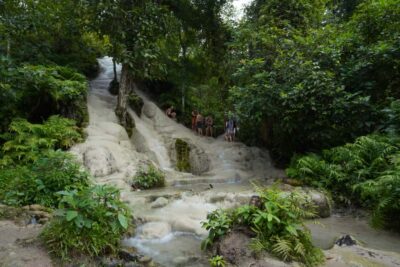
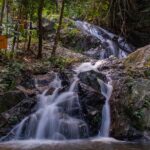
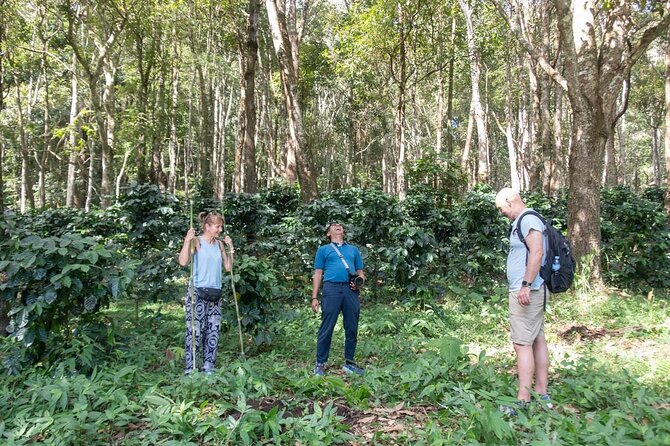
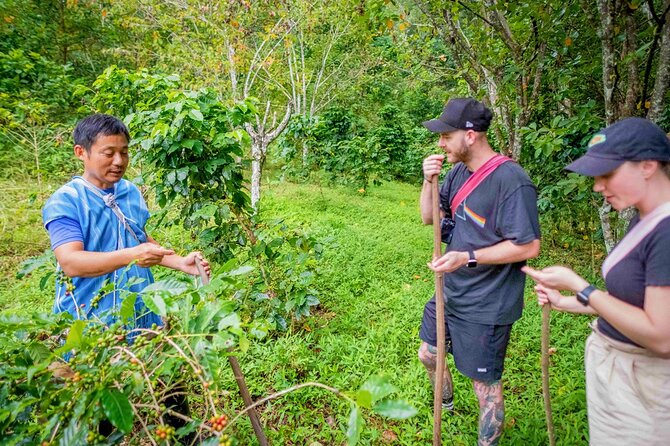
Once you’re on foot, the tour shifts to learning and walking. In Mae Wang National Park, you take part in a trekking and coffee walk through lush forest where coffee grows. This isn’t framed as a botanical lecture where you stare at one plant and call it a day.
You’re walking through coffee habitat and learning about sustainable farming as practiced by the Karen community. The information also extends beyond coffee: you’ll learn about herbal medicine and how the community protects important resources in the forest. That matters because coffee doesn’t live on its own. It depends on shade, soil care, and stewardship in a bigger ecosystem.
Photo tip: the best photos usually aren’t the far-off views. They’re the close, grounded ones—leaves, growing structures, and the small scenes where you can see how coffee fits into the forest. Keep your phone protected in the morning forest damp, and expect some uneven footing.
Participating in stewardship: planting a coffee tree
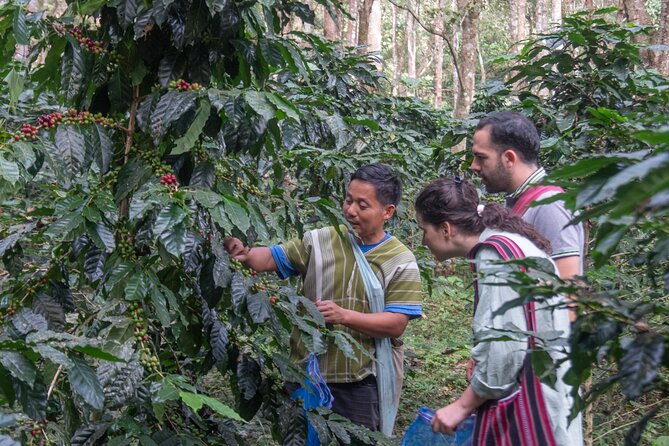
One of the more meaningful stops is the tree planting. You’re invited to plant a coffee tree with your own hands as part of a Karen tradition of forest and farm stewardship. This is more than a symbolic action because it connects directly to conservation and leaving something living behind in the mountains.
What to expect practically: you’ll likely spend only a short amount of time on this activity, but it’s hands-on. Wear shoes you trust. Gloves aren’t listed, but if you have them, they can make planting more comfortable. Also, keep in mind you’ll be doing other hands-on coffee tasks later, so don’t start the day in shoes that feel worn out.
Balanced note: planting is rewarding, but it doesn’t replace the overall coffee education. The tour keeps moving, so if you prefer long, slow cultural sessions, you may want to pair this with additional village time on your own.
Karen-style farm-to-table vegetarian lunch
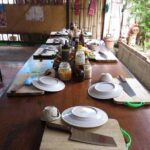
By the time lunch arrives, you’ll be ready for real food, not snack-board survival. The meal is described as farm-to-table vegetarian, prepared with fresh ingredients from the village farm and served with seasonal fruits.
Why I think this is a smart inclusion: a full-day trek tour can feel like work without a proper break. A vegetarian lunch that’s fresh and clearly local helps reset your energy so you can enjoy the later roasting and brewing without thinking about the next restroom stop or running out of steam.
Consideration: the lunch is vegetarian, but the tour data doesn’t mention special diets (like vegan, gluten-free, or allergies). If you have strict dietary needs, check before booking so you don’t end up guessing.
You can also read our reviews of more tours and experiences in Chiang Mai
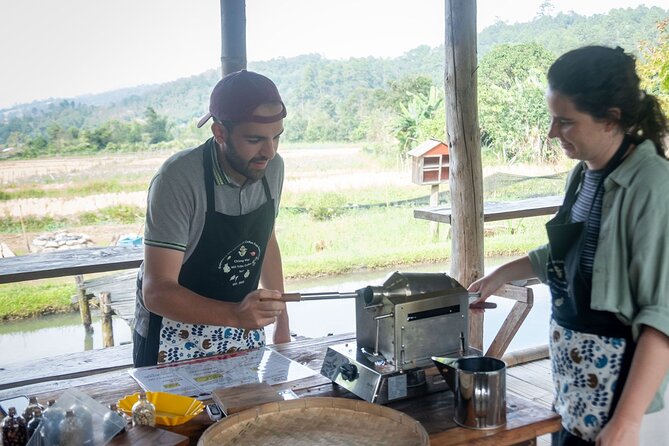
Roasting masterclass: turning green beans into your own batch
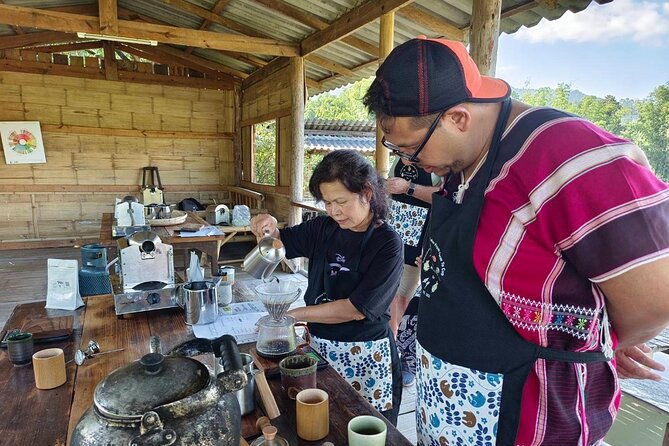
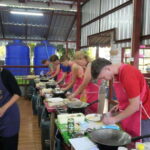
Now for the part coffee lovers remember. You’ll learn a hands-on roasting masterclass where you roast your own batch of green beans. The goal is understanding how to control heat and fire to unlock the bean’s potential.
This is where the pacing and small group size matter again. Roasting takes time, and it takes attention. With a maximum of 8 travelers, you’re more likely to actually get instruction while the roast is happening rather than waiting your turn.
Take-home value: you get a souvenir bag of the roasted coffee beans you make (150 g). That’s a real souvenir, not a small sachet you forget in a drawer. You’ll be able to take your work home and taste the difference between your roasting style and what you’re used to.
If you’re comparing value to a normal paid coffee lesson: those often teach technique with store-bought roasted coffee. Here, you’re doing the roasting yourself from green beans. That’s a bigger skill chunk, and it shows up in the final product you take home.
V60 brewing workshop: mastering the pour-over method
After roasting, the tour finishes with an art-of-brewing workshop using the V60 pour-over method. The emphasis is on learning how to brew a cup that respects the farmers’ work and the beans you just roasted.
The most practical part for most people is learning the mechanics of pour-over: how you control the flow and timing. Even if you don’t become a coffee nerd overnight, you’ll likely leave with a process you can repeat.
You’ll also have coffee and tea for brewing and testing during the experience, so you get more than one tasting moment. That helps you understand what changes taste when you alter brewing technique.
Why this matters for your next coffee day in Thailand: Chiang Mai has plenty of cafés, but this teaches you how to read coffee like an ingredient. Instead of ordering by mood, you’ll start noticing differences in brew style and roast character.
Timing, photo stops, and the realities of a full 8–10 hour day
This trip runs about 8 to 10 hours. That’s a long day, but it’s organized around a sequence: transport, off-road ride, forest walk, planting, lunch, roasting, brewing, then drop-off.
The day structure helps because each segment gives you a different kind of movement:
- ride time for getting into the mountains
- walking time for the coffee habitat experience
- hands-on time for planting and roasting
- focus time for V60 brewing
The trade-off is that you don’t get much spare time. If you like lots of free wandering, this isn’t that kind of tour. It’s a guided day with set activities and a strong schedule.
Photo reality check: yes, you’ll have chances to take pictures on mountain trails, and the small group keeps the visuals cleaner. Just remember that forest light can change quickly and paths can be uneven. Move carefully; don’t turn your head down for every shot.
Supporting Hill Tribe communities: what the structure is really doing
The tour is positioned around local tourism that supports Hill Tribe communities. You’ll see that reflected in the structure: the day includes Karen community traditions (like stewardship and tree planting) and learning from local expertise tied to how coffee and forest life connect.
It also helps that the coffee instruction is guided by an English-speaking local coffee expert—Jack is repeatedly highlighted for passion and for making sure everyone gets a chance to do the hands-on parts. When someone runs a day like that with small numbers, it’s easier to keep it respectful and not reduce everything into quick performances.
A fair caution: no tour can guarantee how every dollar is allocated. Still, this one is at least built to include community-based activities that aren’t just a pass-through.
Price and value: is $123.87 a fair deal?
At $123.87 per person, you’re paying for more than a coffee tasting. Here’s what’s included based on the tour details:
- VIP van pick-up and drop-off from near Old City
- 4WD mountain ride into the area
- lunch (vegetarian farm-to-table with seasonal fruits)
- coffee and tea for brewing and testing
- guide (English-speaking local coffee expert)
- trekking plus tree planting activities (and harvesting if seasonal)
- coffee roasting masterclass and V60 brewing workshop
- insurance, taxes, and entrance fees
- take-home roasted coffee beans you roast yourself (150 g)
That’s a full-day, multi-part program. The value is in the combination: transport + forest trekking + community stewardship activity + actual coffee skill building + a take-home product.
If you’re only interested in tasting coffee, a cheaper half-day café tour will cost less. But if you want to leave with something you made and can reproduce at home, this price is easier to justify.
Who this Chiang Mai coffee trek fits best (and who should skip)
This tour suits you if:
- you want a full-day Chiang Mai experience that goes beyond cafés
- you enjoy hands-on workshops like roasting and brewing
- you’re comfortable with a moderate fitness level for forest paths
- you like learning about how plants, farming, and community stewardship connect
It may not fit you as well if:
- you don’t like early starts or long days (8–10 hours)
- you dislike uneven ground or off-road rides
- you require special dietary accommodations beyond vegetarian
Group size is also part of the fit. With a maximum of 8, this is closer to a guided workshop than a mass-tour day.
Should you book Off the Map Chiang Mai Jungle Coffee Trek?
I’d book this if you want a coffee day that actually teaches you how coffee is grown and made—then lets you take the results home. The strongest selling points are the hands-on roasting masterclass, the V60 workshop, and the fact that you’re also walking through coffee habitat and participating in tree planting with the Karen community.
Book with a clear plan for the day: wear good shoes, bring sun and rain protection, and expect a schedule that stays active. If you can handle early mornings and moderate hiking, this tour gives you something most Chiang Mai coffee experiences don’t: coffee craft with real-world context and a take-home bag of beans you roasted yourself.
FAQ
How long is the Chiang Mai Jungle Coffee Trek?
The tour lasts about 8 to 10 hours.
Where does the tour pick up from?
You get hotel pick-up from within about 3 km of Chiang Mai Old City.
Is hotel drop-off included?
Yes. Drop-off is included at your hotel between about 5:30 pm and 6:30 pm.
How big is the group?
The tour has a maximum of 8 travelers.
What is the fitness level required?
You should have a moderate physical fitness level because there is trekking on forest paths.
What coffee activities are included?
You roast your own green beans and then complete a V60 pour-over brewing workshop.
Is lunch included, and is it vegetarian?
Yes. Lunch is included and is a farm-to-table vegetarian meal prepared in a Karen style, with seasonal fruits.
What happens if weather is bad?
This experience requires good weather. If it’s canceled due to poor weather, you’ll be offered another date or a full refund.