REVIEW · CHIANG MAI
Walk With Monks Collecting Alms(meeting point maybe change)
Book on GetYourGuide →Operated by Journey D Travel · Bookable on GetYourGuide
A 5:45 AM start changes your whole day. This walk with monks collecting alms in Chiang Mai mixes quiet temple routine, real local offering culture, and a friendly chance to ask questions about Buddhism with an ex monk guide. You’ll also pass a market where devotees wait with food for the monks.
I especially like the small group size (just 6) because it stays human-sized for questions, and the guide’s background as a former monk makes the explanations practical instead of just textbook. The biggest watch-out is that this tour accepts only men, and it also asks you to go without headphones and without alcohol or snacks from the package.
In This Review
- Key highlights you can plan around
- Morning at Wat Chai Sri Phum: what that 5:45 AM really means
- Walking with monks: the offering route and how to behave
- Mueang Mai Market stop: seeing daily life inside a religious routine
- Back at the temple: the monk conversation that makes it feel personal
- Ex monk guides and small groups: why the teaching quality matters
- Price and what you actually get for $20
- What to bring (and what the rules are really trying to protect)
- Who should book this tour, and who should skip it
- Should you book Walk With Monks Collecting Alms in Chiang Mai?
- FAQ
- What time does the tour start, and where do I meet?
- How long is the experience?
- Is food included, and is there a donation?
- How big is the group?
- What languages is the guide available in?
- Can women join this tour?
- What should I bring, and what is not allowed?
Key highlights you can plan around
- Ex monk guide leads the whole experience: expect clear, grounded explanations and time for questions.
- Market stop during the alms collection route: you see local produce and morning shopping as part of the religious practice.
- Direct conversation back at the temple: you’re not just watching; you can talk with monks and hear Dhamma discussions.
- Small group of 6: easier to keep close, listen well, and follow the guide’s instructions.
- About 2.5 hours total: long enough to feel meaningful, short enough to still enjoy the rest of Chiang Mai afterward.
Morning at Wat Chai Sri Phum: what that 5:45 AM really means
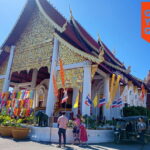
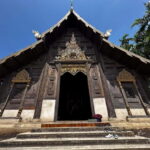
You meet at Wat Chai Sri Phum (Wat Chai Sri Phum / Wat Chai Sri Phum is commonly used on travel listings), typically at 5:45 AM. The meeting point is the front of the chanting hall where the tourist guide is waiting, though the operator notes the exact spot may shift. You’ll get a quick orientation from your live guide before the walk begins.
This early start is not just a scheduling trick. You’re arriving when monks’ daily routine is beginning and when devotees are already preparing. That timing is what makes the experience feel different from a daytime temple visit. It also means you should plan for cooler-than-midday air at first, then warm up as the morning moves on.
If you’re the type who likes to see how places work when locals are actually moving, you’ll feel at home here.
You can also read our reviews of more walking tours in Chiang Mai
Walking with monks: the offering route and how to behave
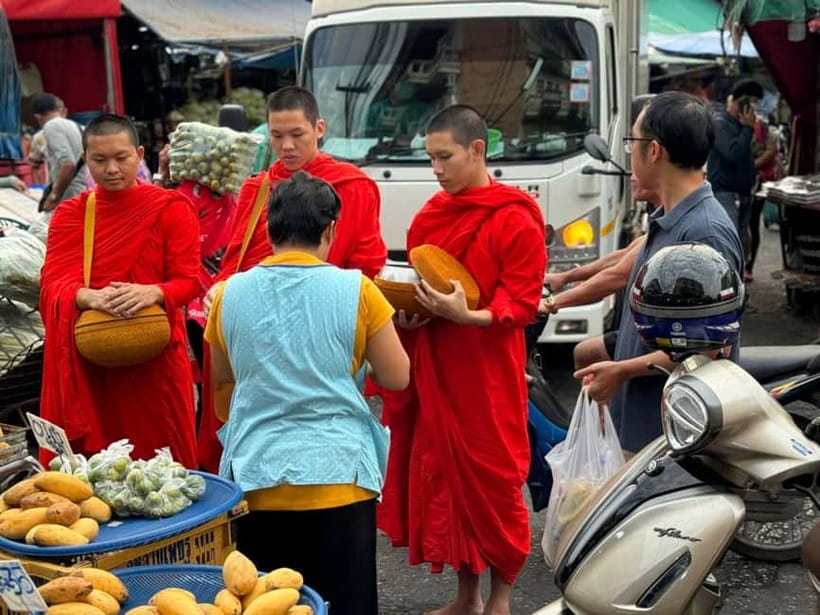
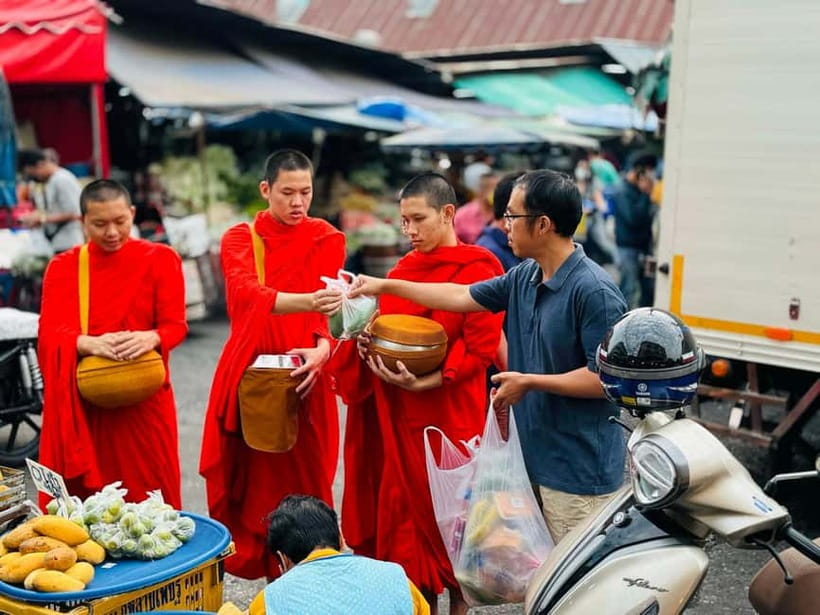
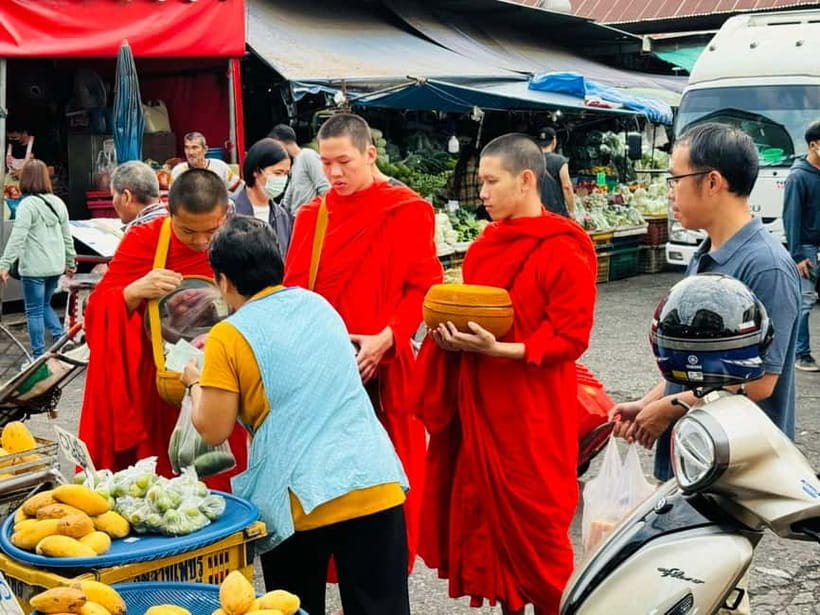
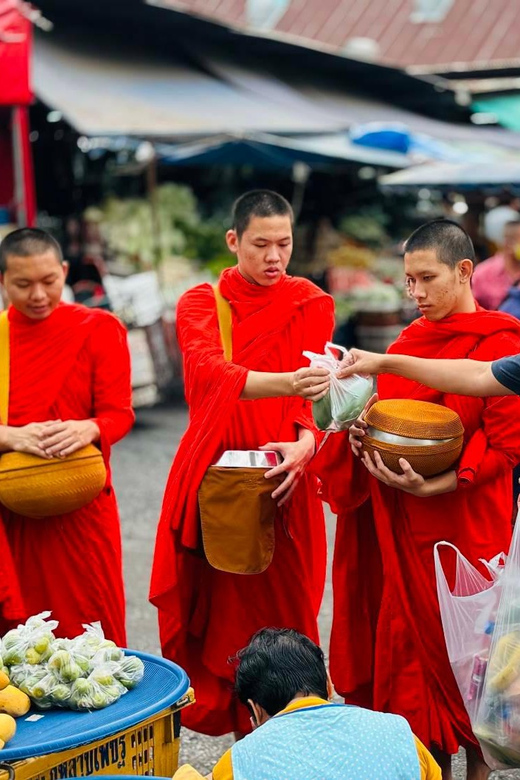
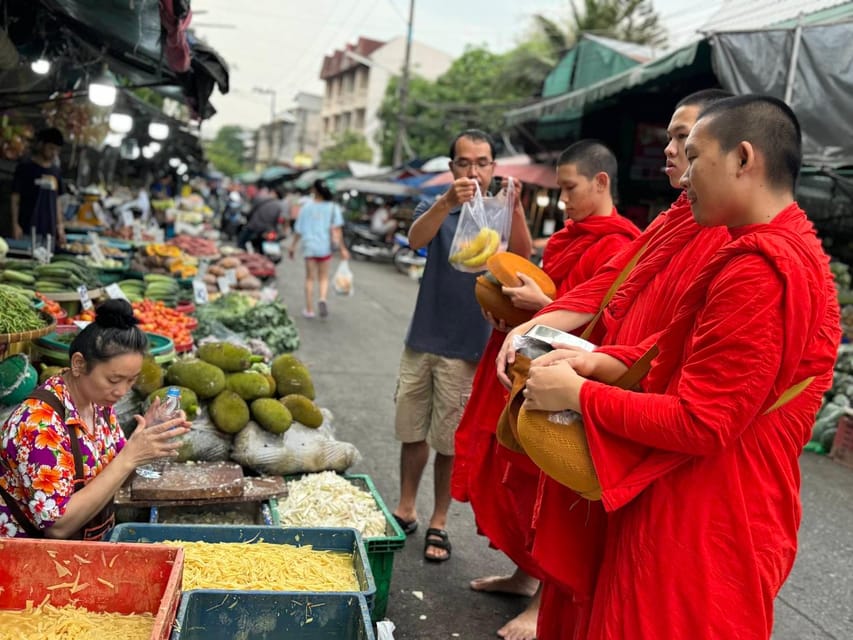
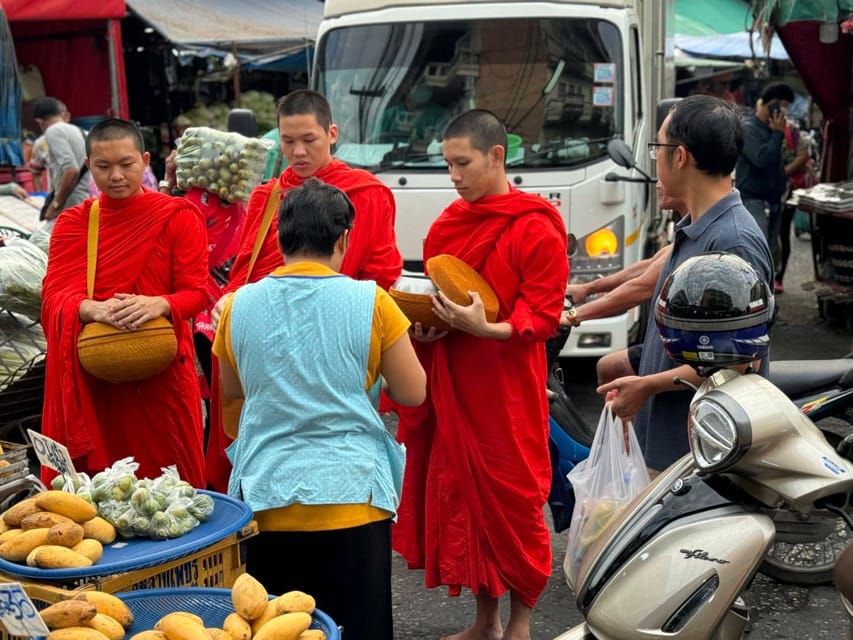
The core of the experience is joining the monks as they collect food offerings. At 6:00 AM, the group starts the walk while the monks move through the route where devotees wait with prepared offerings. Along the way, your guide explains what’s happening and why the practice matters in daily Buddhist life.
What I like about this part is that it’s not just a sightseeing walk. It’s structured around observing a real community ritual and understanding the logic behind it. You’ll hear language like Dhamma discussions and monk routine, and you’ll get context for temple etiquette and what’s expected from you as a participant standing nearby.
A practical note: your tour rules explicitly say no headphones, and you also should not bring weapons or sharp objects. That’s a clue that the experience is meant to stay respectful and focused. If you keep your attention on the monk-led flow and follow your guide’s signals about where to stand and when to speak, the whole morning runs smoothly.
Also, this matters for expectations: the experience is about the walk and the discussion, not about eating during the tour. The tour does not include food or drinks.
Mueang Mai Market stop: seeing daily life inside a religious routine
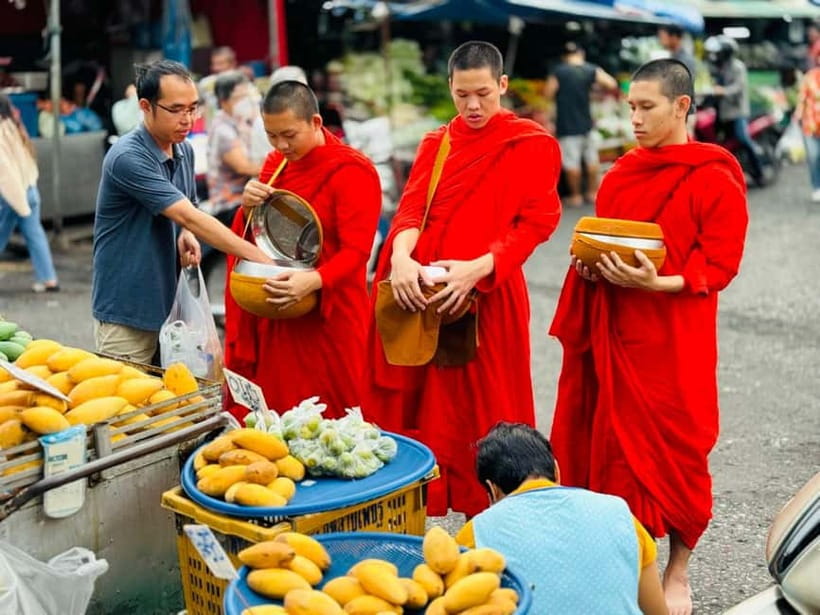
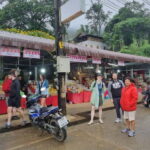
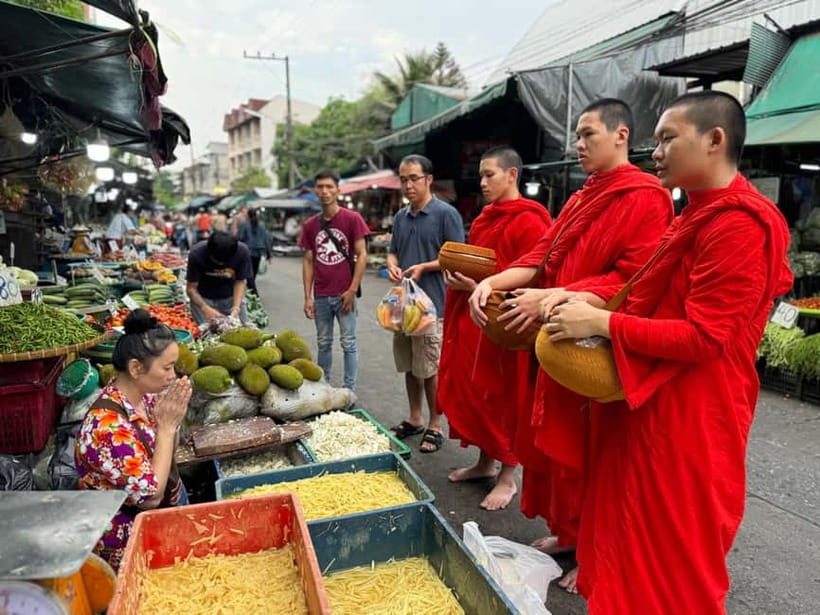
After you start walking, you pass through a market area where Buddhist devotees are waiting with offerings. This is one of the most memorable parts because it’s where faith and everyday commerce overlap in the most straightforward way.
The market stop gives you a view of local morning life: fresh produce, food preparation, and the rhythm of people who are already awake and busy. Multiple guides on similar tours are excellent at explaining the practical side—what devotees are bringing and how the monks receive offerings—so you’re not left guessing.
In terms of photos, this is where you’ll naturally want to pause (briefly, and only when it doesn’t block others). The scenery is real, not staged. And because the walk is small-group, you’re less likely to feel swallowed by a crowd.
One thing to keep in mind: since food is not included, you may want to treat the market more as a cultural viewing stop than a guaranteed tasting stop. If you want snacks afterward, you’ll be able to choose on your own once the main session wraps.
Back at the temple: the monk conversation that makes it feel personal
By around 7:30 AM, you return to the temple. Then comes the part that turns this from observation into learning: a meeting and dialogue with the monks.
This is where the tour can really pay off. Instead of leaving with only a few memorized facts, you get a chance to ask questions about Buddhism and daily monk life. Your ex monk guide often steers the conversation toward topics that travelers are actually curious about—how monks live, what devotees believe they’re supporting, and how etiquette works when you’re inside a temple world.
From the guide names mentioned in past experiences, you may meet an ex monk guide such as Son or Katoon (the guide can vary). Either way, the key is the same: you’re not just hearing a speech. You’re getting a chance to talk.
If you’ve been to other Chiang Mai temples and felt like you knew what you were seeing but not why it matters, this is the bridge. It helps you connect the physical space—worship areas, chanting routines, monks’ movements—to the meaning behind the practice.
Ex monk guides and small groups: why the teaching quality matters
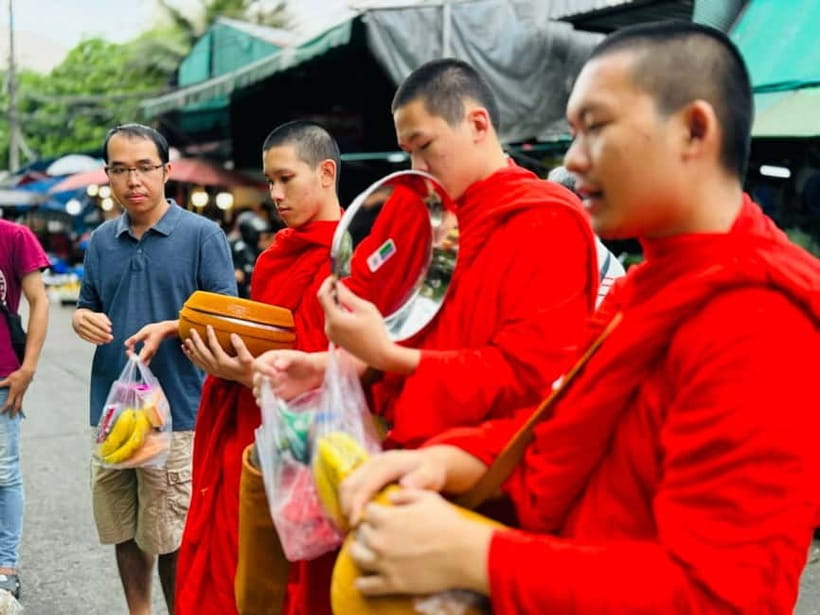
This tour runs with a live tour guide in Chinese and English, and it keeps the group limited to 6 participants. That small size is not a luxury detail. It changes the entire vibe. You can ask follow-ups. You can get your questions answered without feeling rushed. You’re also easier for the guide to manage during the moving parts of the route.
The most consistent praise here is the guide factor. When the guide is an ex monk—like Son or Katoon in prior groups—the explanations tend to feel practical and grounded. You’re getting the perspective of someone who lived the routine, not just someone who studied it.
If you enjoy Q-and-A, this format is a big win. If you prefer a quiet photo-only tour, you might find the conversation heavy. But because the group is small and the session is structured, even chatty questions don’t derail the experience.




Price and what you actually get for $20
At $20 per person for about 147 minutes, this is priced like a focused cultural experience rather than a full-day tour. The included item that matters most is the ex monk guide.
What’s not included is also important for budgeting:
- Donation to the temple
- Food
- Drink
So what you’re paying for is guidance, the guided walk, and the monk conversation time—plus the cultural translation that helps you understand what you’re seeing. If you’re the kind of traveler who usually pays more for a guide to explain temples, you’ll likely feel good value here because the teaching is built into the route and the talk session.
In your planning, keep a little extra cash for any temple donation you choose to make, and decide what you want to eat afterward once you’re done with the main experience.
Also, check your start time availability. The overall duration is listed as 147 minutes, but the operator notes starting times depend on availability. The early 5:45 AM meeting is the standard reference point.
What to bring (and what the rules are really trying to protect)
The tour suggests bringing a change of clothes. That may sound like a lot until you remember it’s an early start, you’ll be walking, and you’re in a space where people are already preparing for the morning ritual. Having an extra set gives you a simple way to feel comfortable after you finish.
Beyond clothes, follow the rule list carefully:
- No headphones
- No alcohol and drugs
- No weapons or sharp objects
- No costumes
- No baby strollers or baby carriages
- Electric wheelchairs are listed as not allowed
- The tour has age limits for young children, and there’s also a maximum age listed
There’s also a clear eligibility rule: this trip accepts only men. That’s a major deciding factor. If you don’t fit that rule, you’ll want to look for an alternative monk/temple experience in Chiang Mai that allows everyone.
Who should book this tour, and who should skip it
You’ll probably love this tour if you:
- Want a real morning ritual, not only temple photos
- Like cultural context and respectful learning
- Enjoy Q-and-A with someone who has lived the routine
- Prefer a small group to keep things personal
You might skip it if:
- You’re not eligible (it’s men-only)
- You’re uncomfortable waking early or you hate walking in the morning
- You want food included in the price (it’s not included)
- You dislike guided conversations and prefer fully self-paced sightseeing
The best fit is a traveler who likes to understand the story behind the place. This isn’t the type of experience where you can just stand back and read the atmosphere. You’ll get more out of it by asking questions and listening.
Should you book Walk With Monks Collecting Alms in Chiang Mai?
If you’re looking for one Chiang Mai morning that feels different from the usual temple circuit, this is a strong choice. For the price, you get a real monk routine walk, a market route that shows how devotees prepare, and a temple dialogue afterward that helps you connect practice to meaning. The small group size and the ex monk guide background are the two things that most likely drive the high satisfaction.
Book it if you match the eligibility rule and you’re ready for an early start and a respectful, conversation-friendly morning. Skip it if you need food included, you’re bringing someone who doesn’t meet the age rules, or you need accessibility accommodations not supported by the tour’s stated limits.
FAQ
What time does the tour start, and where do I meet?
You assemble at 5:45 AM at the front of the chanting hall at Wat Chai Sri Phum. The meeting point location may be subject to change, so it’s smart to confirm with your operator the day before.
How long is the experience?
The duration is listed as 147 minutes, or about 2.5 hours.
Is food included, and is there a donation?
Food and drinks are not included. The tour also notes that a donation to the temple is not included.
How big is the group?
It’s a small group limited to 6 participants.
What languages is the guide available in?
The live guide offers Chinese and English.
Can women join this tour?
No. The tour states it accepts only men.
What should I bring, and what is not allowed?
Bring a change of clothes. The rules say no headphones, no weapons or sharp objects, and no alcohol and drugs. The tour also lists limits on strollers and baby carriages, and it prohibits costumes.