REVIEW · CHIANG MAI
Chiang Mai: Nighttime City Highlights by EV Tram
Book on GetYourGuide →Operated by Touring Center · Bookable on GetYourGuide
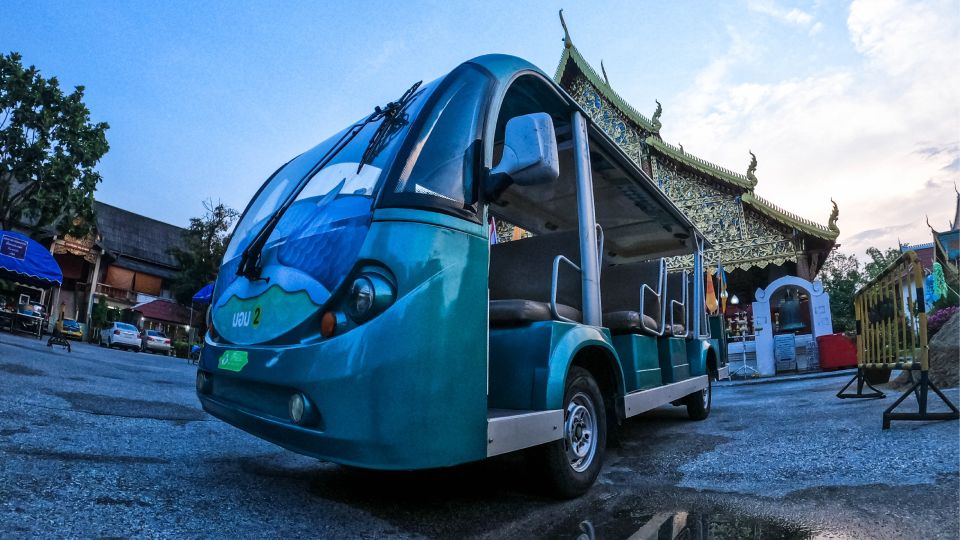
An electric night tram changes how you see Chiang Mai. In just two hours, you glide past temples, gates, and markets with a lively English guide and a story-led route.
I especially like the easy pace: you get real explanations without doing a full evening foot tour. One watch-out is that most major sights are quick photo stops, so this is a good sampler, not a slow, in-depth temple day.
In This Review
- Quick highlights you’ll feel right away
- Why ride an electric tram around the moat at dusk
- Starting at Three Kings Monument: your orientation in 10 minutes
- Wat Chiang Man photo stop: how to spot what’s important
- Wat Lok Moli (Lok Molee): the temple stop you actually remember
- Wat Pa Pao: a smaller pause with real guided time
- Wat Nong Kham: Burmese–Shan temple style, even at a glance
- Markets and gates: Warorot, Tha Phae, then Chiang Mai Gate Market
- A note on value at the market stop
- Wat Chedi Luang: the enormous centerpiece, framed by the city story
- Wat Phra Singh Woramahawihan: final landmark, then you’re back to your start
- Price and what you truly get for about $27
- Small groups, open-air comfort, and the pace that works
- Who should book this EV night tram tour
- Should you book this EV night tram tour in Chiang Mai?
- FAQ
- Where does the tour meet?
- What time does the tour start and end?
- How long is the tram tour?
- Is the tram included in the price?
- Are temple admission fees included?
- Will I get food or snacks?
- What is the cancellation policy?
Quick highlights you’ll feel right away
- Open-air EV tram ride that stays calm and quiet as you move through the city at night
- A guide who tells the story, with humor and answers as you go
- Wat Lok Moli and Wat Pa Pao get actual time, while others are handled as photo/pass-by moments
- Chiang Mai Gate Market stop with guided street-food snacks built into the route
- Wat Chedi Luang plus major landmarks help you connect the city’s religious and civic sides
Why ride an electric tram around the moat at dusk
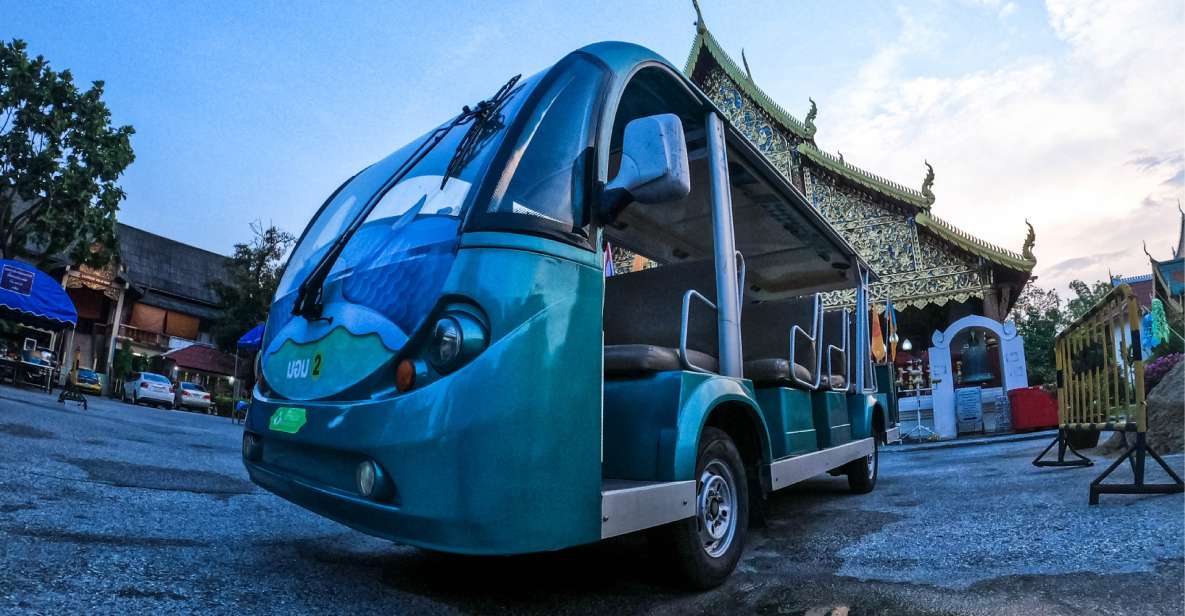
Chiang Mai at night has a different rhythm than daytime, cooler and more human-scale. This tour uses an open-air EV tram to keep you moving while still letting you look around. The big idea is simple: you cover ground fast, then slow down where it counts.
The EV part isn’t just a gimmick. One of the strongest benefits is how it changes your energy level. When you’re tired from walking all afternoon, this style of transport helps you keep your evening intact—and it also makes it easier to travel with kids or anyone who doesn’t want constant stairs and uneven sidewalks.
You’ll also notice how the guide uses the route like a moving classroom. The tour isn’t only about pointing at temples; it’s about explaining why these places sit where they do and how they shaped Chiang Mai’s city life.
You can also read our reviews of more city tours in Chiang Mai
Starting at Three Kings Monument: your orientation in 10 minutes
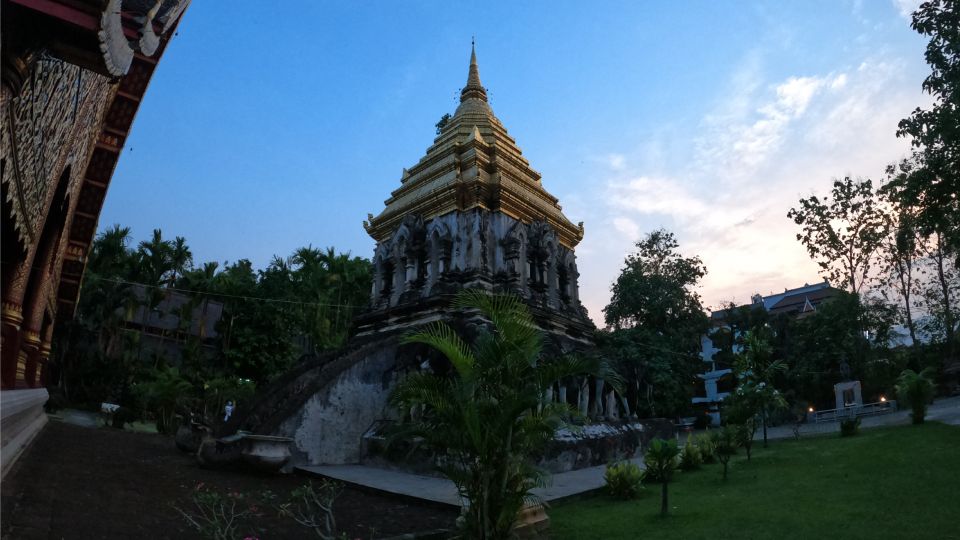
The tour meets at the Three Kings Monument at 6:00 p.m., and you’ll see your guide wearing a white shirt with the Touring Center logo. You’ll start with a short, guided orientation right around this area—about 10 minutes—so you get a mental map before the tram starts rolling.
This early context matters more than you might think. Without it, the Old City can feel like a blur of gates, walls, and temple roofs. With it, the sights start to connect as you pass them—especially when you’re moving around the moat and city gate area.
Then you hop on the tram for a short drive segment (around 3 minutes) that sets you up for the first temple stops and the first longer viewpoints.
Wat Chiang Man photo stop: how to spot what’s important
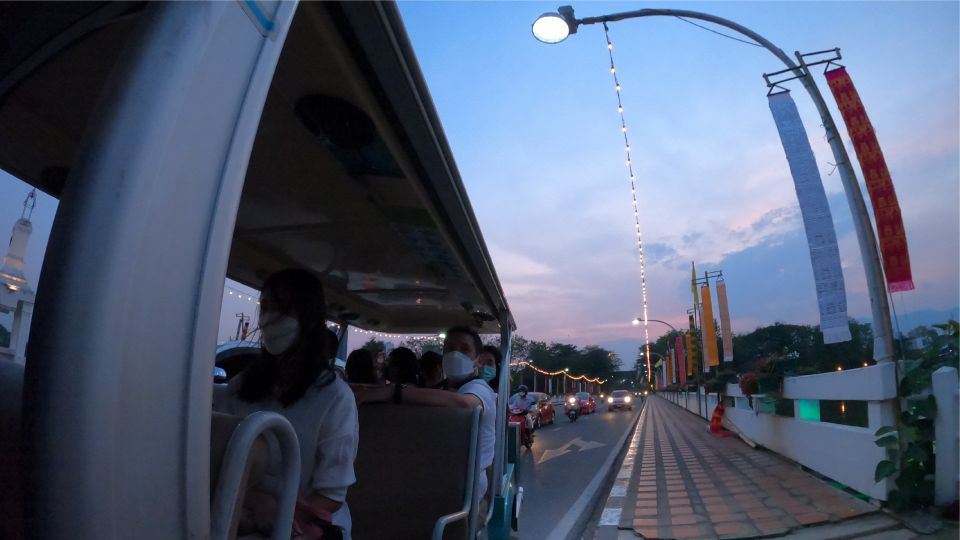
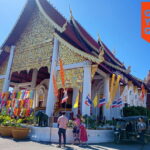
One of your first touchpoints is Wat Chiang Man. The timing is light—more of a photo stop and pass-by than a long visit—so treat it like a chance to orient your camera and your eyes.
The value here is pattern recognition. As you continue through the route, you’ll begin to see which temple features the guide highlights again and again. Even a brief stop works because it’s paired with live interpretation from the guide while you’re still fresh.
Wat Lok Moli (Lok Molee): the temple stop you actually remember
Next comes Wat Lok Moli. Here, the tour shifts from quick glimpses into guided sightseeing time of about 25 minutes. This is one of the highlights in the route: it’s described as among the oldest temples in Chiang Mai, and the guide uses that fact to explain what makes it worth your attention.
This longer stop is where you’ll feel the payoff for booking a night tour with a guide instead of doing temples on your own. The route is packed, yes—but Wat Lok Moli is given enough time for you to understand why it’s important and what details to look for when you take photos.
Practical tip for this stop: since you’re on a timetable, go in with the mindset of noticing a few key things rather than trying to photograph everything. The guide’s explanations give you a shortcut for what to focus on.
Wat Pa Pao: a smaller pause with real guided time
After Wat Lok Moli, you move to Wat Pa Pao, with a visit and guided sightseeing time of about 15 minutes. This is another stop that’s not just a drive-by. Even though it’s shorter than the Wat Lok Moli segment, it still gives you a chance to slow down.
Why this matters: the best night tours don’t only hit the famous names. They also include the stops that help you feel the city’s variety—especially when your route already includes major temple names like Wat Chedi Luang later on.



Wat Nong Kham: Burmese–Shan temple style, even at a glance
You’ll also have Wat Nong Kham as a photo stop and pass-by. It’s specifically noted for its special Buddhist temple style that ties to Burmese–Shan influence.
Even if you only get a quick look, this is useful because it trains your eye. When you hear a clear description of what to notice, you start seeing style differences that you would otherwise miss—like how certain temple elements can reflect cultural connections beyond the immediate city.
Markets and gates: Warorot, Tha Phae, then Chiang Mai Gate Market
Between temple stops, the tram route passes a few key city areas: Warorot Market and Tha Phae Gate. These are described as pass-by moments in the itinerary. So you’re not settling in for a long wander here—but you are getting that nighttime street-city feeling while staying on schedule.
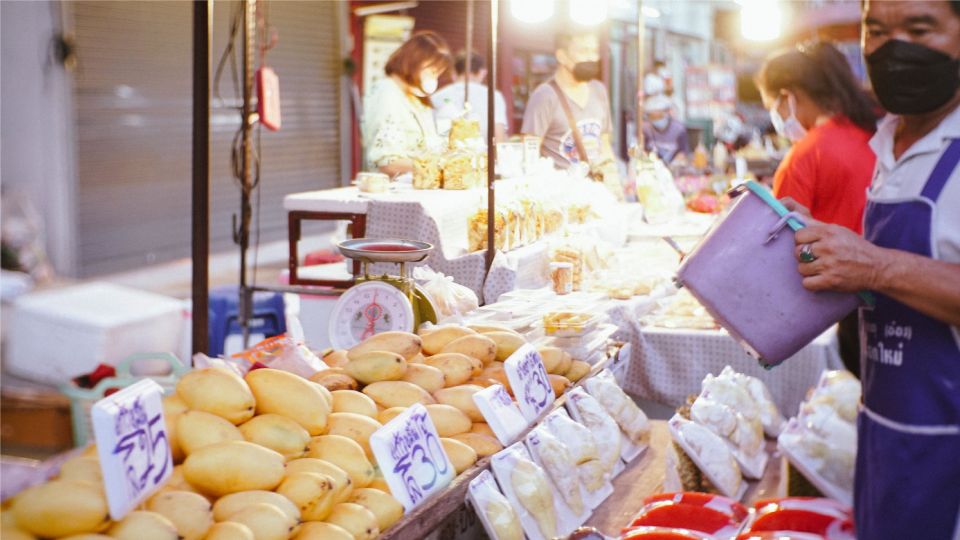
Then comes the biggest food moment: Chiang Mai Gate Market. This stop is about 25 minutes and includes a guided visit plus street-food snacks. This is where the tour earns its keep for many people. A temple-only night tour can feel like sightseeing homework. Adding the market with guidance turns it into something you can actually enjoy and taste.
You’ll also get a clearer sense of what locals eat and how food fits into the evening flow. It’s not just random snacking. The route is designed so your guide can explain what you’re seeing while you’re eating.
One dessert that shows up in this experience is mango sticky rice. If you have a sweet tooth, I’d treat that as a likely candidate for your end-of-tour comfort bite, since it comes up as a memorable item during the market portion.
A note on value at the market stop
Even though you’re only there for about half an hour, the experience is built around guidance and admissions being handled on the tour side. That matters because it reduces the mental load. You don’t have to figure out what to try or where to stand while everyone else is moving. The guide helps you eat without turning dinner into a scavenger hunt.
Wat Chedi Luang: the enormous centerpiece, framed by the city story
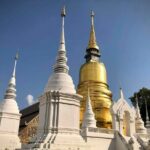
Later, you’ll reach Wat Chedi Luang for a photo stop and pass-by at around 10 minutes. It’s described as enormous and as one of the most important places for city and religious ceremonies.
This is another “quick stop, big meaning” moment. The tour’s earlier explanations help you read what you’re seeing even without a long guided walk inside. By the time you get here, the route has already given you the historical and cultural connective tissue.
Think of it like arriving at the final act after learning the plot. You don’t need hours here to get something out of the stop—you just need context, and the guide gives it while you’re moving through the Old City.
Wat Phra Singh Woramahawihan: final landmark, then you’re back to your start
Your last major photo stop is Wat Phra Singh Woramahawihan, again handled as a pass-by moment. This works well for a 2-hour tour because it helps you finish with a strong set of images in your head, all connected to the city’s religious center.
The tour then drops you back at Three Kings Monument around 8:00 p.m. You end where you started, which is ideal if you’re planning to keep exploring on your own afterward.
Price and what you truly get for about $27
At $27 per person for a 2-hour night experience, the price is easier to judge when you look at what’s included. You’re not only paying for a guide and a route. You’re also getting the tram itself, professional English interpretation, and admissions and activities tied to the stops listed on the tour.
On top of that, you’ll have drinking water and some snack, plus travel accident insurance. When you add up those pieces, the tour starts to feel more like a packaged evening out than a simple walking guide.
Here’s the practical angle: if you were to replicate it yourself, you’d spend time figuring out transport, temple entry logistics, and which food stalls to trust at night. This tour handles the structure. That saves energy and helps you spend your evening on the parts you’ll actually remember—temples you understand, plus food you can enjoy without stress.
Small groups, open-air comfort, and the pace that works
This experience is offered as private or small groups available, so you’re not stuck in a huge crowd experience where the guide can’t answer questions. That matters when you’re asking about temple meaning or the history behind specific sites.
The open-air tram also changes the sensation of the night. You’re outside enough to feel the evening air, but you’re not stuck sweating through long stretches of walking. Reviews also point out that the tram ride tends to feel quiet, which helps the whole tour feel calmer than you might expect for a busy city.
If you like your evenings to feel organized—start on time, hit the main sights, then taste the food—this format fits well.
Who should book this EV night tram tour
Book it if you want:
- A first-night orientation to Chiang Mai’s Old City by temple + market combo
- A guided route that explains what you’re seeing without requiring a full day of walking
- A lighter-paced option for families or anyone who prefers minimal walking
You might skip it if:
- You want long temple visits and lots of time inside the big sites
- You prefer designing your own street-food plan without a fixed schedule
This is a sampler. It’s not pretending to be a full religious or archaeological study session.
Should you book this EV night tram tour in Chiang Mai?
I’d book it if this is your first time in Chiang Mai and you want to get your bearings fast while still eating well at night. The best part isn’t only the EV ride or the temples—it’s how the guide connects the sights into a story you can carry with you for the rest of your trip.
If your goal is to see the highlights, understand why they matter, and finish with street food snacks in an efficient 2-hour window, this tour makes the most sense.
If you already planned to spend hours inside temples on your own, then you might want something longer. For everyone else, this is a smart, low-stress way to enjoy Chiang Mai after dark.
FAQ
Where does the tour meet?
The meeting point is at the Three Kings Monument. Your guide will be wearing a white shirt with the Touring Center logo.
What time does the tour start and end?
You meet at 6:00 p.m. and the tour drops you back at the Three Kings Monument around 8:00 p.m., for a total duration of 2 hours.
How long is the tram tour?
The total duration is 2 hours, with stops spread across the Old City area.
Is the tram included in the price?
Yes. The tram for the tour is included, along with a professional English-speaking tour guide.
Are temple admission fees included?
Yes. Admission fees and activities listed for the stops are included in the tour.
Will I get food or snacks?
You’ll receive drinking water and some snack during the tour. There is also a stop at Chiang Mai Gate Market for street food and local snacks.
What is the cancellation policy?
Free cancellation is available up to 24 hours in advance for a full refund.