REVIEW · CHIANG MAI
Iconic Half-Day Landmarks & Temples of Chiang Mai
Book on Viator →Operated by Asian Trails LTD · Bookable on Viator
One mountain temple can change your whole Chiang Mai mood. This half-day loop hits Wat Phra That Doi Suthep and other heavyweight Lanna sites, with views and context from a guide. You also get a market stop so you’re not just temple’d out.
Two things I really like: the climb details at Doi Suthep and the way the guide connects the dots between temples and local culture (I’ve heard folks rave about guides like Tinny, Nu, Mick, Krisada, Yaya, and Jack for clear, friendly explanations). Second, the pacing is tight without feeling frantic, and you ride in a comfortable air-conditioned vehicle between stops.
One possible drawback: you’ll be doing temple steps and dressing rules. If you’re not up for stairs or you show up in flip-flops and short sleeves, you may feel rushed while finding something appropriate.
In This Review
- Key highlights to look for
- A half-day Chiang Mai temple route that still feels complete
- Wat Phra That Doi Suthep: 306 steps, naga stairs, and top-of-city views
- Wat Chedi Luang: a massive tower and the Emerald Buddha story
- Wat Phra Singh and Wat Phan Tao: two styles, one Lanna identity
- Wat Phra Singh (Temple of the Lion Lord)
- Wat Phan Tao (the teak ordination hall)
- Warorot Market (Kad Luang): where the day gets human
- Private vs shared tour: how it changes your day
- What to expect from the temple etiquette and dress rules
- Price and value: what $66.20 gets you in real time
- Small group pacing: the difference good guides make
- What I recommend you bring for a comfortable temple day
- Should you book this Chiang Mai half-day temple tour?
- FAQ
- How long is the Chiang Mai temples half-day tour?
- What sites does the tour include?
- Is pickup from downtown Chiang Mai included?
- Can I choose a shared or private tour?
- Are entrance fees included?
- Is transportation included?
- What should I wear to temple stops?
- Do I need to remove my shoes?
- What if the weather is bad?
- Is free cancellation available?
Key highlights to look for
- Doi Suthep’s naga staircase: the last 306 steps are designed with a dragon-headed serpent vibe
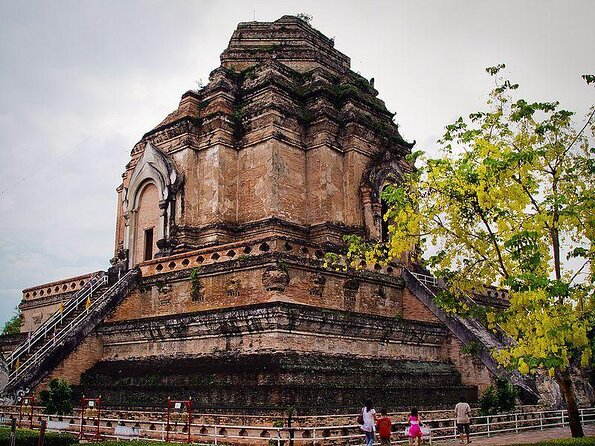
- Wat Chedi Luang scale: a tall 60-meter tower tied to the Emerald Buddha legacy
- Teakwood craftsmanship at Wat Phan Tao: a rare all-wood ordination hall in Lanna style
- Wat Phra Singh’s sacred Buddha image: a 1,500-year-old figure that’s central to Lanna religious life
- Warorot Market time: Kad Luang’s big-market atmosphere, including a wet market section
- Small groups up to 15: enough companionship to make it fun, not so many people that you lose the story
A half-day Chiang Mai temple route that still feels complete
This is the kind of tour that works when you want the famous highlights without turning your trip into a full-day endurance test. You’re out for about 4 hours 15 minutes, and you can go morning or afternoon depending on what fits your schedule.
The value here is the structure. Chiang Mai’s temples can feel like a blur if you show up with a map and no context. With a professional English-speaking guide, you spend your time actually understanding what you’re looking at, not just photographing stone and gold.
Also, the comfort factor matters. You move between sites in a vehicle with air-conditioning, which is a big deal in the heat and when you’re trying to keep energy for the steps and temple courtyards.
You can also read our reviews of more tours and experiences in Chiang Mai


Wat Phra That Doi Suthep: 306 steps, naga stairs, and top-of-city views
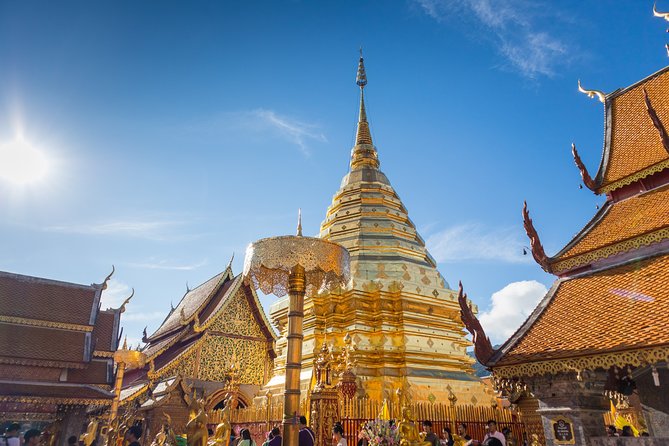
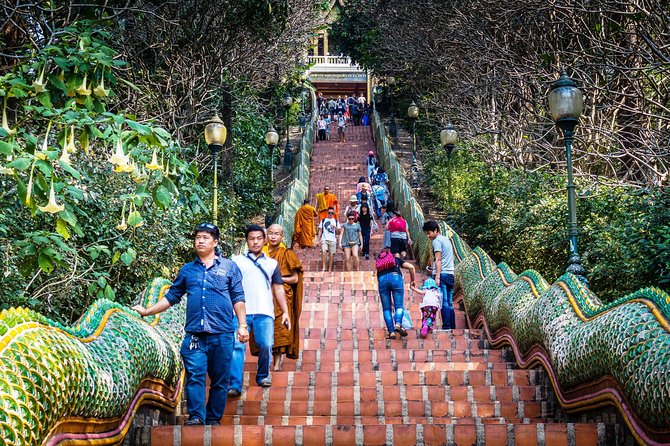
Doi Suthep is the crown jewel for a reason. You’ll drive up the winding mountain road to a temple perched near the summit, then finish with the 306 steps. The staircase is designed in a way that’s meant to evoke a naga (dragon-headed serpent), so the climb is part of the show, not just a workout.
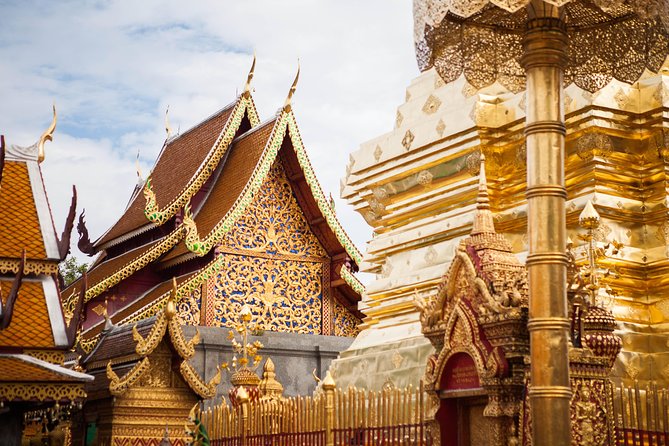
What I’d expect to hit you first is the temple’s strong visual identity. Inside, you’ll see a copper-plated chedi topped with a five-tiered gold umbrella, believed to contain partial relics of Lord Buddha. Even if you’re not deep into Buddhist symbolism, it’s the kind of landmark that makes you slow down.
Then there are the views. On a clear day, you get commanding scenery over Chiang Mai—city rooftops and the mountain haze playing off the bright temple structures. If you’re sensitive to sun, plan for that. You’re high up, and you’ll still want sunglasses, a hat/cap, and sunscreen.
One practical note: some tours and routes include a short ride by funicular up to the top area, though your exact route can vary. Either way, you still end up walking the temple steps, so bring comfortable footwear and expect slow-going at certain stretches.
Wat Chedi Luang: a massive tower and the Emerald Buddha story
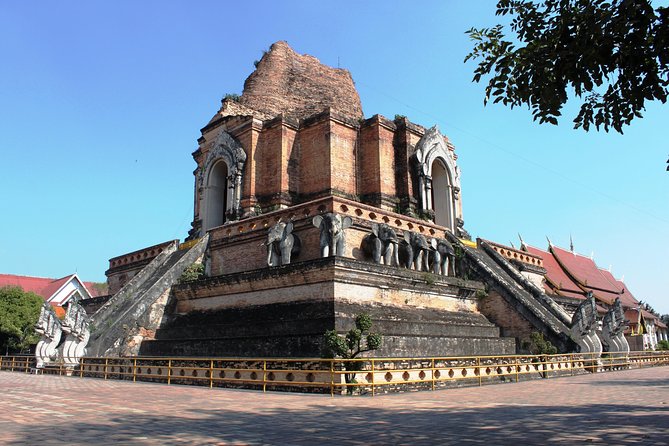
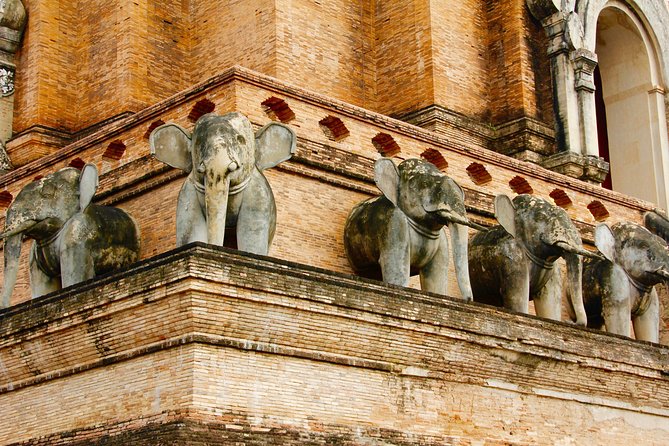
After descending back toward town, you head to Wat Chedi Luang Varavihara, one of Chiang Mai’s most revered sites. This is the temple associated with the Emerald Buddha era, and the site feels historic in a very grounded way—less like a museum, more like a living religious landmark.
The scale is hard to miss. The main structure towers about 60 meters (196 feet), so when you arrive, your eyes go upward fast. That height gives the complex a dramatic presence, especially from angles where you see multiple roof lines and the tower all at once.
This stop is where the guide’s explanations really pay off. If you only skim, you can miss how temples in Chiang Mai tie into royal and religious power over time. A good guide helps you connect the Emerald Buddha legacy with why this temple mattered so much to the region’s identity.
A small reality check: this is a temple area, not a quick photo pass. You’ll want a little patience—slow down, look at the details, and let your eyes adjust before you push on.
Wat Phra Singh and Wat Phan Tao: two styles, one Lanna identity
This tour includes multiple temple styles, and that’s the smart part. Instead of seeing one version of “pretty temple,” you get contrast: grand royal temple space plus a more craft-forward, tradition-specific site.
Wat Phra Singh (Temple of the Lion Lord)
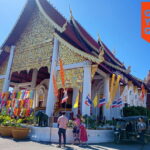
Wat Phra Singh is a 14th-century temple tied to the Lanna Kingdom’s religious center. It houses a sacred Buddha image said to be about 1,500 years old, which makes the site feel heavy with meaning beyond aesthetics.
The complex includes several buildings with different architectural and artistic merits, so you’ll get variation as you move through courtyards. This is the stop I recommend for anyone who enjoys noticing how styles change within one temple complex—different roof forms, ornamentation, and layout choices.




Wat Phan Tao (the teak ordination hall)
Then there’s Wat Phan Tao, known for an ordination hall built entirely of teakwood. It’s often described as one of the few remaining all-wood structures of its kind in Chiang Mai, which makes it especially worth your attention.
Even if you don’t speak the language, wood temples give you something stone won’t: texture. Grain patterns, aging details, and the way light moves across surfaces can make this stop feel unusually intimate compared with larger complexes.
If your camera roll is already full from Doi Suthep, this is a good place to reset and look for smaller, craft-focused images. You’ll usually find more visual variety here than you expect.
Warorot Market (Kad Luang): where the day gets human
The last leg is a market stop at Warorot Market (Kad Luang). This is Chiang Mai’s biggest market, and it’s in the city core—so it brings you back to everyday life after temple reverence.
The market is also where you’ll feel the contrast between ceremonial quiet and street-level bustle. The tour focuses on the experience rather than a meal plan, but you’ll likely have chances to browse and maybe snack if you want.
One thing to know: the market includes a wet market section. That means sights and smells can be intense, so if you’re sensitive, keep your distance and focus on what you can comfortably handle.
As a practical travel move, I love adding markets at the end of a temple day. Your brain is already in sightseeing mode, and you get to carry that cultural connection into something practical—how people live, buy, and cook.
Private vs shared tour: how it changes your day
You can choose either a shared group tour or a private option. Either way, you’re traveling by air-conditioned vehicle and working with an English-speaking guide.
Here’s the difference that matters most: with a private guide, you can usually move at a more natural pace. Some guides will tailor explanations to your questions, and you’ll likely spend less time “waiting for the group” at photo points or rest stops.
With a shared format, the group stays small (maximum 15 travelers). That keeps it from turning into an assembly line, and you’ll often still get good attention—just with a bit more balancing between timings.
I also like the half-day format with either choice because you can layer in other Chiang Mai plans afterward. If you want massage time, a cooking class, a night market walk, or just a long coffee break in town, you’re not locked into an all-day schedule.
What to expect from the temple etiquette and dress rules
Temple etiquette isn’t optional on this route. Plan to take your shoes off before entering where required, and expect a guide to tell you which stops require that.
Doi Suthep and the other major temple complexes also come with strict clothing rules tied to royal temples and palaces. You should dress appropriately by wearing clothes that cover shoulders and fall below the knees. I’d treat this as a checklist, not a suggestion, because the tour notes that inappropriate shirts or very bright/disrespectful prints can lead to refusal of entrance.
If you’re traveling light, here’s the simple solution: carry a light scarf or thin layer that can cover your shoulders, and make sure your bottoms are knee-length or longer. Flip-flops are fine for outside walking, but plan to be moving in and out of shoe-removal zones.
This is also a good tour to start early in your trip. Once you learn the rules and the flow, your later temple visits feel easier.
Price and value: what $66.20 gets you in real time
At $66.20 per person, this tour isn’t trying to be a bargain-basement deal. What you’re paying for is the combination of guide time, air-conditioned transport, and entrance fees.
The entrance fees are included for the temple stops listed in the tour description, and that can add up fast if you’re paying separately on your own. You also get the convenience of having the day arranged logically, with the guide helping you avoid time-wasting confusion on what to see and why.
My rule of thumb: if you’re spending a day in Chiang Mai and you care about understanding temples beyond surface-level photos, a guided half-day like this often delivers better value than DIY. You’re buying a fast education—plus a smoother schedule—without committing to a full day.
Small group pacing: the difference good guides make
The best reviews for this tour consistently point to guide style: friendly, patient, and able to explain history and Buddhist culture in a way that feels easy to follow. Names that come up include Tinny, Nu, Mick, Krisada, Yaya, and Jack, and the common thread is clear communication plus a calm pace.
That pace shows up in practical ways. Good guides take extra care with timing, help with photos without rushing you, and keep the visit from turning into a stopwatch challenge. In rainy-season conditions, some people also report the tour feeling less crowded, which makes it easier to take in details.
If you hate feeling rushed, consider choosing a private option or booking a time window you know won’t be chaotic for you.
What I recommend you bring for a comfortable temple day
This is a sun-and-steps tour, so pack like you’re going outside for real.
Bring:
- Sunglasses
- A hat/cap
- High SPF sunscreen
- Comfortable walking shoes (you’ll do steps and uneven temple areas)
- Modest clothing that fits the shoulder and knee rules
Also protect your phone/camera from sun and weather. The tour notes that natural elements can damage electronic equipment, so keep your devices protected if conditions are hazy, rainy, or misty.
And if you’re planning the rest of your day afterward, consider a light layer. Mountain air and temple shade can feel cooler even when the city is hot.
Should you book this Chiang Mai half-day temple tour?
Book it if you want a high-impact first taste of Chiang Mai’s major temples—especially Doi Suthep, plus major Lanna sites like Wat Chedi Luang and Wat Phra Singh. It’s also a great fit if you’d rather spend your time asking questions and learning than figuring out ticket lines and temple context on your own.
Skip or reconsider if you know you struggle with stair climbs or you might show up without clothing that meets the dress code. In that case, you’ll spend energy on fixes instead of enjoying the sights.
If you’re choosing between morning and afternoon, pick what matches your energy and weather expectations. And if weather looks questionable, be ready for the tour to shift plans—this kind of day depends on good conditions, especially for mountain viewpoints.
In my view, this is the sort of half-day that gives you Chiang Mai’s “why” along with its “wow.” You’ll leave with a clearer sense of how these temples connect to the city’s identity, not just a stack of photos.
FAQ
How long is the Chiang Mai temples half-day tour?
It runs about 4 hours 15 minutes (approx.).
What sites does the tour include?
The tour visits Wat Phra That Doi Suthep, Wat Chedi Luang Varavihara, Wat Phra Singh, and Wat Phan Tao, with a stop at Warorot Market (Kad Luang).
Is pickup from downtown Chiang Mai included?
Pickup is offered, but transfers are only operated within the downtown Chiang Mai areas and restricted to main hotels. Areas outside the central business district may require supplementary charges.
Can I choose a shared or private tour?
Yes. You can choose a shared or private option. The private option includes a personal guide.
Are entrance fees included?
Yes. All entrance fees for the visits mentioned in the description are included.
Is transportation included?
Yes. The tour includes transportation by an air-conditioned vehicle with a professional driver.
What should I wear to temple stops?
You should dress appropriately for royal temples and palaces: clothes must cover shoulders and fall below the knees. Bright colors or disrespectful prints may lead to refusal of entrance.
Do I need to remove my shoes?
Shoes must be removed where required by local customs, and your guide will tell you which sites require it.
What if the weather is bad?
This tour requires good weather. If it’s canceled due to poor weather, you’ll be offered a different date or a full refund.
Is free cancellation available?
Yes. You can cancel up to 24 hours in advance for a full refund. If you cancel less than 24 hours before the start time, the amount paid won’t be refunded.