REVIEW · CHIANG MAI
Evening Cooking Class in Organic Farm with Local Market Tour
Book on Viator →Operated by The Best Thai Cookery School · Bookable on Viator
Thai food starts at the market.
This evening class pairs a real Somphet Market ingredient hunt with hands-on cooking at your own individual station in a nearby organic farm area, so you leave with both skills and a full stomach. You get a professional teacher guiding the process, plus enough time to shop, cook, and actually eat what you make.
The main thing to consider is the timing. You start around 3:30 pm, so if you prefer a slow dinner after midnight or you hate late-afternoon pickups, this one may feel rushed.
In This Review
- Key Things to Know Before You Go
- Evening Cooking Class in Chiang Mai: Why the 3:30 pm Timing Works
- Somphet Market: Your Quick Training Ground for Better Thai Flavors
- Organic Farm Kitchen Prep: From Fresh Ingredients to Curry Paste
- Cooking Six Dishes at Your Own Station (Plus the Show Dishes)
- Eating What You Cook: The Most Useful Part of Any Cooking Class
- Pickup, Transfers, and Small-Group Pace: Practical Logistics That Matter
- Price and Value: Is $29 Worth It?
- Who This Evening Cooking Class Is Best For
- Practical Tips for a Smooth 3:30 pm Start
- Should You Book This Evening Cooking Class and Market Tour?
- FAQ
- Is hotel pickup and drop-off included?
- Where does the tour start?
- How long does the experience take?
- How many people are in the group?
- What happens at the market stop?
- What will I learn in the cooking class?
- Is dinner included?
- What time does the cooking course take place?
- Is the ticket digital?
- What is the cancellation policy?
- FAQ
- Is hotel pickup and drop-off included?
- Where does the tour begin?
- How long is the tour?
- How many people are allowed per tour?
- What is Stop 1?
- What is included in Stop 2?
- Are specific dishes included in the curriculum?
- Do I eat after cooking?
- Is there a confirmation after booking?
- What if the tour has too few participants?
Key Things to Know Before You Go
- Somphet Market first: a short 30-minute local market stop helps you learn ingredients before you cook.
- Organic farm angle: you hand-pick fresh items and learn how the produce connects to flavor.
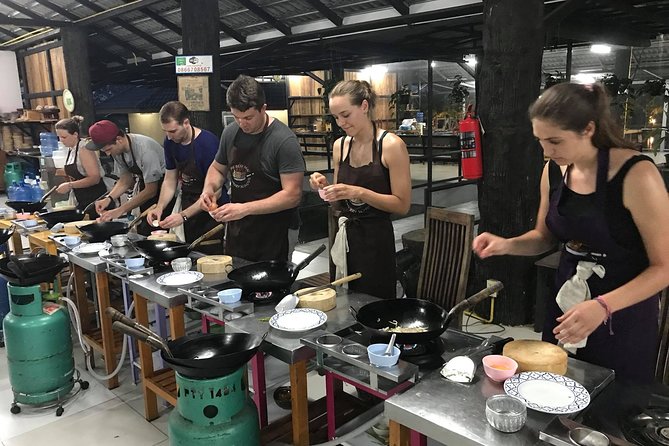
- You cook, you don’t watch: individual cooking stations make the class feel hands-on from start to finish.
- A six-dish payoff: the course leads to six dishes, so you get variety instead of one big plate.
- Chef Perm adds humor: the teacher can be funny and keeps the mood light while you learn.
- Dinner is included: you sit down to eat your creations after class.
Evening Cooking Class in Chiang Mai: Why the 3:30 pm Timing Works
Chiang Mai days can be packed. This format is smart because it turns the late afternoon into something useful instead of wandering hungry. With round-trip hotel transfers included, you can spend less time figuring out transport and more time focused on flavor and technique.
Starting at 3:30 pm also has a nice rhythm. You go to the market while the day still has energy, then you transition to the farm-side cooking kitchen for a proper dinner. Expect it to run about 5 hours total, which is a good length for a solo traveler or a couple who wants a full experience without losing an entire day.
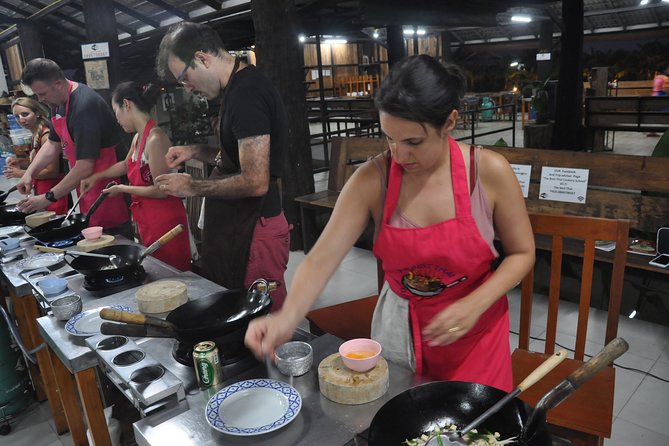
One more practical note: the group is capped at 10 people. That matters because you’re at your own station, and you’re not stuck waiting behind a crowd to get help.
You can also read our reviews of more shopping tours in Chiang Mai
Somphet Market: Your Quick Training Ground for Better Thai Flavors
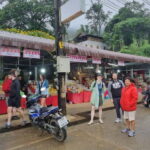
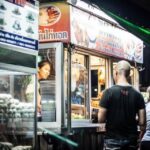
The tour’s first stop is Somphet Market, about a 30-minute introduction to northern Thai shopping habits. You’re not just killing time here. This is where you learn what to look for, smell, and understand before you start cooking.
What I like about this kind of market-first setup is the cause-and-effect lesson. When you later make curry paste or build a salad, the ingredients make sense because you already saw them in context. Even if you don’t buy anything, you’ll likely leave with a mental map of common Thai produce and herbs.
The other plus: the market stop includes admission. That’s one less thing to handle once you’re already in motion. And because the tour is near public transportation, you’re not trapped if you want to plan an independent day—but the pickup is still the easiest option if you’re staying central.
Possible drawback: 30 minutes goes fast in any market. If you love slow browsing, you’ll need to treat this as an orientation stop, then plan extra time later on your own.
Organic Farm Kitchen Prep: From Fresh Ingredients to Curry Paste
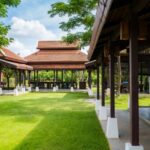
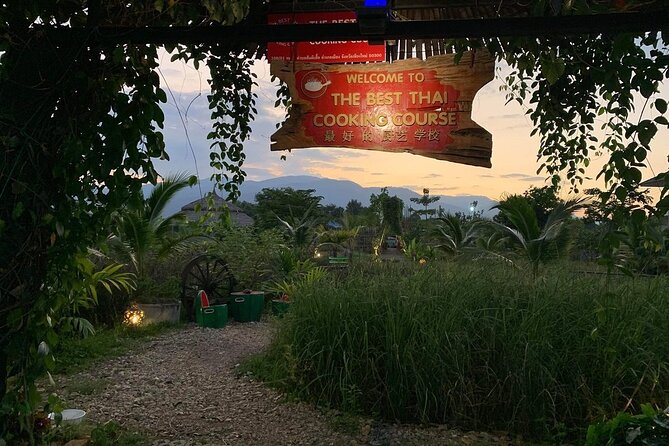
After the market, you’re driven to the cooking course area in a farm setting just outside Chiang Mai. The big value here is that the class connects ingredients to farming and freshness. You get a chance to hand-pick ingredients, which sounds simple, but it changes how you cook. You start paying attention to what’s mature, fragrant, and ready, not just what looks good in a photo.
In the kitchen, the course focuses on Thai cooking basics with real process work. You’ll learn how to make authentic curry paste from scratch, which is the heart of many Thai dishes. The teacher also uses herb and plant smells to build understanding fast. That’s the kind of sensory shortcut you can’t get from a cookbook.
You’ll also see (and practice) how Thai flavor comes from balance, not just heat. Even if you’ve cooked Thai food before, curry paste usually makes or breaks the result. This class gives you the step-by-step approach so you can repeat it later at home with a clearer idea of what each component is doing.
Here’s the honest consideration: curry paste work can take some effort, especially if you’re not used to grinding and mixing. But that’s also why it’s worth it. You’re not just learning a recipe name—you’re learning a technique.
Cooking Six Dishes at Your Own Station (Plus the Show Dishes)
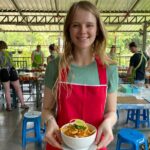
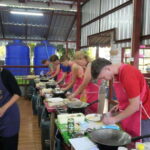
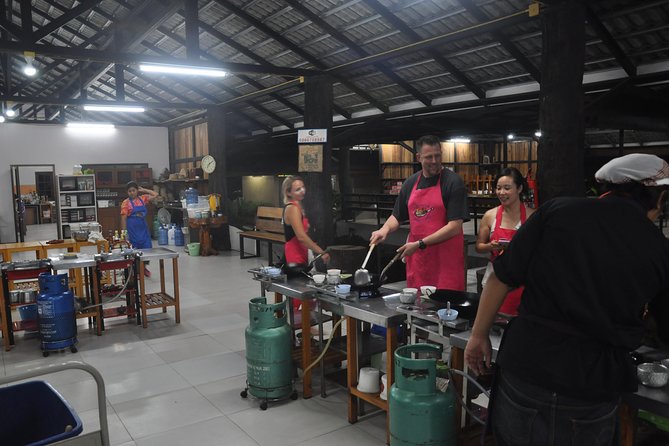
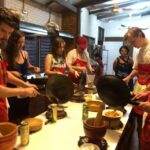
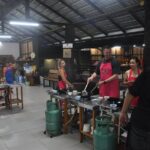
This is not a sit-and-watch class. You get individual cooking stations, which is a huge quality-of-life factor. It keeps the pace moving and lets you ask questions without waiting your turn for space.
The course structure is built around variety. You’ll cook up six dishes, so you get a broader view of Thai home cooking rather than one highlight plate. One session includes a papaya salad focus, plus mango sticky rice as a key dessert element. That combination is classic for a reason: it shows off sour-salty-sweet balance in savory food, then finishes with a satisfying sticky sweetness.
You’ll also get a demonstration element and then time to apply what you learn. The overall goal is practical: you should be able to taste your own food and understand why it tastes that way. And because you’re producing multiple dishes, you’ll cover a range of techniques and flavor profiles.
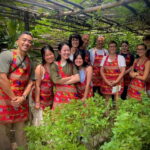
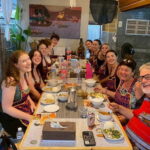
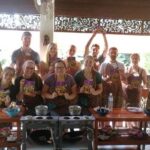
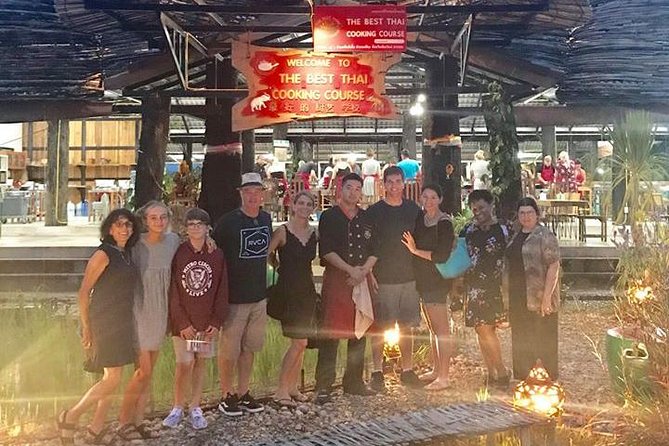
Another detail I appreciate: there’s a group picture included. It’s small, but it’s also nice when you’re on an activity that runs in one shared block. You’ll leave with a memory that isn’t just your camera roll.
If you’re a picky eater, this may not be the right choice unless you can be flexible. The class is built around common Thai dishes, and you’ll be cooking what the curriculum leads with.
Eating What You Cook: The Most Useful Part of Any Cooking Class
After cooking, you sit down to eat the meal you made. This is the moment where everything clicks. When you taste a curry, a salad, or the sweet finish, you can connect your hands-on effort to the outcome.
This meal included setup is what makes the experience feel like real value. Many cooking classes teach technique but then send you off hungry. Here, you’re guided through a full dinner flow, which matters if you’re doing it as an evening plan while visiting Chiang Mai.
Also, because it’s held in a farm-area setting a short drive from the city, it tends to feel more relaxed and away from traffic noise. Even if you’re not going for a scenic day, it helps you focus on cooking, not logistics.
One more practical note: come ready to eat. If you snack heavily before the pickup, you might feel too full to enjoy your own dishes at the end.
You can also read our reviews of more tours and experiences in Chiang Mai


Pickup, Transfers, and Small-Group Pace: Practical Logistics That Matter
The tour includes round-trip hotel transfers, and that’s a big deal in Chiang Mai. Without it, you’d likely burn time negotiating transport or waiting for rides after the class. With transfers included, the schedule stays simple and you can plan the rest of your evening around a clear start.
The tour also uses a mobile ticket, which you’ll appreciate if you’re traveling light. It keeps you from juggling paper printouts while you’re moving between pickup points, markets, and the farm area.
With a maximum of 10 people, you’re not stuck in a massive class. That size usually means more attention from the teacher and less time feeling anonymous. In a market and cooking combo, that attention makes a difference because ingredients and questions come fast.
Possible drawback: with pickup included, you’ll want to be reachable around the start time. If your hotel requires extra steps for pickup, expect a little coordination.
Price and Value: Is $29 Worth It?
At $29, this is priced like a budget-friendly evening activity. The real question is what’s included, and here the math is surprisingly good.
You’re getting:
- A market stop with admission included
- A 4-hour cooking course with admission included
- Individual cooking stations
- A meal where you eat what you cooked
- Round-trip hotel transfers
- A small group size (up to 10)
If you’ve taken Thai food tours before, you know how expensive cooking instruction can get, especially when transfers and admissions are added. Here, the structure is tight enough that you’re not paying just for the kitchen space. You’re paying for instruction time, ingredients, and the full dinner outcome.
You’re also getting a real skill. Making curry paste from scratch is the kind of thing you can repeat later. It’s not just eating a meal; you’re learning a process.
My only caution on value: because it’s an evening class, you should treat it as a committed dinner plan. If you’re the type who likes to roam at night for street food, this may replace one of those experiences.
Who This Evening Cooking Class Is Best For
I’d send this to you if you:
- Want a beginner-friendly path into Thai cooking
- Like learning ingredients through a market, not just from a store shelf
- Prefer an activity with small group size
- Want a ready-made dinner plan that’s more than a snack-and-sip tour
- Travel solo or as a couple and appreciate hotel pickup
It can also work well if your time in Chiang Mai is limited. In about 5 hours, you get a market lesson, cooking basics, multiple dishes, and a full meal.
I’d skip it if you:
- Hate late-afternoon schedules
- Don’t want to do market walking at all
- Need a very slow, roaming style activity (this one moves with purpose)
Practical Tips for a Smooth 3:30 pm Start
A few small things make the difference between a good time and a slightly annoying one.
Wear comfortable shoes. Market floors and cooking-area walkways can be slippery or uneven. Bring a light layer too; farm-area air can shift as the evening cools down.
Go hungry, or at least hungry enough to enjoy the end meal. If you arrive already full, the dinner will feel like extra.
If you’re into photos, you’ll have natural moments: the market, the cooking station work, and the included group picture. The class setting tends to be photogenic in a simple way, especially with herb ingredients and curry paste prep.
Finally, plan your evening around the 3:30 pm start. This tour is a single block, and it’s easiest when you don’t try to stack other activities on either side.
Should You Book This Evening Cooking Class and Market Tour?
If you want an efficient, hands-on Thai food experience in Chiang Mai, I think this one is an easy yes. You get a market-first start, professional instruction, individual stations, and a meal that’s part of the curriculum. For $29, the included transfers and admissions make the value feel real, not inflated.
Book it if you like structure. The itinerary runs smoothly as one continuous cooking dinner arc. If you’re flexible about timing and ready to get your hands in curry paste, you’ll likely come away feeling like you gained something you can repeat.
If you hate markets or you’re trying to keep your evenings free for street food hunting, then it might feel too scheduled. In that case, you might prefer a more self-directed food day.
FAQ
Is hotel pickup and drop-off included?
Yes. Round-trip hotel transfers are included for added convenience.
Where does the tour start?
The start time is 3:30 pm, and the tour includes pickup offered from your hotel area.
How long does the experience take?
It runs about 5 hours (approx.).
How many people are in the group?
The tour has a maximum of 10 travelers.
What happens at the market stop?
You visit Somphet Market for about 30 minutes, and admission is included.
What will I learn in the cooking class?
You’ll learn to make curry paste from scratch and cook six dishes, with teaching and a demonstration that includes papaya salad and mango sticky rice.
Is dinner included?
Yes. After the class, you eat the meal you cooked.
What time does the cooking course take place?
The overall tour starts at 3:30 pm, and the cooking course segment runs about 4 hours.
Is the ticket digital?
Yes. The tour offers a mobile ticket.
What is the cancellation policy?
Free cancellation is available up to 24 hours in advance for a full refund. If you cancel less than 24 hours before the experience’s start time, the amount paid is not refunded.
FAQ
Is hotel pickup and drop-off included?
Yes. Round-trip hotel transfers are included for added convenience.
Where does the tour begin?
The tour starts at 3:30 pm.
How long is the tour?
The experience lasts about 5 hours.
How many people are allowed per tour?
The tour has a maximum of 10 travelers.
What is Stop 1?
Stop 1 is Somphet Market, for about 30 minutes, and admission is included.
What is included in Stop 2?
Stop 2 is The Best Thai Cooking Course, which includes a market-to-cooking experience and instruction to make curry paste and cook six dishes.
Are specific dishes included in the curriculum?
Yes. The course includes a demonstration featuring papaya salad and mango sticky rice.
Do I eat after cooking?
Yes. You stay to eat what you cooked.
Is there a confirmation after booking?
You should receive confirmation at the time of booking.
What if the tour has too few participants?
The experience requires a minimum number of travelers. If it’s canceled due to not meeting that minimum, you’ll be offered a different date or a full refund.