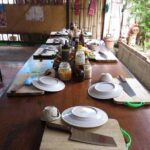
Thai food first, elephants second, all in one long day. I love how the day begins with picking real ingredients at Mae Hia Fresh Market, then turns into hands-on cooking at Team Aim Cooking School with teacher Aim, who brings 10 years of experience. The other big win is the Joy Elephant Sanctuary observation time, where you prepare elephant food and watch their natural behavior up close.
The main drawback to know up front: it’s a full 10 to 11 hours starting at 8:00am, so you’ll want comfortable shoes and patience for a busy schedule.
If you’re after an authentic food day that doesn’t feel like a checklist, this hits a sweet spot. You’ll also get vegan and vegetarian options, a shared meal you can actually be proud of, and a small group capped at 24 people.
In This Review
- Key highlights worth waking up for
- How this Chiang Mai food-and-elephant day really flows
- Mae Hia Fresh Market: picking ingredients that make the food taste right
- Team Aim Cooking School: cooking with teacher Aim and a view
- What you’ll eat during the cooking session (and what’s included)
- Joy Elephant Sanctuary: Karen clothing, feeding, and calm observation
- The waterfall break and herbal tea reset
- Price and value: is $87.12 a fair deal?
- Group size, comfort, and the small practical stuff
- Who should book this Chiang Mai experience?
- Practical tips before you go
- Should you book this tour?
- FAQ
- What time does the tour start in Chiang Mai?
- How long is the Chiang Mai cooking class and elephant sanctuary experience?
- Does the tour include hotel pickup?
- What’s included in the price?
- Do I need any prior cooking experience?
- Are vegan or vegetarian meals available?
- What do you do at Joy Elephant Sanctuary?
- How big is the group?
- What’s the cancellation policy?
Key highlights worth waking up for
- Mae Hia Fresh Market ingredient picking before you cook
- Cooking with teacher Aim at Team Aim Cooking School (10 years’ experience)
- Make and eat a full Thai meal, with vegan/vegetarian options available
- Karen clothing + preparing elephant food at Joy Elephant Sanctuary
- Elephant observation plus a breather with herbal tea and a waterfall stop
How this Chiang Mai food-and-elephant day really flows
This is an early-to-late day trip built around two anchors: Thai cooking and elephant observation. You’ll be in an air-conditioned vehicle for transport, and you’ll get enough food included that you don’t need to hunt for lunch on your own.
The pacing matters. You’ll do a short market stop first, then several hours focused on cooking, then about another few hours at the sanctuary with activities and observation. Plan to eat, drink, and rest when the breaks show up, because the whole rhythm is “learn, cook, then shift gears to nature.”
You can also read our reviews of more cooking classes in Chiang Mai
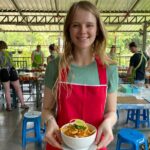
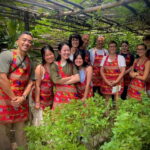
Mae Hia Fresh Market: picking ingredients that make the food taste right
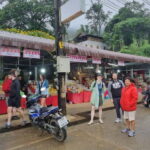
You start with hotel pick-up and head to Mae Hia Fresh Market, where you’ll choose fresh ingredients for your cooking session. The time here is short (about 30 minutes), so the goal isn’t shopping for souvenirs. It’s more like a fast, guided reset of your senses: you see what Thai flavors look like before they hit a cutting board.
Why this stop is valuable: many cooking classes in tourist areas skip the ingredient logic. Here, you’re choosing things you’ll actually use, which helps you understand why certain herbs, produce, and aromatics matter in Thai dishes. Even if you cook at home only occasionally, you’ll leave with a better sense of how Thai cooking builds flavor.
A practical consideration: the market portion is included and ticketed, so don’t plan to arrive late or squeeze extra stops in the morning. You’ll want to be ready to walk and pick at a steady pace.
Team Aim Cooking School: cooking with teacher Aim and a view
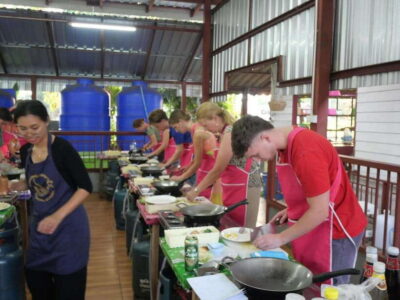
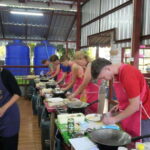
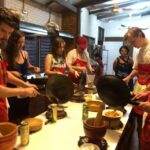
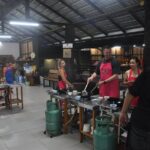
Next you’ll go to Team Aim Cooking School for about 3 hours of cooking. The venue has a strong “teaching kitchen” feel, and there’s even mention of a Grand Canyon view, which makes the classroom time easier on the eyes.
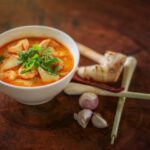
Teacher Aim leads the session, and the experience is built around learning authentic Thai dishes through real steps—not just watching. You’ll cook a mix of classic categories such as spring rolls, curries, soups, salads, and stir-fries. If you have dietary preferences, the tour offers vegan & vegetarian options, and you can also flag allergies so the teacher knows what to adjust.
What I like about this style of class: you’re not stuck making only one dish. The structure is designed so you learn techniques across several menu types, which makes it easier to recreate something later. One review highlight that matches the vibe here: guests often come out feeling like they cooked a true spread, not just sampled a single plate.
Possible drawback: because it’s an active class, you’ll be on your feet and working with spices and hot pans. If you’re sensitive to strong aromas, take slow breaths while you cook—Thai food is fragrant on purpose.
What you’ll eat during the cooking session (and what’s included)
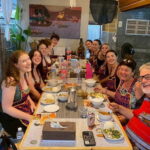
Food isn’t an afterthought on this tour. You’ll get brunch and dinner, plus coffee and/or tea and drinking water. The class also includes cooking ingredients, so you’re not paying extra for the materials.
The way this matters for your day: once your meal is planned, your schedule stays smoother. You aren’t racing from one place to another, and you’re not stuck with a “tour snack” that doesn’t feel like a real meal.
You’ll also receive an e-book recipe set, which helps you translate what you did in the kitchen into something you can repeat. That matters if you’re the kind of person who likes to cook at home and doesn’t want to rely on memory alone.
Joy Elephant Sanctuary: Karen clothing, feeding, and calm observation
After cooking, you head to Joy Elephant Sanctuary for about 3 hours. This part is centered on responsible tourism and elephant observation—you’ll learn about elephant history and behavior, then participate in hands-on activities like preparing elephant food.
One of the most memorable parts is the cultural touch: you’ll change into traditional Karen clothing before the elephant activities. It’s not just a photo moment. It puts you in the rhythm of the day and helps frame the experience as something tied to local culture.
Then comes the elephant work. You’ll prepare elephants’ food and snack, and you’ll observe the elephants in what’s described as their natural behavior in a jungle setting. This is the heart of the tour for animal lovers—your time isn’t limited to watching from a distance while the rest of the day is spent elsewhere.
A key consideration: the tour includes observation and feeding prep, but it doesn’t emphasize any kind of riding or performance. If you care deeply about how animals are treated, pay attention to what the sanctuary emphasizes in the day’s instruction—this tour is clearly designed around education and observation rather than showy gimmicks.
You can also read our reviews of more tours and experiences in Chiang Mai

The waterfall break and herbal tea reset
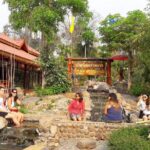
Between the elephant activities and observation time, you also get downtime with herbal tea and a break at a waterfall. It’s described as being in lush forest surroundings near serene rivers.
This is more than a nice add-on. It gives your brain a reset after the intensity of cooking and the emotional focus of being around elephants. If you tend to get “tour tired,” that break is a big part of why this day feels rounded instead of exhausting.
Price and value: is $87.12 a fair deal?
At $87.12 per person, this tour can look like a splurge—until you break down what’s actually included. You’re paying for transport (air-conditioned vehicle), market admission for ingredient picking, the full cooking class, cooking ingredients, meals (brunch and dinner), coffee/tea, and water. Then the cost also covers elephant food and snack, insurance, and an e-book of recipes.
That’s a lot of “covered costs” packed into one ticket, which is where the value comes from. If you tried to assemble this yourself—market visit, guide-led cooking, sanctuary admission, food, and transport—you’d likely spend more and spend extra time coordinating.
The tradeoff is time. This isn’t a quick half-day. It’s a long day, so the price feels more reasonable if you truly want both cooking and elephants. If you only care about one half, you may feel like you’re paying to cover parts you don’t fully care about.
Group size, comfort, and the small practical stuff
The tour keeps things capped at maximum 24 travelers, which helps keep the pace from turning chaotic. You also have a mobile ticket, and you’ll get confirmation at booking.
You’ll be indoors in the classroom, then outdoors at the sanctuary. Expect the day to involve moving between places and participating in activities. If you’re bringing kids, note that while most travelers can participate, cooking classes are recommended for children above 5 years old.
Also, pets aren’t allowed, and a child seat is available on request. If your group includes anyone with food allergies, tell the cooking class teacher when you can, so the kitchen can adjust appropriately.
Who should book this Chiang Mai experience?
This is a strong fit if you want:
- a Thai cooking class that teaches through action, not just watching
- a day that mixes food with something meaningful like elephant education and observation
- vegan/vegetarian-friendly options without having to plan around it
- a guided experience with pickup and included meals, so you can relax and just show up
It’s also a great match for couples and small groups who like shared activities—everyone cooks, everyone feeds elephant food prep, and everyone gets the same rhythm.
If you’re extremely sensitive to animal-themed tourism ethics, you should read the sanctuary’s approach carefully before booking. This tour describes responsible tourism and observation, so it’s not positioned as a thrill ride. Still, your comfort level matters.
Practical tips before you go
- Come hungry. You’ll be cooking and you’ll also eat included meals, so skipping breakfast won’t help.
- Plan for a long day. With a 8:00am start and 10 to 11 hours total, pack a good mood and wear comfortable shoes.
- If you have allergies, speak up. The tour explicitly asks you to let the cooking class teacher know.
- If you’re traveling with kids, remember the cooking class recommendation is for children above 5.
- Bring your curiosity. The sanctuary part includes learning about elephant behavior, and the cooking part includes learning dishes like curries, soups, salads, stir-fries, and spring rolls.
Should you book this tour?
Yes, if you want one ticket that reliably delivers two highlights: a real Thai cooking session and an elephant sanctuary day focused on observation. The combination of market ingredient picking, teacher Aim’s instruction, included meals, and the sanctuary’s Karen clothing + feeding prep format makes it feel like a full cultural day rather than two unrelated stops.
I would skip it only if you’re short on time in Chiang Mai or you’re sure you only want the cooking (or only want the animals). Because it’s long, it’s best for travelers who truly want both.
If you do book, go in with the right mindset: eat what you cook, pay attention during the behavior teaching, and treat the waterfall herbal tea break as part of the experience—not downtime you’re rushing past.
FAQ
What time does the tour start in Chiang Mai?
The start time is 8:00am.
How long is the Chiang Mai cooking class and elephant sanctuary experience?
It runs about 10 to 11 hours.
Does the tour include hotel pickup?
Yes, pickup is offered.
What’s included in the price?
The tour includes brunch and dinner, coffee and/or tea, drinking water, elephant’s food and snack, insurance, cooking ingredients, and an e-book recipe set, plus vegan and vegetarian options and an air-conditioned vehicle.
Do I need any prior cooking experience?
No prior cooking experience is required.
Are vegan or vegetarian meals available?
Yes. Vegan and vegetarian options are available, including for the cooking class.
What do you do at Joy Elephant Sanctuary?
You’ll change into traditional Karen clothing, prepare elephant food, and observe elephants along with learning about their history and behavior. You’ll also have herbal tea and a break at a waterfall.
How big is the group?
The tour has a maximum of 24 travelers.
What’s the cancellation policy?
Free cancellation is available up to 24 hours in advance for a full refund. If you cancel less than 24 hours before the start time, the amount paid won’t be refunded.