REVIEW · CHIANG MAI
Guided Chiang Mai City Night Tour by EV Tram
Book on Viator →Operated by Touring Center · Bookable on Viator
Night in Chiang Mai feels different. On this EV tram tour, you slow down, learn the city’s meanings, and see temples and markets without the usual rushed grind. What I like most is the electric tram for a quieter ride and the way your guide turns each stop into everyday context, not just postcard views. One thing to keep in mind: it’s mostly an evening walk-and-tram rhythm, so you’ll want to be comfortable with short stretches on foot.
The group stays small, capped at 12 travelers, so it’s easier to ask questions and actually hear the stories. You start at the Three Kings Monument area and finish back where you began, with a schedule that mixes heritage sites with dinner-friendly street life. The evening tone also helps: the air can feel calm and serene, and that makes for great photo conditions.
In This Review
- Key Things to Know Before You Go
- A Quiet, Practical Way to See Chiang Mai After 6:00 pm
- Meeting at Three Kings Monument and Getting Oriented Fast
- Wat Chiang Man and Wat Lok Molee: Lanna-Style Temple Details You Can Actually Notice
- Chang Puek Gate to Wat Pa Pao: Where the Old City Meets Night Life
- The Burmese-Shan Influence at Wat Nong Kham
- Warorot Market and Tha Phae Gate: The Food and Festival Heartbeat
- Chiang Mai Gate Night Market: Dinner That Feels Guided, Not Random
- Wat Chedi Luang Varavihara and Wat Phra Singh: Big-Stupa Scale and Northern Style
- Price, Value, and What You’re Really Paying For
- Who This Tour Fits Best (and Who Might Want Something Different)
- Should You Book the Guided Chiang Mai City Night Tour by EV Tram?
- FAQ
- How long is the EV Tram city night tour?
- What time does the tour start?
- Where do I meet the guide?
- Is the EV tram included?
- Are temple and market admissions included?
- Is pickup and drop-off included?
- How big is the group?
- What’s the dress code?
- What’s the cancellation policy?
Key Things to Know Before You Go
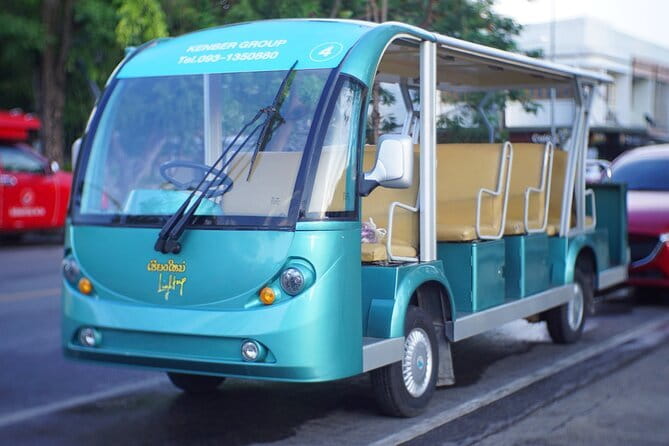
- EV tram ride included: less noise, smoother going between sights
- Temples plus markets: you get both spiritual sites and food stops
- Small group size (max 12): better listening, fewer bottlenecks
- English-speaking guide: context for what you’re seeing as you go
- Smart casual dress code: plan to look put-together for temple time
- No hotel pickup included: optional pickup is available within a 5km radius
A Quiet, Practical Way to See Chiang Mai After 6:00 pm
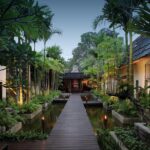
Chiang Mai’s nights can be the sweet spot: cooler air, softer street energy, and lights that make older buildings look extra sharp. This tour is built around that idea. You’re not sprinting from one landmark to the next. Instead, you’re getting a guided orientation—how places fit together and how beliefs show up in daily life.
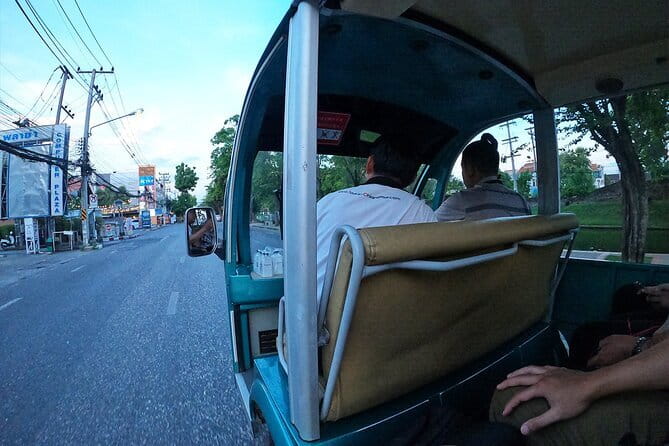
The EV tram matters more than you might think. Chiang Mai traffic and foot-only transfers can make an evening tour feel jostled. Here, the tram keeps things calmer and helps you cover ground without constantly stopping and starting. That also means you spend more time looking at what’s right in front of you—temple details, street scenes, and market life.
And yes, the night timing helps with photos. In the dark, you’re catching different angles than daytime: temple silhouettes, glowing signboards, and faces at food stalls. The most enjoyable part for me is how the tour doesn’t treat the night like a bonus—it treats it like the main event.
You can also read our reviews of more guided tours in Chiang Mai
Meeting at Three Kings Monument and Getting Oriented Fast
You’ll start at the Three Kings Monument area (QXRP+3WX on Prapokklao Road). The start time is 6:00 pm, and the tour ends back at the same meeting point, so you don’t have to worry about changing locations at the end of your evening.
From the beginning, the guide focuses on bearings. That’s a big deal in a city where the old walls, gates, and temple neighborhoods can feel confusing at first. You begin with a short history around the Three Kings Monument zone, including a connection to the city pillar called Inthakin. It’s said that the Inthakin pillar was erected in 1296 by King Mangrai, and there’s a bit of walking in this area to the Wat Inthakin Sadeu Muang site.
What you gain: by the time you’re moving through gates and temple districts later, the city map starts making sense. You’re not just learning names. You’re learning why those places were positioned where they are, and how they relate to the old city layout.
Also note the tone of the tour: it’s unhurried. Even though it’s about 2 hours on paper, the pacing is meant to feel relaxed rather than rushed. That unhurried pace is exactly what makes the stories land.
Wat Chiang Man and Wat Lok Molee: Lanna-Style Temple Details You Can Actually Notice
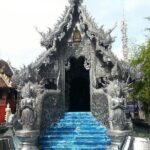
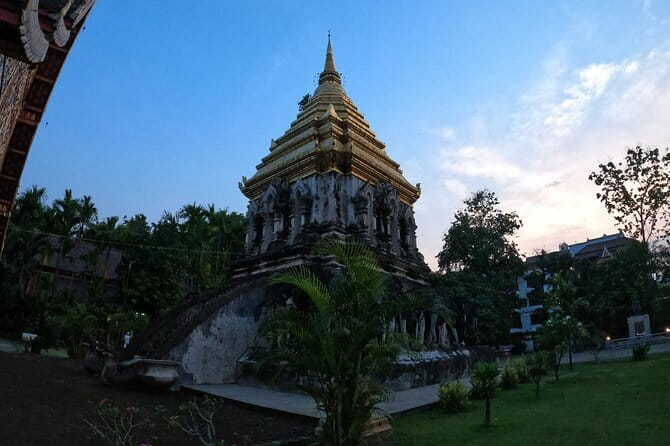
After your opening orientation, you hop from area to area and land at Wat Chiang Man. This is the oldest temple in the Lanna-style chedi tradition. One of the standout features here is the chedi support style—rows of elephant-shaped buttresses. That’s the kind of detail you can miss when a tour tries to move too fast.
Your stop time is short (about 5 minutes), but the point is focused viewing. You’re getting a quick explanation of what you’re looking at, not just a photo stop. In this style of tour, short stops work because the guide is setting context immediately.
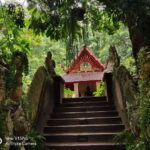
Next you move to Wat Lok Molee, described as a handsome wooden temple complex with terracotta sculptures. It’s considered one of the most attractive wát outside the city walls. The story link is also interesting: it’s thought to have been founded in the 14th century for monks from Burma.
What I’d expect you to enjoy at this point is the shift in texture. You’re moving from the old core stories to the wider religious geography outside the walls. The city doesn’t feel like one museum stop—it feels like a network.
Chang Puek Gate to Wat Pa Pao: Where the Old City Meets Night Life
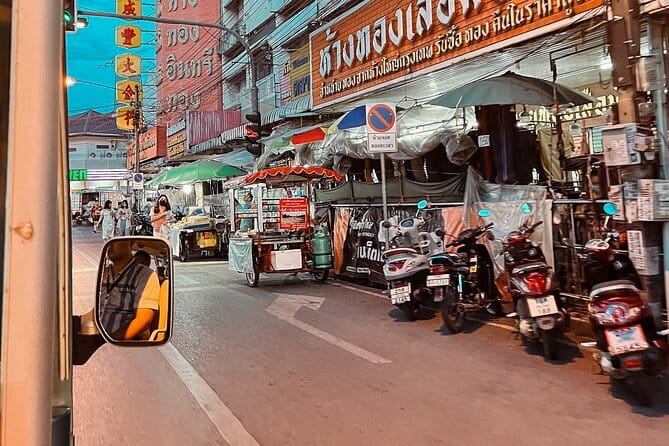
Then you reach Chang Puek Gate, the northern gate of the old city with the ruins of the old city wall nearby. This is where the tour starts to tilt toward neighborhood life. From here, you’re introduced to the night market energy for popular street food and dinner options.
This is a smart transition. You’ve already been building the story of the old city. Now you see what happens after dark when locals and visitors both feed their needs—food, conversation, and easy social time.
From there, the tour continues to Wat Pa Pao, noted as the first temple of the Ngiaw or Tai Yai in Chiang Mai. This kind of stop matters because it shows Chiang Mai isn’t only one cultural stream. It’s shaped by groups who brought beliefs, styles, and community ties.
The timing also helps your brain. You’re not trying to memorize temple architecture and then immediately jump into a chaotic market. You get a guided runway into the food scene, and then you’re ready.
The Burmese-Shan Influence at Wat Nong Kham
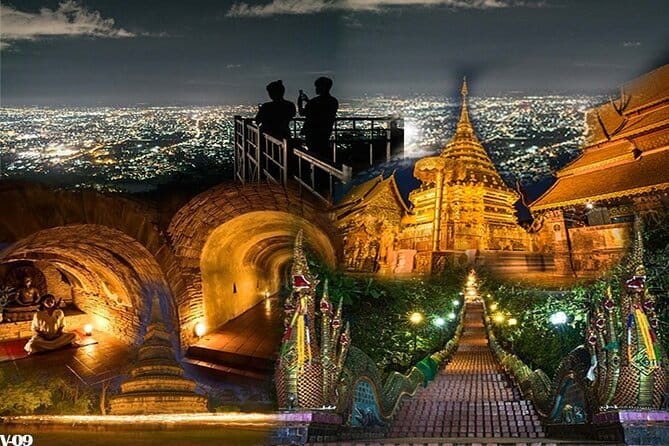
Wat Nong Kham is highlighted as a Buddhist temple with Burmese-Shan temple styles. Even without long time slots, this kind of stop gives you something valuable: variety in religious architecture.
If you’re the type of traveler who likes seeing how cultures travel and blend, you’ll appreciate that the tour doesn’t treat all temples as identical. It points out differences in style and gives you a reason to pay attention. You’ll likely leave with a mental checklist for what to notice if you later visit other wats on your own.
It’s also a nice reminder that Chiang Mai’s identity isn’t frozen in one era. Styles and communities shifted, and the city still shows that in the details.
You can also read our reviews of more city tours in Chiang Mai

Warorot Market and Tha Phae Gate: The Food and Festival Heartbeat
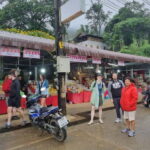
Warorot Market is next—described as Chiang Mai’s biggest local fresh market. This is your chance to see local everyday shopping rhythms and the types of products sold to local people. You also get a window into the city’s supply chain: what people buy, what’s in season, and how markets function beyond tourist snacks.
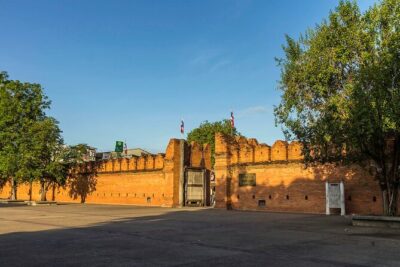
Then you move toward Tha Phae Gate, the main center for public city activities and festivals. This gives you a broader view of where energy gathers. Even on a night that isn’t a major festival day, Tha Phae Gate is the kind of place where you can feel how events would scale up.
This part is especially good for first-time visitors because it stops the tour from feeling like a sequence of unrelated monuments. Instead, it connects places that shape everyday life: markets for food and goods, and a central gate area for public gathering.
Chiang Mai Gate Night Market: Dinner That Feels Guided, Not Random
One of the most memorable stops is Chiang Mai Gate Night Market. You get about 25 minutes here, and the experience is framed through a local foodie lens. Admission is included for this market stop, and some snack and drinks are part of the foodie portion.
Here’s how to make this moment work for you. Use this time to identify a few food “lanes” you want to remember. You’re not meant to finish dinner inside the tour footprint only—you’re meant to sample and get ideas for where you’d happily return later.
Also, the inclusion of snacks and drinks is a real value add. It helps you avoid the awkward moment of arriving at a food market with low energy. Bottled water is included too, which is great for staying comfortable as you walk and look.
If you’re picky about where you eat, this market stop is one of the safest ways to start. You get context and you’re not walking in cold.
Wat Chedi Luang Varavihara and Wat Phra Singh: Big-Stupa Scale and Northern Style
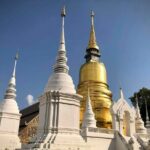
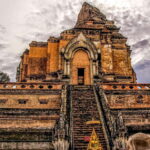
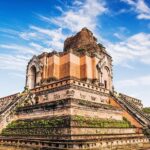
After the market energy, you switch back to temple focus with Wat Chedi Luang Varavihara. This stop includes admission and lasts about 10 minutes. Wat Chedi Luang is described as the temple of the biggest stupa. It also housed the city pillar along with the Tripiṭaka Buddhist scriptures.
This stop is a good example of why guided tours beat solo wandering, even when you’re only there briefly. The guide helps you connect what you see—scale, architecture, and the significance of what’s been housed there—with why that matters to the city story.
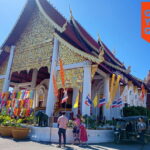
Then you move to Wat Phra Singh, noted as the most beautiful northern-style architecture reflected from the chapel. Northern style can look subtle if you’re rushing. With a guide walking you through what to notice, you’re more likely to remember specific details instead of just taking a few generic photos.
At this stage, your brain is probably tired in a good way. You’ve eaten snacks and seen market life, then you returned to stone-and-symbol meaning. That mix is what makes the tour feel balanced rather than one-note.
Price, Value, and What You’re Really Paying For
The price is $27.43 per person for an evening tour lasting about 2 hours, starting at 6:00 pm. That might sound like a small amount, but the real value is in what’s included.
You’re getting:
- EV tram during the trip
- Professional English-speaking guide
- All admission fees as mentioned
- Some snack and drinks during the foodie portion
- Bottled water
- Travel accident insurance
On top of that, most of the temple stops have admission listed as free, and the paid parts are included for the market and Wat Chedi Luang. So you’re not constantly pulling out your wallet for entrances mid-evening.
There are a couple of extras to understand. Pickup/drop-off is optional and costs THB 500 for locations within 5km from the city center. If you don’t need pickup, you simply meet at Three Kings Monument, and you’re good.
Also, the group discount is mentioned, and the tour uses a mobile ticket. Those details matter if you’re traveling with friends or you like having a low-friction entry process.
Is it a bargain? For what you get—tram transport, guide explanations, and market/temple time—it’s priced like a practical local experience rather than a heavy sightseeing production.
Who This Tour Fits Best (and Who Might Want Something Different)
This is ideal for you if you want your first Chiang Mai night to feel like orientation. The tour is built around learning how history, culture, and beliefs shape daily life. If you tend to enjoy meaning and context, you’ll likely love the pacing and the guide’s explanations at each stop.
It also suits you if you prefer calmer movement. The EV tram reduces noise and makes transfers easier. And with a max group size of 12, you’re less likely to feel lost in a crowd.
It may not be your perfect match if you want a long, self-directed food crawl with lots of free time. This tour is structured: short temple visits, a couple market blocks, then temple stops again. If you want hours of wandering only, you might prefer a different style of tour.
One more small consideration: the dress code is smart casual. It’s not formal temple wear rules, but you’ll look more comfortable following it—especially when you’re moving between gates, temples, and market areas.
Should You Book the Guided Chiang Mai City Night Tour by EV Tram?
I think this is a smart booking for most first-timers in Chiang Mai. It’s affordable for a guided evening with an EV tram, and it covers the exact mix that helps you feel oriented: old-city anchors, Lanna temple highlights, a look at fresh market life, and a night market dinner-style experience.
If you’ve only got one evening to spend, this tour gives you a strong foundation. You’ll come away with a clearer sense of where everything sits in the city and what to notice if you return on your own.
If you value calm pacing and guided stories you can remember later, book it. If you want total freedom and long stays in just one neighborhood, you may want to choose a different kind of food-focused outing.
FAQ
How long is the EV Tram city night tour?
It runs for about 2 hours.
What time does the tour start?
The start time is 6:00 pm.
Where do I meet the guide?
Meet at Three Kings Monument (QXRP+3WX, Prapokklao Road, Tambon Si Phum, Amphoe Mueang Chiang Mai, Chiang Wat Chiang Mai 50200, Thailand).
Is the EV tram included?
Yes. The EV tram is included during the trip.
Are temple and market admissions included?
All admission fees mentioned in the tour are included. Some temple stops are free, and admissions are included for the Chiang Mai Gate Night Market and Wat Chedi Luang Varavihara.
Is pickup and drop-off included?
No. Pickup and drop-off is optional, at THB 500 for a location within 5 km from the city center.
How big is the group?
The tour has a maximum of 12 travelers.
What’s the dress code?
Dress code is smart casual.
What’s the cancellation policy?
You can cancel for a full refund up to 24 hours before the experience’s start time.