REVIEW · CHIANG MAI
Half day Best of Chiang Mai City by Tuk-Tuk Private tours
Book on Viator →Operated by Chiang Mai Local Tours · Bookable on Viator
Chiang Mai clicks into focus fast. This half-day tuk-tuk tour is a smart way to map the old city, with an English-speaking guide handling the turns and timing while you relax. I like how you get four temples plus Warorot Market in just a few hours, so you leave with both sights and practical shopping ideas. If you want a simple start to your trip, it fits the bill; just remember it’s only a short loop.
The biggest catch is the “half-day” pace: you’ll move through a lot of highlights in about three hours. Also, because it’s a tuk-tuk ride, the comfort can vary by vehicle—one report noted worn seating—so it’s worth going in expecting bumps and less-than-perfect suspension.
In This Review
- Key Things I’d Make Sure You Notice
- A Half-Day Orientation on Chiang Mai’s Old City Loop
- Tuk-Tuk Pickup and Route: Gates, Canals, and Easy Photo Timing
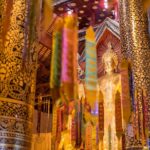
- Wat Chedi Luang: Big Stupa, Emerald Buddha Links, and Earthquake Damage
- 3 Kings Monument: A Quick Landmark Break Between Temples
- Wat Srisupan (Silver Temple) and Sala Sip Mu Lanna Silvercraft
- Warorot Market: Souvenirs, Food Stalls, and Real Market Pricing
- Price, Timing, and Who This Tour Fits Best
- Should You Book This Chiang Mai Tuk-Tuk Half-Day Tour?
Key Things I’d Make Sure You Notice
- Hotel pickup by tuk-tuk: Door-to-door starts make this a low-effort orientation.
- Old city canal and historical gates: You’ll see where the city used to be walled and defended.
- Wat Chedi Luang’s earthquake story: The damaged upper structure is part of what you’ll be looking at.
- Wat Srisupan’s silvercraft setting: It’s not just a pretty temple; you’ll get tied to the silversmith tradition.
- Warorot Market shopping reality: Think locals-first market with prices you’ll feel.
A Half-Day Orientation on Chiang Mai’s Old City Loop
This tour is built for one job: help you get your bearings quickly in Chiang Mai. You’ll cover the parts most first-timers want—old city gates, major temple stops, and a market that feels like the real local shopping world rather than a souvenir street.
The “half-day” length matters. In about three hours, you don’t do everything. Instead, you get a well-chosen sampler that helps you decide what to revisit later (temples? markets? specific crafts?). That’s the value here: not one perfect afternoon, but a better trip plan for the days after.
You’ll also travel by tuk-tuk, which changes the feel of the day. You’re not stuck in a car watching streets blur past. You’re moving through the old city at a slower rhythm, with easy photo opportunities whenever the guide stops for gates, monuments, and temple exteriors.
You can also read our reviews of more city tours in Chiang Mai
Tuk-Tuk Pickup and Route: Gates, Canals, and Easy Photo Timing
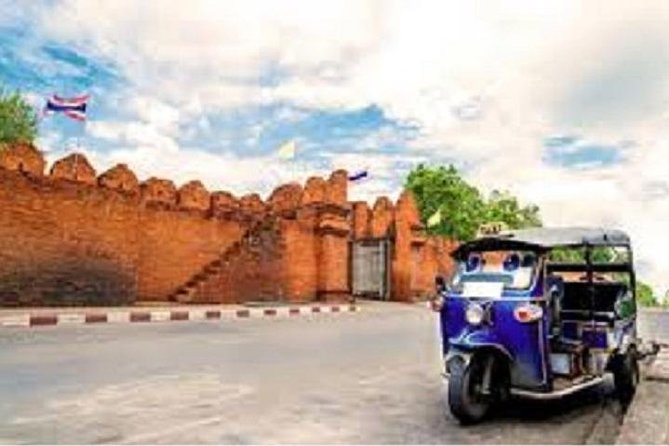
The day starts with pickup from your hotel or guesthouse, then a tuk-tuk ride that quickly orients you to where things sit. The first stop is the canal that surrounds the old city. Even if you’ve only seen Chiang Mai on a map, you’ll understand its shape once you’ve got the waterway context.
From there, you’ll pause at historical gates—Chiang Mai Gate and Tha Pae Gate—to see remnants of the guard walls that once protected the city. These are the kinds of places where photos actually help later. You can remember how you reached the old city, which road felt closest to the market areas, and what direction to head when you return on your own.
Practical note: this is a sightseeing loop, so expect frequent short stops rather than long stays. That’s good for orientation and photo-taking. If you like lingering in places, you may want to plan a longer return visit later to the temples that grabbed you most.
Wat Chedi Luang: Big Stupa, Emerald Buddha Links, and Earthquake Damage
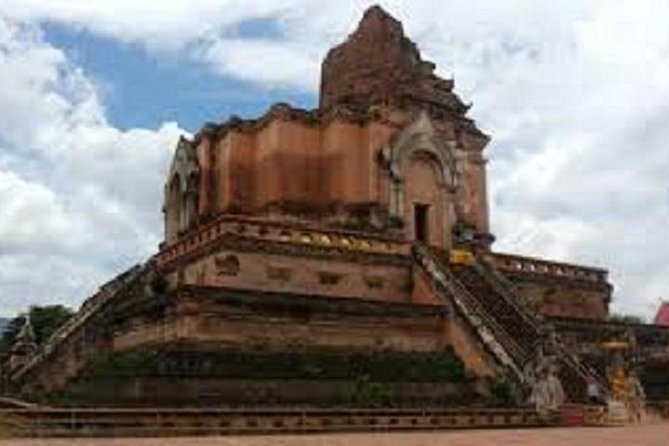
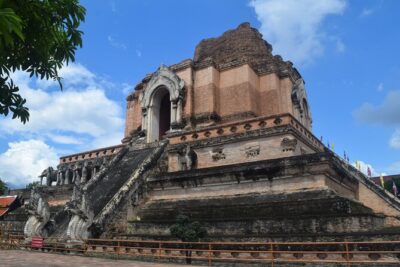
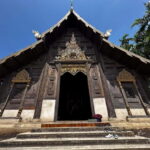
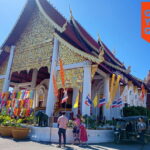
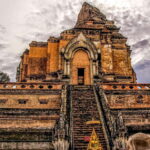
One of the tour’s strongest stops is Wat Chedi Luang. The temple’s name translates roughly to Temple of the big stupha, and you’ll see why that matters once you’re standing near the structures.
This is where the context gets interesting. The temple was built in the 14th and 15th centuries and was once associated with the famous Emerald Buddha—at the time, it was housed here, and later it ended up in Bangkok’s Grand Palace. So even though you’re in Chiang Mai, you get a tangible connection to major Thai Buddhist history.
There’s also a major visual detail tied to tragedy and time. In 1545, an earthquake destroyed the top portion—about 30 meters—of the temple. Much of the structure has been repaired, but the damaged sections around the lower edges are still visible. That means you’re not just looking at “old temple ruins.” You’re seeing a repaired monument that still carries the mark of what happened.
Is it perfect for every traveler? If you’re not big on temple architecture or Buddhist history, you might feel like it’s one more temple stop. But if you like seeing how places change over centuries (and how stories shape what you see), this one usually lands.
3 Kings Monument: A Quick Landmark Break Between Temples
After Wat Chedi Luang, the route includes a stop at the 3 Kings Monument. This is a break in the pacing—still within the old city feel, but a different kind of sight than the temple buildings themselves.
Think of it as a landmark moment. Monuments like this help you understand where you are as you hop from site to site. They also give you a nice pause before moving again toward the more specialized temple stop that’s coming next.
On a short tour, these “connector” stops are useful. They prevent the day from feeling like only one long temple sequence. You get a change of scenery and a spot to grab photos without the same kind of temple rules and quiet interior expectations.
Wat Srisupan (Silver Temple) and Sala Sip Mu Lanna Silvercraft
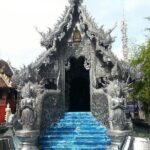
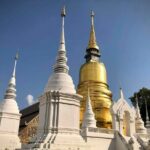
Next comes Wat Srisupan, often called Chiang Mai’s Silver Temple. This is one of those places where the details matter, and the tour gives you a reason to pay attention instead of just snapping pictures and moving on.
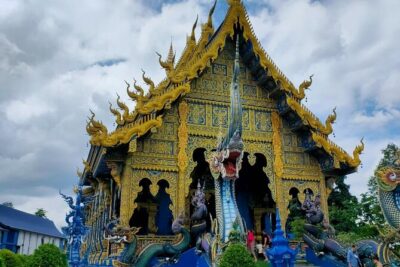
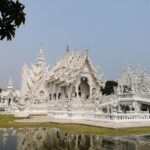
Wat Srisupan was first founded in 1501 under King Mengrai, and it was renovated in 2004. The most striking element is a silver-colored building that shimmers in sunlight. If you’ve ever wondered why certain temple colors look “alive” in Thai photos, this is the kind of place where the lighting makes a visible difference.
You’ll also hear about materials used in the temple complex. The ubosot (the main ordination hall area) uses an alloy and zinc-silver approach, and visitors are encouraged to notice how the craftsmanship shows up in the structure.
Here’s what makes the stop more than a pretty facade: it connects you to Chiang Mai’s silversmith tradition. The temple is described as an important center for handicrafts and helps preserve the craft locally. You’ll also be pointed toward the Ancient Lanna Arts Study Centre, known as Sala Sip Mu Lanna, where techniques are passed to new generations of silversmiths.
What you’re really getting is a cultural snapshot. You’re seeing how faith spaces and craft traditions overlap in northern Thailand, and that makes the temple stop stick in your memory longer than a generic temple photo.
One practical thought: silver-temple scenes often look best when you can see the light hit the reflective surfaces. If the weather turns harsh or cloudy, the shimmer effect may feel less dramatic, but you’ll still get the craft-focused atmosphere.
You can also read our reviews of more private tours in Chiang Mai





Warorot Market: Souvenirs, Food Stalls, and Real Market Pricing
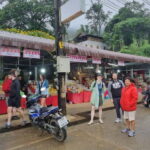
The finale is Warorot Market, a big local market where many residents do their shopping. This is a great counterpoint to temples. Temples give you cultural context; markets give you day-to-day life.
The tour includes a chance to see where Chiang Mai’s Sunday Market and the famous Night Bazaar areas are located before you head deeper into Warorot. That way, even if you don’t shop there today, you’ll recognize where those bigger events fit into the city map.
Inside Warorot, you’ll find a wide spread of stalls: fresh and dried fruit and vegetables, souvenirs, fireworks, clothing, fresh seafood, jewelry, watches, beauty supplies, and even a flower market. You may notice that the variety is intense. The tour positions Warorot as a place with lower prices in Chiang Mai, which is exactly what you want for practical souvenir shopping and snack browsing.
Is it always comfortable? Markets come with heat, crowds in the busiest sections, and lots of visual noise. This can be a sensory overload if you prefer quiet shopping. But if you like rooting around and comparing prices, Warorot usually delivers.
Also, remember the tour includes water and seasonal fruit, which helps during a market walk. You’re still responsible for personal purchases, but the included refreshment can keep the experience pleasant rather than exhausting.
Price, Timing, and Who This Tour Fits Best
The tour is priced at $55 for about 3 hours. On a time-per-dollar basis, it can feel like good value if you’re the type of traveler who wants a clear plan right away. The cost is mainly paying for three things:
- Pickup and drop-off from your hotel by tuk-tuk
- An English-speaking guide to route you efficiently
- Temple entry guidance and the market orientation that helps you know where you’re going and what you’re looking at
You’re also getting drinking water and seasonal fruit, plus accident travel insurance. Those small included items matter more than they sound. In Thailand, a guided orientation with basic provisions can make the difference between an afternoon that feels easy and one that turns into a sweaty scavenger hunt.
Timing-wise, you get two options—morning or afternoon—so you can match it to jet lag or plans later in the day. You’re picked up around 8:30am for the morning start, and around 1:30pm for the afternoon option. Return is roughly 11:30am or 4:30pm depending on which departure you choose.
Who should book it?
- Great fit for first-time Chiang Mai visitors who want a guided starter route.
- Solid choice if you want temples plus a market without spending your whole day planning logistics.
- Ideal if you like shopping for souvenirs but want a reality-based market stop, not only tourist traps.
Who might skip?
- If you prefer slow, deep temple time, three hours may feel rushed.
- If you’re very sensitive to vehicle comfort, go in expecting a bumpy ride and varying seat conditions depending on the tuk-tuk used.
One more detail worth noting: the tour includes a maximum of 10 travelers, which keeps it from becoming a huge bus-style crush.
And yes, there’s a formal dress code. That means you should plan to dress respectfully for temple visits and follow whatever guidance the guide gives on the day.
Should You Book This Chiang Mai Tuk-Tuk Half-Day Tour?
Book it if you want a smart first afternoon that helps you understand Chiang Mai quickly. The mix of old city gates, Wat Chedi Luang’s earthquake-linked scale, and Wat Srisupan’s silvercraft focus makes it more interesting than a generic “temples only” loop. Add Warorot Market at the end and you leave with photos, names of places to revisit, and practical shopping leads.
Skip or reconsider if you know you only like one or two temple stops and hate market noise. Also, if you’re expecting plush comfort, you may be disappointed; tuk-tuk comfort varies, and not every vehicle will feel new.
If you’re arriving and thinking, Where do I go tomorrow?, this tour is built for that question. It’s not trying to replace a full-day excursion. It’s trying to give you momentum.