REVIEW · CHIANG MAI
Historic Temples and City Guided Walking Tour in Chiang Mai
Book on Viator →Operated by Beyond Experience · Bookable on Viator
A few blocks in Chiang Mai can teach you a lot. This 3-hour guided walking route links the city’s oldest temple, classic Lanna architecture, teak craftsmanship, and the famous ruined chedi at Wat Chedi Luang. I especially liked the clear explanations from guides like TwoTwo, Jen, Pang, and Tin, and the way the stops feel planned but not rushed. A small drawback: you’ll need to budget for entrance fees at Wat Phra Singh and Wat Chedi Luang, since they’re not included.
Because the tour runs on foot through the walled old town area, it’s also a low-impact way to get your bearings. You get bottled water, a mobile ticket, and a group capped at 10 people, which makes questions easy. If rain rolls in, plan for weather-dependent timing, since the experience may switch dates or offer a refund.
In This Review
- Key things to know before you go
- Wat Chiang Man to Wat Chedi Luang: the smart 3-hour Old City loop
- Entering Wat Chiang Man and the elephant chedi moment
- Three Kings Monument: a pause in the walled old town story
- Wat Phra Singh: classic Lanna style you can see up close
- Wat Phan Tao: teak wood construction and the rulers’ throne
- Wat Chedi Luang Varavihara: ruined chedi plus the standing Buddha
- Price and value: how $16 fits (with the one extra cost)
- Guides make the difference: questions, pacing, and real personality
- Practical tips for a smooth walk in Chiang Mai’s old town
- Who this tour is best for (and who might skip it)
- Should you book this Chiang Mai temple walking tour?
Key things to know before you go
- Old City focus, not a random temple list: the route links a logical west-to-old-town flow.
- Small groups (max 10): you’ll have time for questions, not just photo stops.
- Teak temple craftsmanship at Wat Phan Tao: the building is known for its teak construction and its rulers’ throne.
- A strong ending at Wat Chedi Luang: ruined chedi energy plus the standing Buddha in the main prayer hall.
- Budget for 2 entrance fees: Wat Phra Singh and Wat Chedi Luang are paid stops.
- Bottled water + mobile ticket: easy basics so you can stay moving.
Wat Chiang Man to Wat Chedi Luang: the smart 3-hour Old City loop
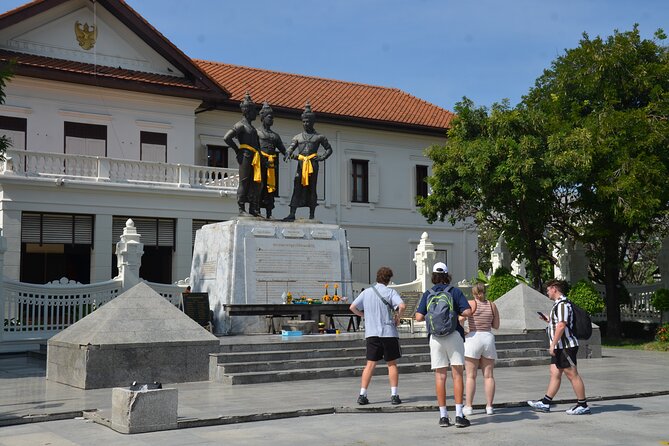
This is a classic way to see a lot without spending your whole day glued to a map. The walking time is about 3 hours, and the route stays in Chiang Mai’s historic old town area, so you’re not constantly repositioning. It’s also billed as a more low-impact way to explore, which matters in a city where the nicest sights are often close together.
What makes the tour genuinely useful is how it’s structured around meaning, not just location. You start with the oldest temple, then move through key landmarks, and finish at a chedi that’s a highlight even on its own. You’ll also hear local legends and temple context, which helps the architecture and statues click into place instead of feeling like background scenery.
Group size is small (up to 10), so it feels more like a guided walk with a plan than a crowded check-the-box circuit. Guides like TwoTwo, Jen, Pang, and Tin were specifically praised for answering questions and keeping things organized without killing the fun.
You can also read our reviews of more walking tours in Chiang Mai

Entering Wat Chiang Man and the elephant chedi moment
You begin at Wat Chiang Man, described as Chiang Mai’s oldest temple. The first visual jolt is the chedi surrounded by elephants, including 15 stone elephants shown carrying the structure on their backs. Even if you’ve seen elephant imagery in Thailand before, this one hits differently because the whole composition is right there as part of the monument.
You spend about 30 minutes at this opening stop, with a guide-led pace that helps you notice details you might otherwise miss. The timing also matters: early on, you still have energy for a “first impressions” temple where the architecture and symbolism can set your expectations for the rest of the walk.
Practical tip: take a minute to watch how other visitors orient themselves—some people aim straight for the most photogenic angles, but the guide’s explanation helps you understand which parts are central to the design. That turns the elephant chedi from a cool picture into an actual story.
Three Kings Monument: a pause in the walled old town story
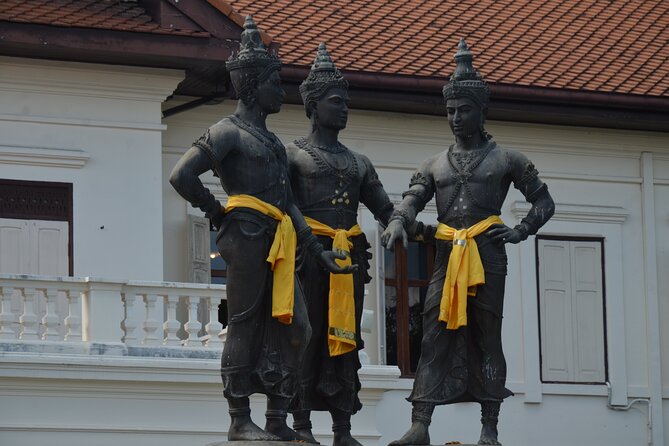
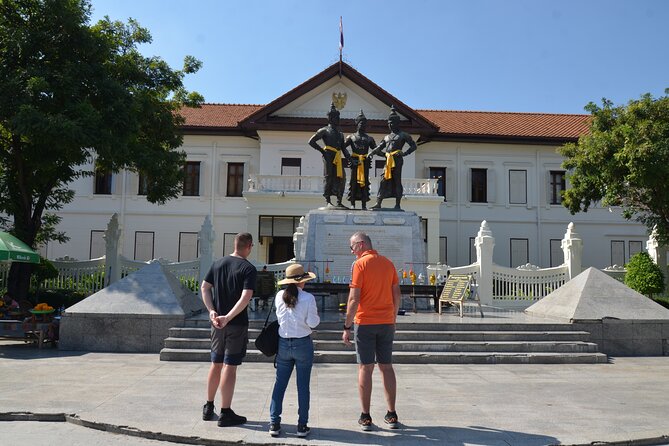
After Wat Chiang Man, the route moves west toward a major landmark in the old city: the Three Kings Monument. This stop is short—around 15 minutes—but it plays an important role. It’s a reset point where the city’s history becomes more concrete, and you get the cultural significance behind what you’re seeing.
You also get a feel for how the old town “works” spatially. This is the kind of moment that helps you understand why the temples were placed where they were, especially when you’re walking rather than driving. In plain terms: once you’ve seen this square-area landmark, the next temples don’t feel random.
If you like city context as much as architecture, this quick stop is a good fit. If you prefer longer temple time only, you might wish it ran a bit longer—but the pace keeps the whole tour within the 3-hour window.
Wat Phra Singh: classic Lanna style you can see up close
Next comes Wat Phra Singh, described as one of the finest examples of classic Lanna style temple architecture in Northern Thailand. You’ll spend about 50 minutes here, which is a solid chunk of time for both photos and guided explanation. This is also one of the key reasons the tour works for first-timers: the architecture is prominent, and the guide helps you read what you’re looking at.
One thing to plan for: entrance fees are not included at Wat Phra Singh. The guide will get you to the right place, but you’ll still need to pay on-site. It’s common for temple entrances to be ticketed, so I treat this as part of the normal Chiang Mai cost of doing temple sightseeing—just don’t assume the $16 covers everything.
Why I like this stop in particular: the tour gives you enough time to notice design features, not just rush through. When you slow down at one anchor temple like this, the later stops make more sense, especially the materials and construction choices you’ll see at Wat Phan Tao.
Wat Phan Tao: teak wood construction and the rulers’ throne
Then you move to Wat Phan Tao, built in the 14th century. The temple is noted for being constructed almost entirely of teak wood, and it was originally used as a palace before becoming a monastery. That detail is a big deal: it means you’re not just looking at a temple shell, you’re seeing a building with a shift in royal-to-religious purpose.
You get about 15 minutes here, which is the only short stop besides Three Kings. The reason it still works is that the temple’s “wow” comes from materials and craftsmanship. You’ll hear about the enormous teak throne that was once used by Chiang Mai’s rulers, and you’ll be pointed toward the main hall features that connect the woodwork to power and ceremony.
This is also one of the best stops for fans of craftsmanship. You’ll likely find yourself looking at joinery, shapes, and the feel of the wood structure more than you would at a temple where stone dominates. The teak focus gives the tour variety, especially after the more general stone-and-chedi feel of earlier sights.
You can also read our reviews of more guided tours in Chiang Mai

Wat Chedi Luang Varavihara: ruined chedi plus the standing Buddha
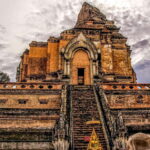
The tour ends at Wat Chedi Luang Varavihara, and it finishes with real impact. You explore the impressive ruined chedi, and you’ll also see the majestic standing Buddha in the main prayer hall. Spending about 50 minutes here gives the ending stop the time it deserves.
Like Wat Phra Singh, this is another paid entrance. Wat Chedi Luang entrance fees are not included, so have a bit of budget set aside. Even if you’re only mildly interested in temple history, this stop tends to work because the chedi is visually dramatic. The word ruined doesn’t mean dull—it means you’re seeing the scale and age of something that’s been through time.
I also like how the finish location helps you keep your momentum. Ending at Wat Chedi Luang means you’re dropping out at a major old-town hub rather than back at the start. After the tour, you can continue on your own with a clearer sense of where you are.
Price and value: how $16 fits (with the one extra cost)

The headline price is $16 for the guided walk, about 3 hours with bottled water included and a mobile ticket. For a route covering five major landmarks, that’s strong value—especially because it’s small-group and guide-led, not just a self-guided checklist.
The part to plan for is cost on top of the $16. Wat Phra Singh and Wat Chedi Luang have entrance fees not included in the tour price. If you want a simple budgeting rule, I treat the $16 as your guide + bottled water + logistics, then add the two on-site temple tickets as the only extra fixed costs.
Also note: this experience requires good weather. If conditions aren’t right, you’ll likely be offered a different date or a full refund, so it’s worth booking only when your schedule can handle flexibility.
Guides make the difference: questions, pacing, and real personality
What truly sets this tour apart is the human element. The experience has been praised for guides who are quick to answer questions and good at explaining what you’re seeing without making it feel like a lecture. Names you may hear associated with this walk include TwoTwo, Jen, Pang, and Tin.
That matters because temples can feel like a blur if you’re left on your own with a guidebook. Here, you’re getting context for things like why a monument matters, what makes Lanna style distinctive, and why teak wood construction is a big deal at Wat Phan Tao. In other words: the guide turns sightseeing into understanding.
Pacing is also handled well. The tour uses a mix of longer and shorter stops—especially the 50 minutes at Wat Phra Singh and Wat Chedi Luang—so you’re not stuck staring at one place for too long, yet you still get time where it counts.
Practical tips for a smooth walk in Chiang Mai’s old town
This tour is an easy fit if you like walking and want your temples with context. It’s also near public transportation, so you’re not locked into a single “start here and nowhere else” plan. Still, it’s a good idea to wear comfortable shoes and dress for warm weather and temple rules (covered shoulders and respectful clothing).
Bring a hat or sun protection if you tend to burn easily. You’ll get bottled water, which helps, but it’s smart to pace yourself at the start when the route is tight through the old town streets.
Finally, be ready for the ticket reality: mobile ticket means less paperwork, but it doesn’t remove the temple entrance fees at the two paid stops. If you show up assuming everything is included, you’ll feel the surprise later. If you show up knowing two temples cost extra, your day stays stress-free.
Who this tour is best for (and who might skip it)
I think this walk is perfect for first-timers in Chiang Mai who want a strong orientation to the old city temple cluster without spending hours researching. If you care about architecture, you’ll get classic Lanna style at Wat Phra Singh and teak wood craftsmanship at Wat Phan Tao. If you care about stories, the route includes local legends and the cultural meaning behind major landmarks.
It’s also a good choice if you like smaller group experiences. The cap of 10 travelers means you can ask follow-up questions, and the guide can keep an eye on the pace.
If you already know you’re not into guided storytelling and you prefer purely self-paced temple wandering, you might find the structure a bit limiting. The tour is tightly timed, with some stops only 15 minutes, so it’s not built for long solo contemplation at every building.
Should you book this Chiang Mai temple walking tour?
Book it if you want an efficient, well-paced introduction to Chiang Mai’s big historic sights—especially if you like learning what you’re looking at. The value is solid at $16, the route hits major landmarks in a logical flow, and the experience is backed by strong guide feedback from people named TwoTwo, Jen, Pang, and Tin.
Skip or reconsider if you’re allergic to extra on-site costs, since two temple entrances are not included. Also consider the weather factor: since the tour needs good conditions, choose dates when you can adapt.
If you want a 3-hour hit of old town history and temple architecture—with a guide who answers your questions—this is one of the easier “yes” decisions in Chiang Mai.