REVIEW · CHIANG MAI
Mastering Chiang Mai Temples in Halfday – Visit 7 Temples
Book on Viator →Operated by joinusthai · Bookable on Viator
Chiang Mai temples, packed smart. This half-day circuit is built for people who want seven standout sights without the stress of planning routes. I love how it turns temple-hopping into a calm loop with a guide and convenient pickup, so you can focus on what you came for: the Lanna beauty and the stories behind it.
Two things I really like: the schedule gives you a fast, high-impact hit of major temples (without feeling totally rushed), and the guided explanations are practical and easy to follow. Even better, my guide, Faan, had a knack for sharing the right context and taking pictures as you move from stop to stop.
One consideration: some sites get less time than you might want if you love slow wandering. The pace is efficient, so if your main goal is deep, long-form temple study, you may want to plan a separate visit afterward.
In This Review
- Quick Takeaways: What Makes This Temple Loop Work
- Chiang Mai’s Temple Density: Why This Tour Makes Sense
- The Day at a Glance: A 9:00 Start With Smart Timing
- Price and Value: Paying for Time Saved (Not Just Sights)
- Stop-by-Stop: What You’ll See and Why It Matters
- Wat Phra Singh: A Sacred Buddha and a Festival-Story
- Wat Chedi Luang Varavihara: The Massive Chedi That Dominates the Area
- Wat Phantao: Teakwood Elegance in the Ordination Hall
- Wat Chiang Man: The Oldest Temple and Its Elephant-Buttressed Chedi
- Wat Lok Molee: Stucco Patterns and Lanna Pagoda Charm
- Wat Suan Dok: White Chedis and the Flower Garden Meaning
- Wat Phrathat Doi Kham: The Golden Mountain View and the 17-Meter Buddha
- The Guide Factor: How Faan’s Explanations Change the Experience
- Rainy Season Reality: Going Anyway With an Umbrella
- Temple Etiquette: What to Wear for Smooth Entry
- Who This Tour Is Best For
- Should You Book This Half-Day Temples Tour?
- FAQ
- FAQ
- How long is the Mastering Chiang Mai Temples in Halfday tour?
- What time does the tour start?
- Is pickup offered?
- Which temples are included in the half-day route?
- Is admission included for the temples?
- What should I wear to visit the temples?
- Does the tour operate during rainy season?
- Is the tour private?
Quick Takeaways: What Makes This Temple Loop Work
- Seven temples in about four hours keeps the day efficient when you have limited time
- Pickup and a driver remove the headache of juggling transport to multiple areas
- Short guided stop times help you see the highlights without losing your whole morning
- Rain-ready operation means you’re not stuck waiting for weather to improve
- Respectful dress expectations (shoulders and knees covered) make the visit smoother
- Temple tickets are mostly free on this tour—you’re not constantly hunting for entrances
Chiang Mai’s Temple Density: Why This Tour Makes Sense
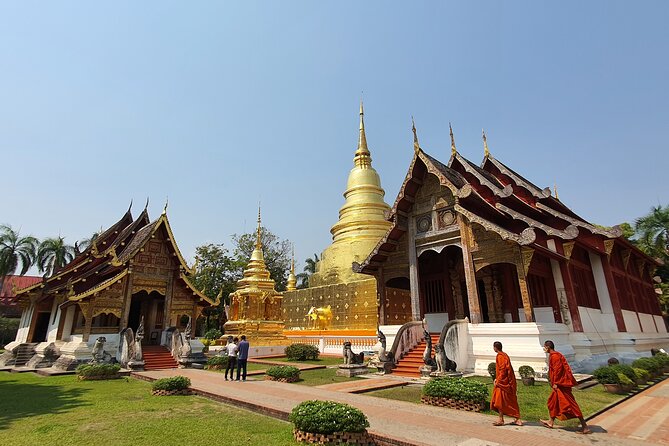
Chiang Mai is famous for its Buddhist temples, and here’s the simple reality: there are over 300 Buddhist temples in the province. That’s great… until you try to pick which ones matter and how to get between them without wasting your limited vacation time.
This tour fixes the usual problem in Chiang Mai—route chaos. Instead of trying to stitch together transportation and figure out where each temple fits, you get a prepared loop and a guide to help you spot what’s important at each stop. The result is a half-day that feels like you get your bearings fast and still leave with a real sense of what makes Chiang Mai temples different from the big, famous ones you’ve seen elsewhere.
It also helps that most stops are quick. You get a taste of the bigger landmarks—chedis, ordination halls, and hilltop views—without turning your day into a slow grind.
You can also read our reviews of more tours and experiences in Chiang Mai.



The Day at a Glance: A 9:00 Start With Smart Timing
The tour starts at 9:00 am and runs about four hours (timings are approximate). You’ll generally get around 10 to 40 minutes at each stop, which is exactly the sweet spot for photos, quick appreciation, and a clear sense of what you’re looking at.
This is also set up as a private tour/activity, meaning it’s just your group. That matters more than it sounds. In a temple circuit, you don’t want to constantly adjust to a large crowd’s pace, or miss your turn for a good view because the group ahead is slow.
If you’re the type who wants to see the most meaningful places without turning your itinerary into a full-day logistics project, this format fits nicely.
Price and Value: Paying for Time Saved (Not Just Sights)
At $93.71 per person for a half-day, it’s not the cheapest option in Chiang Mai. But value is about what you buy: routing stress.
You’re paying for:
- a driver who keeps you moving between the key areas,
- a guided explanation so you understand what you’re seeing,
- and the convenience of not having to negotiate multiple transport arrangements.
If you already planned to hire a vehicle for a route anyway, you may feel the cost makes more sense. On the other hand, if you’re traveling super budget and you’re comfortable navigating on your own, you could do this cheaper. The trade-off is time and the effort of picking what to see and how to reach each spot.
For many people, the sweet spot is this: use the tour to cover the heavy hitters efficiently, then return later to the one or two temples you loved most.
Stop-by-Stop: What You’ll See and Why It Matters
Wat Phra Singh: A Sacred Buddha and a Festival-Story
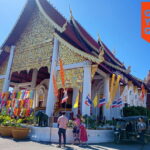
Wat Phra Singh is a highlight because it’s home to Chiang Mai’s most sacred Chiang Saen-style Buddha image. What makes it interesting isn’t just the image—it’s how the local community treats it during Songkran (April 13–15). The image is carried in a parade procession, and locals bathe it with scented water, which is believed to bring good luck.
You get about 30 minutes here. That’s enough time to orient yourself, notice the key features, and understand the cultural importance beyond the stone and gold.
Small practical note: if you visit on a hot day, the shade can be hit-or-miss. Bring water and pace yourself during this first stop.


Wat Chedi Luang Varavihara: The Massive Chedi That Dominates the Area
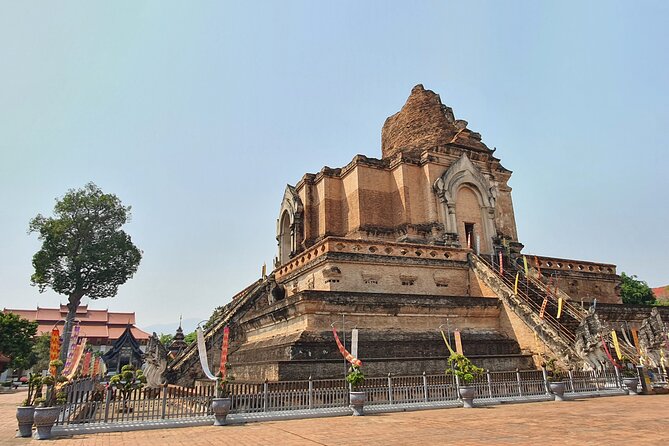
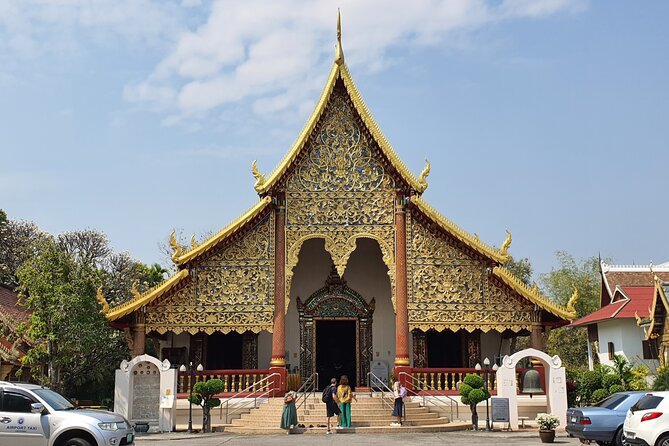
Wat Chedi Luang is known for the massive chedi that dominates the site and makes a strong photo. This is one of those temples where the structure isn’t just decorative—it’s the main character. Even if you’re not an architecture nerd, you’ll feel it right away because it fills your field of view when you arrive.
This stop runs about 30 minutes. The tour includes admission here, so you’re not stuck figuring out tickets mid-route.
A caution for your photo time: the best angle often depends on where you’re standing, and moving around can take a minute. Don’t rush your first shot—take a few minutes to find a viewpoint that doesn’t feel like you’re shooting through crowds or obstructions.
Wat Phantao: Teakwood Elegance in the Ordination Hall
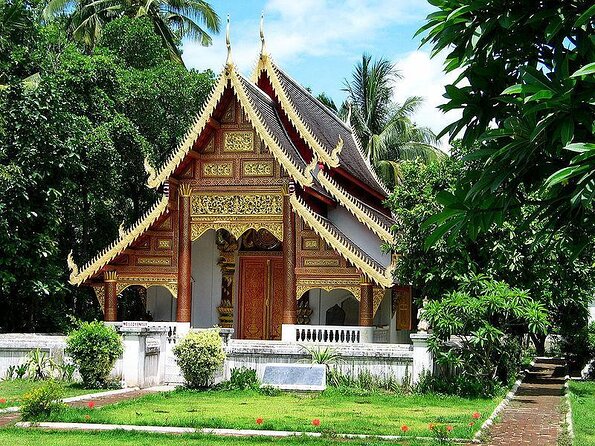
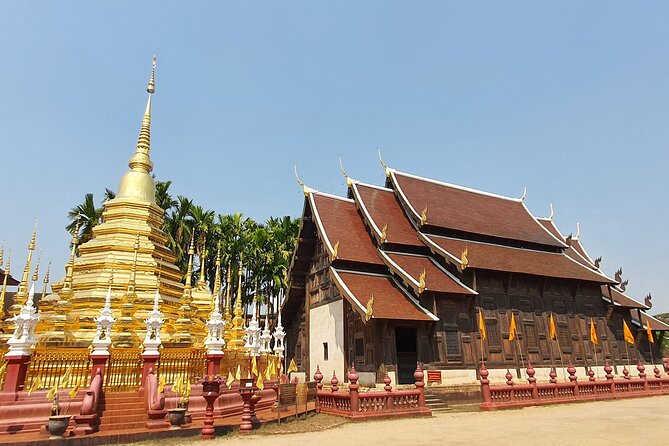
Wat Phantao is famous for its Lanna-style ordination hall (Wihan) made of teakwood. The tour points out that this hall served as a throne hall, which gives it an extra layer of meaning. You’re not just looking at pretty woodwork; you’re seeing a space tied to ceremonial importance.
This stop is shorter, about 10 minutes, so it’s best for quick appreciation. If you like wood details and historical function, you’ll probably wish you had more time. But for a half-day temple loop, it works as a contrast stop—less about big gold structures and more about craftsmanship.
Wat Chiang Man: The Oldest Temple and Its Elephant-Buttressed Chedi
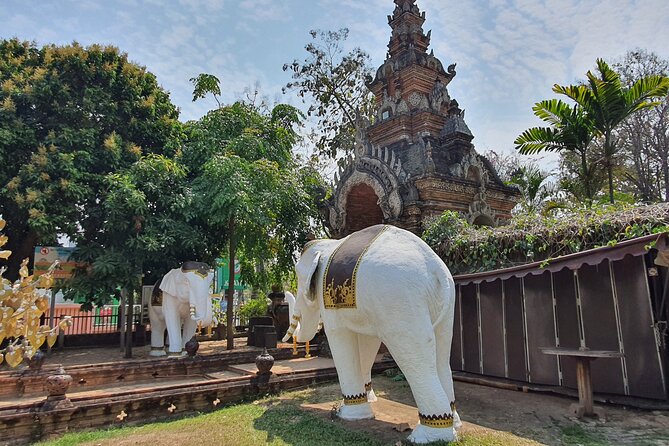
Wat Chiang Man is the oldest temple in Chiang Mai town, and it’s known for a Lanna-style chedi supported by rows of elephant-shaped buttresses. That detail is the kind of thing you’ll remember later because it’s so specific—elephants used as structural design elements is not something you’ll see everywhere.
You’ll get about 20 minutes. Use that time to slow down and look at the buttresses rather than only aiming at the tallest part of the chedi. The whole point is the repeated elephant forms, and you’ll miss the pattern if you rush.
Wat Lok Molee: Stucco Patterns and Lanna Pagoda Charm
Wat Lok Molee focuses on artistic style—specifically the pagoda and stucco pattern that can be classified as a masterpiece of Lanna art. This one is for people who like to notice surface design: pattern, texture, and how craftsmanship is applied across the structure.
This stop is about 15 minutes. That’s enough for a good look and a couple of photos, but not enough to become a pattern photographer who spends an hour adjusting angles. Think of it as a quick art break inside the temple circuit.
Wat Suan Dok: White Chedis and the Flower Garden Meaning
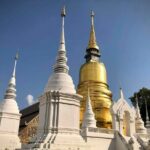
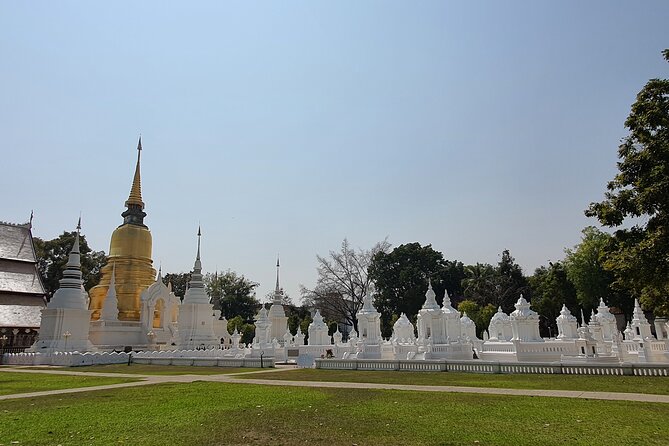
Wat Suan Dok is an old temple known for its large number of white chedis (pagodas). The name matters too: Suan Dok literally means flower garden temple. The tour’s context says the area was once used as a royal flower garden by the ruler of Chiang Mai, which helps explain the landscape intent behind the site.
You’ll have about 20 minutes here. The white chedis can feel visually repetitive in a good way—like you’re surrounded by a field of form. If you’re not sure what to photograph, look for perspective shots where multiple chedis align, since that’s what brings the site to life in an image.
Wat Phrathat Doi Kham: The Golden Mountain View and the 17-Meter Buddha
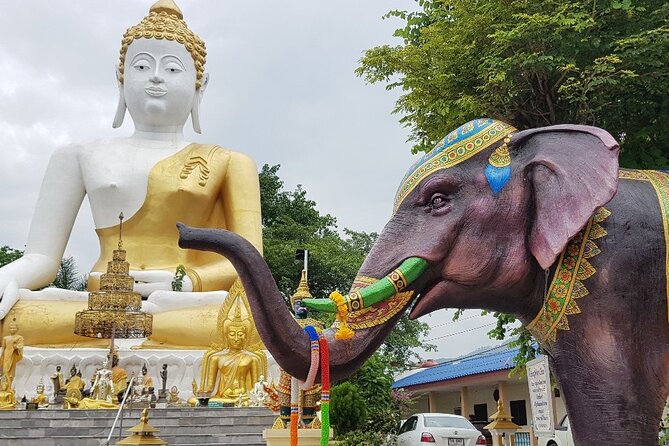
Wat Phrathat Doi Kham literally means Temple of the Golden Mountain, and it’s perched on Doi Kham hill. You’ll be surrounded by mountainous scenery, and the big attraction is a 17-meter sitting Buddha image on the hilltop.
This is the stop that tends to feel most dramatic because it’s visible from miles away and it dominates the area. You’ll also have about 40 minutes, which is generous compared with most other stops on this half-day loop.
If you want the best results, give yourself time before you decide on photos. From a hilltop, lighting changes quickly. Also, if it’s a rainy day, surfaces can get slick—watch your footing near uneven ground and keep an eye on steps.
The Guide Factor: How Faan’s Explanations Change the Experience
A big part of why this tour works is that it isn’t just a driver dropping you off. My guide, Faan, explained things in a way that actually helped me understand what I was seeing. That matters because Chiang Mai temples can look similar at a glance, especially if you haven’t been paying attention to Lanna architectural cues.
Faan also did a lot of picture-taking. That’s more than convenience. It means you can actually be in the photos without hustling, and you don’t have to ask strangers for help every time you want a clean shot at a chedi or ordination hall.
Short version: when each stop has limited time, guided context turns time into learning instead of just sightseeing.
Rainy Season Reality: Going Anyway With an Umbrella
From May to October, Chiang Mai is the rainy season. The tour runs in rainy conditions, so you should plan for wet weather. Bring an umbrella or raincoat—it’s not optional vibes. You’ll be outside at multiple temples, and weather can change your mood fast if you’re unprepared.
Rain also affects photos. You may get softer light, which can look great. Just don’t let gear and camera frustrations slow you down. In wet weather, the goal is to stay comfortable so you can actually enjoy the sites.
Temple Etiquette: What to Wear for Smooth Entry
To enter temples, you need shoulders and knees covered. Sandals or flip flops are allowed, which is helpful because heat is real. If you’re wearing a tank top or shorts that show knees, plan on covering before you arrive.
This is one of those small details that can make or break the first minutes. Sorting it out ahead of time helps you start your day focused, not stuck at the gate.
Who This Tour Is Best For
This is a strong match if you:
- only have a half-day in Chiang Mai,
- want to see major temples without planning routes or negotiating transport,
- prefer a guided explanation you can process quickly,
- like being out in the morning and then having the afternoon free.
It’s also good for first-timers who feel overwhelmed by the sheer number of temples in Chiang Mai. Instead of choosing randomly, you get a structured set of high-impact stops.
If you’re the kind of visitor who wants to sit quietly and read every plaque for a long time, you’ll still enjoy it—but you’ll probably want a return trip to your favorites afterward.
Should You Book This Half-Day Temples Tour?
I think this is worth booking if your main goal is efficient temple sightseeing with less hassle. The value comes from the time saved on transport and the fact that you’re not just walking around—you’re getting clear context at each stop, with guidance that helps you notice the differences between Lanna-style features.
Book it if:
- you want seven temples in one morning,
- you appreciate guided stories and practical pacing,
- you’re okay with shorter stop times at each location.
Skip it (or supplement it with extra time) if:
- you want long, slow visits and deep reading at each site,
- you’re already planning to visit these temples on your own with lots of extra days.
If you’re on a tight schedule, this tour is one of the easiest ways to get the core Chiang Mai temple experience without turning your day into logistics.
FAQ
FAQ
How long is the Mastering Chiang Mai Temples in Halfday tour?
It runs for about 4 hours, with timings at each stop listed as approximate.
What time does the tour start?
The start time is 9:00 am.
Is pickup offered?
Yes, pickup is offered.
Which temples are included in the half-day route?
The tour includes Wat Phra Singh, Wat Chedi Luang Varavihara, Wat Phantao, Wat Chiang Man, Wat Lok Molee, Wat Suan Dok, and Wat Phrathat Doi Kham.
Is admission included for the temples?
Admission is included for Wat Chedi Luang Varavihara, and the other listed stops indicate admission tickets are free.
What should I wear to visit the temples?
You should cover your shoulders and knees. Sandals or flip flops are allowed.
Does the tour operate during rainy season?
Yes. From May to October (rainy season), the tour runs even on rainy days.
Is the tour private?
Yes. It’s private, so only your group participates.