REVIEW · CHIANG MAI
Local Farming Experience in Chiang Mai, Thailand
Book on Viator →Operated by Hang Tueng Farmstay And Workshop Chiang Mai · Bookable on Viator
If you like real farm work, this one hits the spot. You’ll learn how rice grows from the ground up and how local farmers raise and care for their buffalo—at Hang Tueng Farm near Chiang Mai.
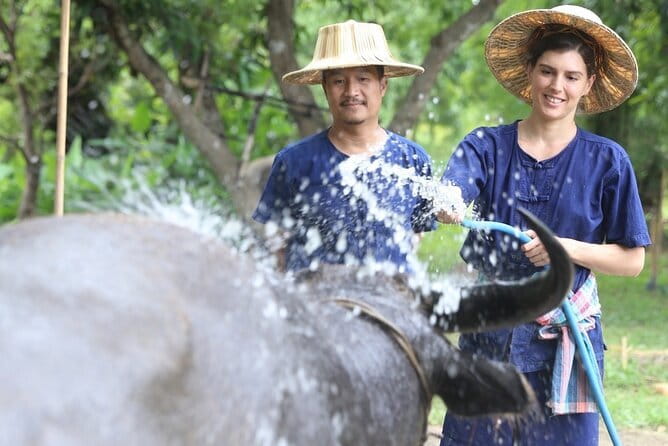
I love the hands-on feel: harvesting grass to feed Riam Thai buffalo and helping with her shower time. I also like the full rice process, from uprooting seedlings in a nursery to tying them with bamboo rope and planting them in the field.
One heads-up: this is a muddy, outdoors experience, and it depends on good weather, so plan for getting a bit dirty and possibly rescheduling if conditions don’t cooperate.
In This Review
- Why this farm experience works so well
- Key points to know before you go
- Local Farming Experience in Chiang Mai: Buffalo, Mud, and Real Rice Work
- Where you’ll meet and how the timing feels
- Buffalo time: feeding grass and showering Riam Thai
- Switching gears to rice nursery work
- Planting in the rice field with Uncle Serd
- The lunch set: green curry, mango sticky rice, and farm-style extras
- Price and value: what you’re really paying for
- Who should book this (and who might skip it)
- Practical tips so you enjoy it more
- Should you book Hang Tueng Farm in Chiang Mai?
- FAQ
- How long is the local farming experience?
- How much does it cost?
- Where does the experience start?
- What is included in the price?
- Is private transportation included?
- How big is the group?
- What ticket type do I get?
- What happens if the weather is poor?
- Can I cancel for a full refund?
Why this farm experience works so well
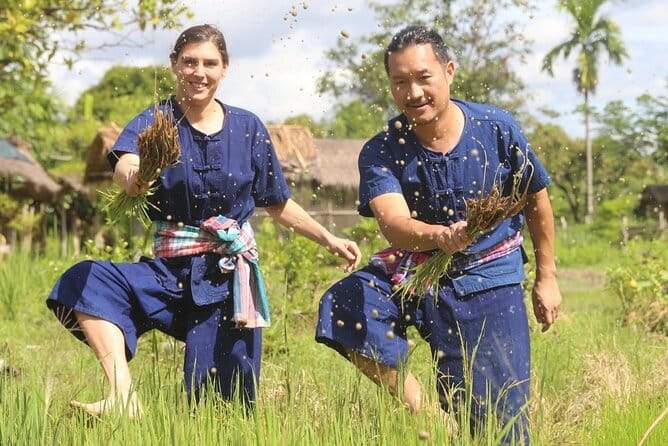
You’re not just watching. You’re working alongside local farmer uncle Serd, a professional who’ll guide you through rice planting step by step. If you enjoy practical learning—how things are actually done, not just how they look—this format is hard to beat.
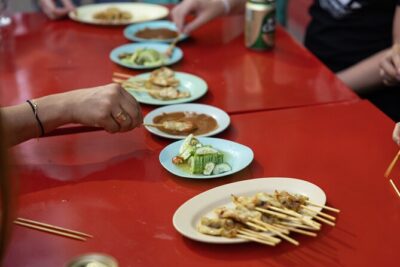
The food also helps. After you’ve worked up an appetite, you’ll sit down to a set lunch that includes a signature rice dish with chicken green curry, a herbal drink, and mango sticky rice, plus additional farm-style items like Pad Thai special sauce with mushrooms and grass jelly as part of the broader lunch set.
The only drawback I’d flag is logistics: there’s no private transportation included, so you’ll need to get yourself to the meeting point at Hang Tueng Farm.
Key points to know before you go
- Feed and shower Riam Thai buffalo as part of the farm routine
- Rice planting from nursery to field, with bamboo-rope tying hands-on
- Uncle Serd teaches the workflow, not just the photos
- Small group size (max 10) keeps it personal
- Lunch is included, with herbal drink and sweet finishing notes
- Works best on good-weather days, since it runs outdoors
You can also read our reviews of more tours and experiences in Chiang Mai

Local Farming Experience in Chiang Mai: Buffalo, Mud, and Real Rice Work
Most Chiang Mai farm tours are either too short to matter or too staged to feel local. This one is different because it’s built around everyday tasks—caring for buffalo and growing rice—so you get a full slice of farm life in about three hours.
You’ll start at Hang Tueng Farm, where the tone is friendly and practical. The day is structured like a guided workflow: first you learn what to do for the animals, then you switch to rice work that’s physically active and hands-on. It’s a mix that keeps things moving, and it’s also the reason adults and kids can enjoy it. You’ll have real tasks, not just a short walk and a few photos.
Also, the group stays small. With a maximum of 10 travelers, you’re less likely to feel like you’re waiting your turn. That matters when you’re planting and tying seedlings. It’s easier to learn when you can actually try the steps yourself.
Where you’ll meet and how the timing feels
The experience starts at Hang Tueng Farm, with the address listed on the booking info: 89/23 ถ.ศรีบัวเงิน ซ. 19, Tambon Tha Sala, Amphoe Saraphi, Chiang Mai 50000. The activity ends back at the meeting point, so you’re not dealing with a long transfer at the end of a muddy morning or afternoon.
Duration is listed as about 3 hours, and that’s a sweet spot for this type of activity. Too long and you’re just exhausted; too short and you don’t learn the process. Here, you get enough time to cover buffalo feeding/showering, then move through the core rice-growing steps: uprooting, mud-kicking, tying, and planting.
One practical note: there’s no private transportation included. If you’re planning your day around this, build in extra time to get to the farm on your own. The good news is it’s listed as near public transportation, which makes it easier to fit into a normal Chiang Mai schedule.
Buffalo time: feeding grass and showering Riam Thai
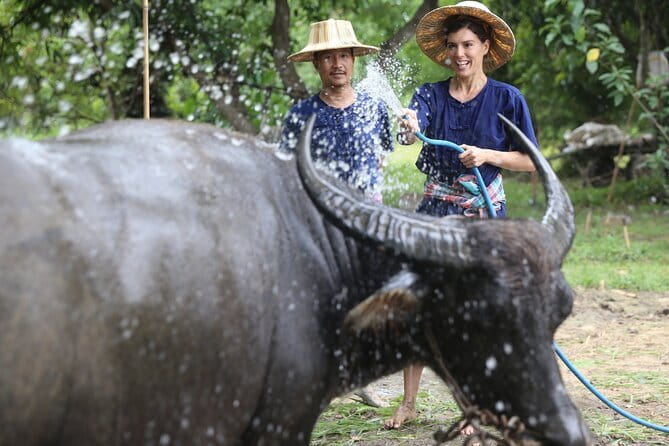
The first big section is all about buffalo. You’ll learn how to harvest grass for feeding Riam Thai buffalo and then how to help with showering—because yes, buffalo can enjoy water. In the farm’s routine, the animal isn’t treated like a prop. She’s part of the workday.
You’ll likely see the practical logic fast: buffalo need a steady feed, and keeping them comfortable is part of caring for them. The experience description notes that Riam Thai buffalo likes water and eating a lot, so the “feeding then showering” sequence isn’t random. It’s a real farm rhythm, and that’s why it feels authentic.
What I like about starting with buffalo is that it lowers the intimidation factor. Rice work can feel technical at first. Buffalo care is more immediate and intuitive: bring the grass, help with the water routine, and follow the farmer’s lead. It’s also a great moment to slow down and ask questions, since the tasks are concrete and visual.
Expect to get a bit involved. If your idea of farm life is hands-off animal viewing, this will probably surprise you—in a good way. You’re interacting with the care routine, not just standing near a fence.
Switching gears to rice nursery work
After buffalo, you move to the rice portion of the day. The experience covers the nursery stage, where you uproot rice seedlings. This is not just about pulling a plant. It’s about doing it carefully enough that the seedlings are usable afterward.
You’ll learn how to uproot the seedlings in the rice nursery, then you’ll also practice the next steps that matter for transplanting. One key detail in the description is kicking mud out from rice seedlings. That part is important: you don’t want the seedlings trapped in extra mud that makes handling harder. It’s also one of the reasons the tour can get messy fast.
Then comes a step you might not expect on a short tour: you tie rice seedlings with bamboo rope. The bamboo rope tying isn’t just craft time—it’s a practical way to keep seedlings organized and ready for planting. For you, it turns rice into a process, not a mystery. You see how farmers prepare for the next stage instead of only seeing the final field.
This is also where you’ll feel most “in it.” Uprooting, mud-kicking, and bundling are physical tasks, and they take a few minutes to get the rhythm right. If you’re the type who learns by doing, you’ll probably enjoy this section a lot.




Planting in the rice field with Uncle Serd
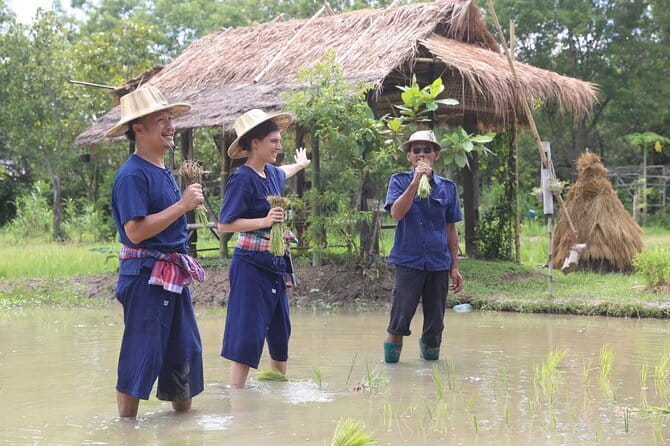
Next you’ll plant rice in the rice field with Uncle Serd, a local farmer described as a professional. This is the main moment most people come for: putting the seedlings into the field the way a farmer would.
The planting portion ties the whole morning together. You’ve already uprooted seedlings from the nursery. You’ve removed extra mud and bundled them. Now you get to place them in the field—turning all that earlier work into real outcomes.
This is also where the small group size helps. Planting takes coordination, and you don’t want a line of people waiting for their turn while you’re stuck watching. With up to 10 travelers, you’ll likely get enough time with the process to feel like you actually learned it.
You can expect that the farmer will show you technique and then let you try. The best part is that rice planting isn’t just one action. It’s a set of choices: handling the seedlings carefully, keeping spacing reasonable, and working steadily. It’s simple enough to teach in a short time, but real enough that it feels like work.
The lunch set: green curry, mango sticky rice, and farm-style extras
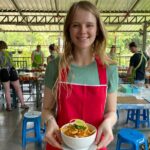
You’ll finish with a lunch set after the rice work. The experience notes that your signature lunch includes rice with chicken green curry, an herbal drink, and mango sticky rice. That’s a strong combo for refueling after muddy hands and outdoor activity.
The farm-style menu also includes items like Hang Tueng farm Pad Thai special sauce with mushrooms, plus Roselle mixed with dates and grass jelly with rice germ whole grains. Even if you don’t end up trying every single item in every order, the presence of those options matters. It means this isn’t just plain lunch. It’s designed to give you local flavors and textures you can’t easily replicate from a roadside snack stand.
Here’s what I think makes the meal feel worthwhile for the money: lunch is included, and it’s not treated like an afterthought. When you’re doing hands-on farm labor for a few hours, the food needs to be real. You shouldn’t leave hungry, and you shouldn’t feel like you paid extra for a token meal.
And because the tour includes a herbal drink and fruit-based sweetness, it helps you reset after the physical work. You’ll likely feel more human by the time you’re back at the meeting point.
Price and value: what you’re really paying for
At $58.60 per person for about 3 hours, this isn’t the cheapest activity in Chiang Mai. But the value comes from what’s included and what you do.
You’re paying for:
- A guided, hands-on farm workflow (buffalo care + rice growing steps)
- Lunch (not just snacks)
- An herbal drink
- A small group experience (max 10), which makes actual practice more likely
A lot of tours at this price either include transport you don’t need or provide only a brief “look and learn” stop. Here, you’re getting real tasks that take time and attention. That’s why it feels worth it even if you’re not a hardcore agriculture person.
Also, the tour is described as having a mobile ticket. For you, that usually means fewer last-minute headaches and easier check-in.
The one value trade-off: no private transportation is included. If you have to spend a lot more than expected to get to the farm, it can shift the math. Still, since it’s noted as near public transportation, you can likely keep costs controlled.
Who should book this (and who might skip it)
This is a strong choice if you want:
- A hands-on cultural experience that’s not just a performance
- A clearer understanding of how rice growing works, from nursery to field
- An outdoor activity where you’re doing tasks, not just watching
- A small-group format with time to ask questions and try steps yourself
It might be less ideal if:
- You hate getting dirty. The experience style is messy by nature, especially with rice seedlings and mud-kicking.
- You have a tight schedule and can’t handle the travel time to the meeting point.
- You’re worried about weather. It requires good weather, so you should be ready for a possible reschedule if conditions are poor.
Practical tips so you enjoy it more
This tour can be hands-on fast. You’ll be dealing with mud and outdoor farm conditions. Based on the overall farm-work nature (including mud work and buffalo care), come prepared:
- Wear shoes you’re okay with getting dirty.
- Bring a change of clothes if you can. You’ll likely want it for later in the day.
- Use bug spray if that’s part of your normal routine in Chiang Mai.
- Bring a little water for yourself if you like to stay hydrated, even though you’ll have an included herbal drink at lunch.
And mentally, go in expecting “work mode.” It’s fun work, but it’s still work. That mindset helps you avoid frustration and lets you enjoy the learning.
Should you book Hang Tueng Farm in Chiang Mai?
If you want an experience that’s close to how local farming actually happens, I’d book it. The buffalo routine and the rice-growing workflow are a real combo, and the small group size makes it more than a quick stop.
You should especially consider booking if you like practical learning: feeding and caring for buffalo, then learning the steps of uprooting, mud-handling, tying seedlings, and planting. Add in a proper lunch with chicken green curry, mango sticky rice, and herbal drink, and the value makes sense.
One last decision helper: if you’re worried about muddy clothes or weather uncertainty, pick a flexible day. Otherwise, this is the kind of Chiang Mai experience you’ll remember because you did the work, not just watched it.
FAQ
How long is the local farming experience?
It runs for about 3 hours.
How much does it cost?
The price is listed as $58.60 per person.
Where does the experience start?
You’ll start at Hang Tueng Farm at 89/23 ถ.ศรีบัวเงิน ซ. 19, Tambon Tha Sala, Amphoe Saraphi, Chang Wat Chiang Mai 50000, Thailand.
What is included in the price?
Lunch and an herbal drink are included.
Is private transportation included?
No. Private transportation is not included.
How big is the group?
The experience has a maximum of 10 travelers.
What ticket type do I get?
You receive a mobile ticket.
What happens if the weather is poor?
The experience requires good weather. If it’s canceled due to poor weather, you’ll be offered a different date or a full refund.
Can I cancel for a full refund?
Yes. You can cancel up to 24 hours in advance of the experience for a full refund.