REVIEW · CHIANG MAI
Chiang Rai White Temple Blue Temple and Hill Tribe Village Tour
Book on Viator →Operated by WanderSiam · Bookable on Viator
A Chiang Rai day feels like a mini adventure.
This tour strings together the big-name sights in Chiang Rai with a hill tribe community visit, plus a quirky hot spring stop that turns your breakfast into a hands-on activity. I especially like the mix of visual art at Wat Rong Khun and Wat Rong Suea Ten with the quieter, more human pace of time in a Lahu village. Just be aware it’s a long day and one key temple, Wat Rong Khun, has a separate entrance fee you pay on-site.
I love the Mae Khachan Hot Spring moment: soaking your feet in mineral water and boiling eggs in naturally hot water. I also love how both temples give you something different to look for—Wat Rong Khun’s white-and-glass sparkle and Wat Rong Suea Ten’s striking blue halls paired with modern-style Buddhist art.
One possible drawback: the schedule is tightly packed over about 11 hours including travel, and you’ll need to budget cash for Wat Rong Khun’s entrance fee.
In This Review
- Key highlights worth your time
- Chiang Rai day tour: White and Blue Temples plus a hill tribe stop
- Timing and logistics for your 7:30am start
- Mae Khachan Hot Spring: 90°C water and DIY boiled eggs
- Wat Rong Khun White Temple: glass mosaic sparkle and photo rules
- Wat Rong Suea Ten Blue Temple: a non-active temple with modern Buddhist art
- Wiang Pa Pao Lahu hill tribe village: walking respectfully in the hills
- Price and value: what $56.93 covers (and what it doesn’t)
- What the group size means for your comfort
- Temple dress code and practical comfort tips
- Reliability and how to protect your travel day
- Who should book this tour (and who might not love it)
- Should you book this Chiang Rai White/Blue/Hill Tribe tour?
- FAQ
- How long is the Chiang Rai White Temple Blue Temple and Hill Tribe Village Tour?
- What time does the tour start?
- Where do I meet the tour?
- Is hotel pickup included?
- Are tickets and entrance fees included?
- Do I need to pay for anything during the tour?
- What’s included with the hot spring stop?
- Is there a hill tribe village visit?
- What should I wear for temple visits?
Key highlights worth your time
- Mae Khachan Hot Spring foot soak plus boiling eggs in naturally hot water
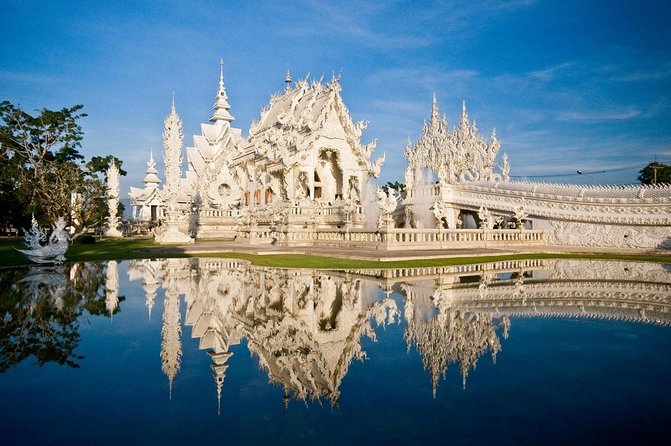
- Wat Rong Khun (White Temple) white plaster and glass mosaic details that catch the light
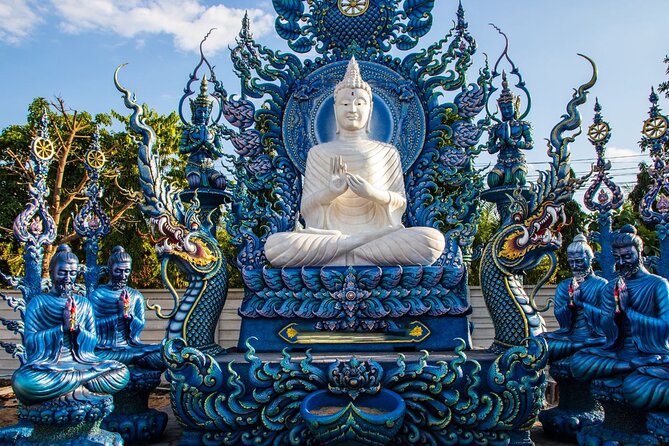
- Wat Rong Suea Ten (Blue Temple) a non-active temple with a big seated White Buddha inside
- Wiang Pa Pao / Lahu hill tribe village walking and trekking in mountainous areas with small settlements
- Hotel pickup from Chiang Mai old town area plus air-conditioned transport for the full day
Chiang Rai day tour: White and Blue Temples plus a hill tribe stop
If you like your Thailand days to mix famous landmarks with real people, this itinerary hits the sweet spot. You start in Chiang Mai and spend most of your time in Chiang Rai, where two temple stops do the heavy visual lifting: Wat Rong Khun and Wat Rong Suea Ten. Then you shift gears to a hill tribe village experience in the hills around Wiang Pa Pao.
This is also a rare-feeling day because breakfast isn’t just “served,” it’s part of the hot spring routine. At Mae Khachan Hot Spring, you get mineral water foot soaking time and eggs you boil yourself, using the water’s heat.
The tour’s promise of “small group” can help here. With a guided route, you spend less time figuring out what’s where and more time actually looking—especially at temples where details matter.
You can also read our reviews of more tours and experiences in Chiang Mai.


Timing and logistics for your 7:30am start
The day runs for about 11 hours in total, and that includes travel time between Chiang Mai and Chiang Rai. The start time is 7:30am, and your meeting point is at Tha Phae Gate area in Chiang Mai.
If you’re staying in the Chiang Mai old town area, pickup is offered. If you’re outside the pickup range, you’ll meet at the Burger King in front of Thapae Gate. Either way, you’ll travel in an air-conditioned vehicle, which is a relief in the morning heat.
Two practical tips for this kind of day trip:
- Plan for a fast pace. Temple stops can be short, and you’ll want to keep moving so you don’t miss photo angles or quiet moments.
- Bring something comfortable for walking. Even if most time is guided, the hill tribe part includes trekking and walking in mountainous terrain.
Also, temples here are sacred places. You’ll need to cover shoulders and knees. Pack light layers you can wear comfortably, and you won’t have to scramble to solve a dress-code problem on the spot.
Mae Khachan Hot Spring: 90°C water and DIY boiled eggs
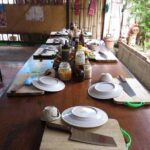
Stop one is Mae Khachan Hot Spring, the well-known natural hot spring along the Chiang Mai–Chiang Rai route. The key idea is simple: this isn’t just a pretty spot to look at. You get a hands-on break where your feet soak in mineral water and you boil eggs using the heat of the water itself.
The water runs at about 90 degrees Celsius, hot enough to cook eggs. That means your breakfast is part science experiment, part snack. You’ll also get a small breakfast there: creamy boiled eggs dipped into sauce.
Why this stop works well on a day tour:
- It gives your body a chance to reset before temple time.
- You get a memorable Thai travel moment that feels more local than a standard “rest stop.”
The one thing to keep in mind is that “soak time” can still mean you’re moving fairly soon afterward. If you tend to get chilled easily, you might want to dry off and keep a light layer handy, because moving from hot water to outdoor air can feel like a change in temperature.
Wat Rong Khun White Temple: glass mosaic sparkle and photo rules
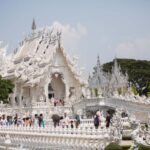
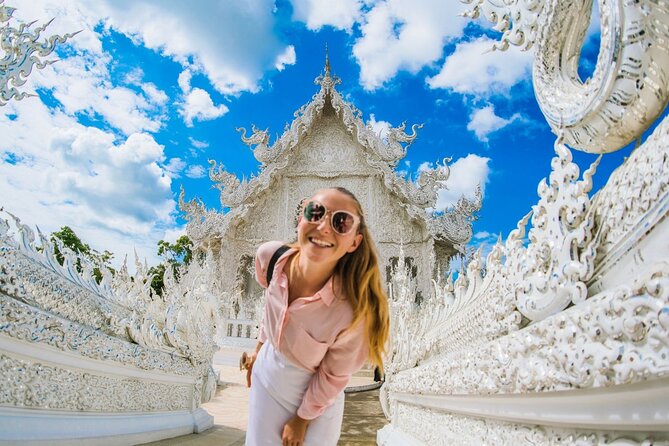
Wat Rong Khun is the White Temple, and it’s one of Chiang Rai’s most recognizable attractions. The exterior uses white color and glass pieces in the plaster, which can sparkle in the sun and make the whole structure feel almost luminous.
The tour includes about 2 hours here, which is a nice amount of time for a place like this. You can look at the main temple form, then circle around to catch different angles and detail work in the plaster and glass.
A big practical point: Wat Rong Khun’s entrance fee is not included. You pay 50 THB per person, and you’ll need cash at the attraction. If you only travel with card, this could slow you down for a minute—so it’s smart to carry some Thai baht before you arrive.
Also, because this is an active religious space open to visitors, dress matters. Shoulders and knees must be covered, and you’ll want to follow any on-site guidance from the staff.
What I like about this stop is how much it rewards attention. Even when you’ve seen photos before, in-person you tend to notice the surfaces—the glass reflections, the crisp white lines, and the way light changes across the building.
Wat Rong Suea Ten Blue Temple: a non-active temple with modern Buddhist art
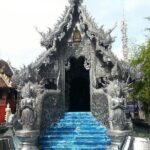
Next you visit Wat Rong Suea Ten, the Blue Temple. The first impression is the color: a bold sapphire-blue tone with gold embellishments. The temple isn’t an active monastery, so there are no monks living here. That can make the atmosphere feel more like a visitor-focused site, with a strong emphasis on visual experience.
You’ll have about 1 hour at this stop. That’s enough time to see the main hall and take in the central interior feature: a huge seated statue of a White Buddha. Around it, you’ll find contemporary Buddhist art in a modern style.
One helpful way to plan your mind for this stop: don’t expect the exact same vibe as Wat Rong Khun. Blue Temple is more about modern artistic elements and color impact than about a “museum-like” presentation or a traditional monk-centered routine.
The good news: admission here is listed as free on this tour. That helps keep the day’s overall cost predictable, aside from Wat Rong Khun.
Wiang Pa Pao Lahu hill tribe village: walking respectfully in the hills
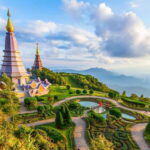
The final major experience is a visit to Wiang Pa Pao, where you spend time with Lahu hill tribe communities. This is not a quick look-and-leave photo stop. The time you spend here includes walking and trekking around mountainous areas where small settlements appear.
The Lahu people originally lived on the Tibetan plateau and later migrated gradually into Yunnan. According to the tour background, they likely began moving into north Thailand in the 1870s or 1880s, pushed partly by pressure from Chinese domination.
What makes this part valuable on a tour like this is the contrast with the temples. Temples are large, designed spaces you view from a distance. Here, you move at a human walking pace through the region where people actually live and maintain their way of life.
The tour also includes dessert at the hill tribe village and uses bottled water as part of the day’s basics. It’s a small inclusion, but it helps the stop feel like more than just a cultural photo opportunity.
A respectful note: these settlements are remote from roads and towns because of their commitment to maintaining their way of life. That remoteness is part of the story. Keep your expectations realistic, stay polite, and follow the guide’s cues about where you should and shouldn’t walk.
Price and value: what $56.93 covers (and what it doesn’t)
At $56.93 per person, this tour feels positioned as a “packed highlights day” rather than a slow, multi-day exploration. Your included cost covers a lot of the moving parts:
- Licensed English-speaking tour guide
- Pickup and drop-off from hotels in the Chiang Mai old town area (and a fallback meeting point at Thapae Gate if you’re outside that range)
- Air-conditioned vehicle
- Boiled eggs at the hot spring
- Dessert at the hill tribe village
- Bottled water
- Mobile ticket
The main “extra” cost is the one temple that’s not included: Wat Rong Khun entrance fee (50 THB cash). Since everything else is listed as free at the other stops, you can budget that one payment without surprises.
Is it good value? For many people, yes—because the day includes transport, a guide, and multiple set pieces that would otherwise take planning. Chiang Rai temples can be done independently, but doing them as a guided loop reduces stress and helps you hit the timing.
The main value question for you is about pace. If you like days where you see a lot in limited time, the price makes sense. If you’d rather slow down for deeper exploration, the 11-hour schedule may feel rushed.
What the group size means for your comfort
The tour lists a maximum of 100 travelers, which sounds big on paper. Still, the route is described as a small-group experience, and the timing suggests you’ll be moving together with guidance rather than being scattered everywhere.
Here’s how to judge this day in a realistic way:
- You’ll likely have enough structure to find viewpoints quickly and learn what to notice.
- You may still feel “a bit tour-clocked,” especially at the White Temple where people want photos at the same popular angles.
If you’re the type who loves quiet corners, go with the flow. During a guided stop, you often have moments where you can step a little off to one side and slow down. Just don’t stray from the group’s plan without checking with your guide.
Temple dress code and practical comfort tips
This itinerary is temple-heavy, with two major temple stops plus a third religious site atmosphere at Blue Temple. That means dress code matters.
Plan to wear something that covers shoulders and knees. If you don’t, you could lose time either finding a solution or getting turned back. Light clothing works best since you’ll be in and out of vehicles and moving between stops.
Also consider:
- Bring sunglasses and sunscreen. White Temple in particular can reflect a lot of light.
- Bring a small towel or wet wipes for hot spring time. Your feet will be wet, and the rest of the day is on the move.
- Carry a small cash stash in Thai baht for the White Temple fee.
Reliability and how to protect your travel day
There’s one thing you should know before you treat this as your only Chiang Rai plan. I’ve seen at least one case where the tour was canceled last-minute due to an urgent personal issue, even after payment. The refund was provided, but it still meant losing a travel day with no compensation.
That doesn’t mean this happens routinely, but it’s enough to suggest a smart habit: don’t book this as your sole fixed item if your schedule is ultra-tight. Leave some breathing room in your Chiang Mai or Chiang Rai dates so you can swap plans if anything changes.
Who should book this tour (and who might not love it)
This tour is a great fit if you want:
- A single-day hit list of Wat Rong Khun + Wat Rong Suea Ten
- A real break at a hot spring with DIY boiled eggs
- A hill tribe village visit that includes walking and trekking and a dessert stop
- Easy hotel pickup and a guided English experience
It might not be your best match if:
- You need a slow travel pace with lots of free time at each site.
- You dislike paying a cash entrance fee on-site.
- You’re traveling on a day where you absolutely cannot afford schedule disruption.
If you’re comfortable with a busy day and want iconic sights without the planning headache, you’ll probably feel satisfied by the way it’s structured.
Should you book this Chiang Rai White/Blue/Hill Tribe tour?
I’d book it if you want a focused Chiang Rai sampler with a memorable hot spring breakfast and a culturally guided village visit. The inclusions make it smoother than doing everything separately, and the one paid add-on (Wat Rong Khun) is clearly stated as 50 THB cash.
I’d be a little cautious if your schedule is fragile. With a full day clocked at about 11 hours including transfers, you’ll feel changes more than you would on a flexible multi-day plan.
If you’re ready for a well-packed day that mixes art, nature, and community time, this is a solid way to spend your day outside Chiang Mai.
FAQ
How long is the Chiang Rai White Temple Blue Temple and Hill Tribe Village Tour?
The tour lasts about 11 hours, and that total includes travel time from Chiang Mai to Chiang Rai and back.
What time does the tour start?
The start time is 7:30 am.
Where do I meet the tour?
The meeting point is at Tha Phae Gate. If your hotel is outside the pickup area, you meet in front of the Burger King at Thapae Gate.
Is hotel pickup included?
Yes, pickup and drop-off are included for hotels in the Chiang Mai old town area.
Are tickets and entrance fees included?
Admission is not included for Wat Rong Khun. The fee is 50 THB per person, paid in cash at the attraction. Other listed stops have admission ticket free.
Do I need to pay for anything during the tour?
Wat Rong Khun requires a 50 THB cash entrance fee. Personal expenses are not included.
What’s included with the hot spring stop?
At Mae Khachan Hot Spring, you’ll have a foot soak and you’ll also get boiled eggs as part of a small breakfast. Bottled water is included as well.
Is there a hill tribe village visit?
Yes. You visit a Lahu hill tribe village area in Wiang Pa Pao, with walking and trekking, and you also get dessert at the village.
What should I wear for temple visits?
Temples are sacred places, and you’re required to dress appropriately. Shoulders and knees need to be covered.