REVIEW · CHIANG MAI
Morning Thai Cooking with Grandma – Market Visit & Farm Tour
Book on Viator →Operated by Grandmas Home Cooking School · Bookable on Viator
Your morning becomes a Thai cooking lesson. This tour strings together a market visit and an organic farm stop, so you learn ingredients first and cook them right after. I especially liked the way the instructors connect herbs and sauces to real Thai flavor, plus the farm activities like feeding chickens and collecting eggs. One thing to consider: pickup can run a little tight, so arrive ready for the stated pickup window.
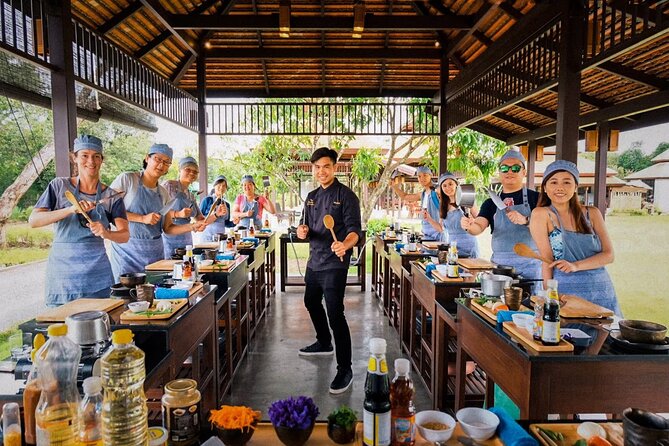
You also get a proper cooking setup at Grandma’s open-air kitchen, with your own station in a small group so you’re not just watching. The class feeds you well, and the finish includes mango sticky rice you made possible by your own hands-on work. If you’re not a morning person, plan to keep your schedule light after, because you’ll likely leave full, happy, and a bit caffeinated.
In This Review
- Key takeaways before you go
- Chiang Mai market to cooking class: the smartest way to start
- From rice fields to chickens: what the organic farm tour really adds
- Grandma’s open-air kitchen: how the class keeps you active
- What you’ll cook: four Thai dishes with real guidance
- The meal and the sweet finish
- Ingredients you can actually buy again at home
- Vegetarian-friendly and allergy-ready in practice
- Pickup, timing, and what to do with your morning
- Price and value: what $38.79 is really buying you
- Who this class fits best (and who might want a different option)
- Should you book Grandma’s Home Cooking School?
- FAQ
- How long is the Morning Thai Cooking with Grandma tour?
- Is hotel pickup included?
- What happens on the organic farm tour?
- How many Thai dishes will we cook?
- Is the cooking class vegetarian-friendly?
- Is dessert included?
- Do you get recipes to take home?
- Can I cancel for free?
Key takeaways before you go
- Market visit sets you up for flavor: you learn what to buy and how locals pick fresh ingredients.
- Organic farm time is hands-on: rice fields, herb gardens, chicken coop, mushroom hut, and egg collecting.
- You cook at your own station: step-by-step guidance for four Thai dishes in a small group.
- You eat what you make, hot and fresh: the meal is part of the lesson, not an afterthought.
- Take-home e-book via QR code: practical recipes you can recreate later.
- Vegetarian-friendly cooking with adaptations: you can still learn the techniques and make the dishes work.
Chiang Mai market to cooking class: the smartest way to start
This is one of those tours where the timeline actually makes sense. You begin at a local market with an instructor, then you go to an organic farm, and only after that do you head to the kitchen. That order helps you understand Thai food as a set of building blocks, not just a list of finished dishes.
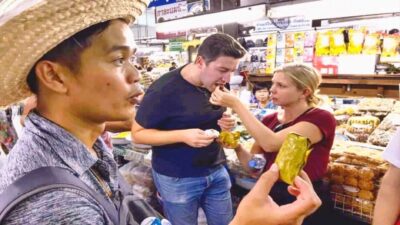
At the market, you’re guided through the ingredients that show up again and again in Thai cooking: herbs, spices, sauces, and seasonal vegetables. What I like about this approach is that you don’t just learn names. You learn how you’d choose and use them when you’re back at home trying to recreate the same flavors.
If you’re worried you’ll spend too long shopping or not enough cooking, don’t be. The market stop is part of the lesson plan, and you’ll return to the kitchen ready to use what you just learned.
You can also read our reviews of more shopping tours in Chiang Mai
From rice fields to chickens: what the organic farm tour really adds
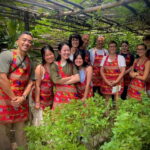
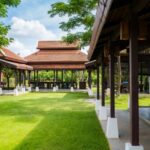
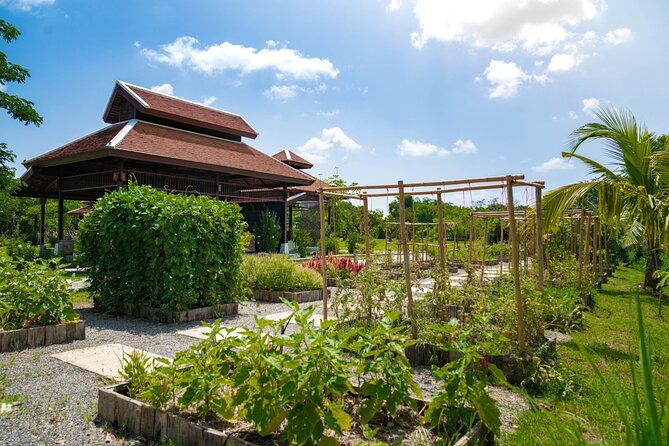
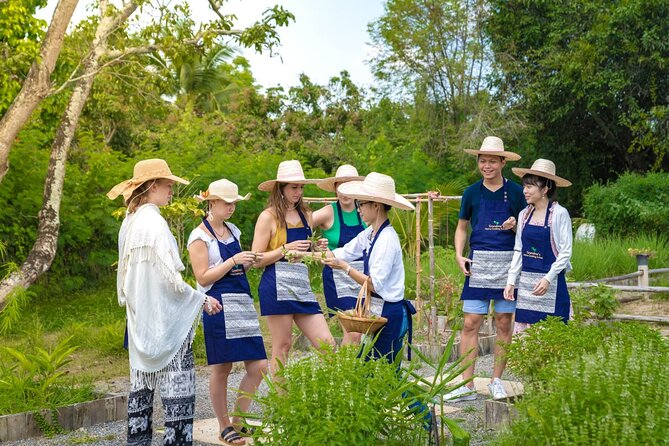
The farm stop is the calm break in your morning. It’s outside Chiang Mai’s city rhythm, with rice fields and gardens that smell like actual ingredients, not supermarket packages. You walk through herb and vegetable areas, and you get to see the ingredients your food is built on.
The hands-on farm activities are a big part of the experience. You can feed and hug the chickens, collect fresh eggs, and explore areas like the mushroom hut. Picking mushrooms is also included, which makes the farm part feel more than a photo stop.
Here’s the practical value: Thai dishes depend on fresh herbs and aromatic components, and seeing them growing gives you a better sense of what matters. Even if you’re not a “farm person,” this is a useful way to build confidence for cooking later.
Also, it’s a nice change of pace if you’ve already eaten your way through Chiang Mai restaurants. This is food learning with a side of animals and dirt under your nails.
Grandma’s open-air kitchen: how the class keeps you active
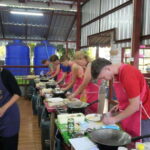
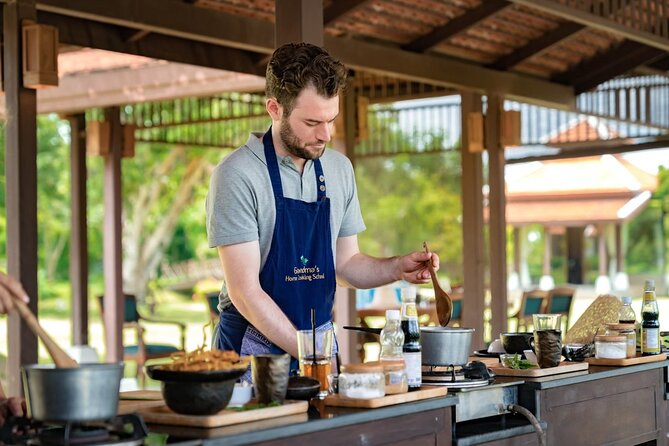
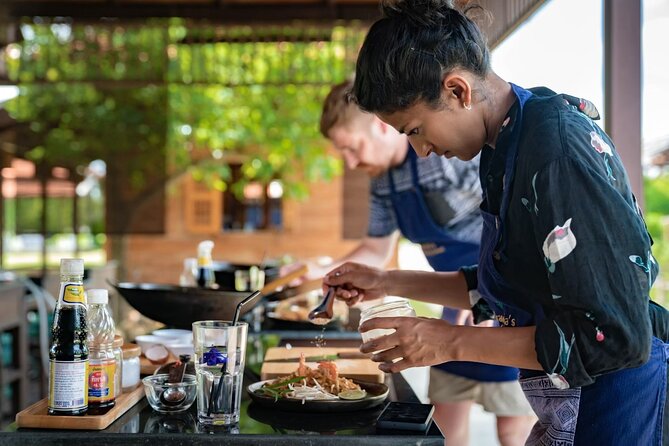
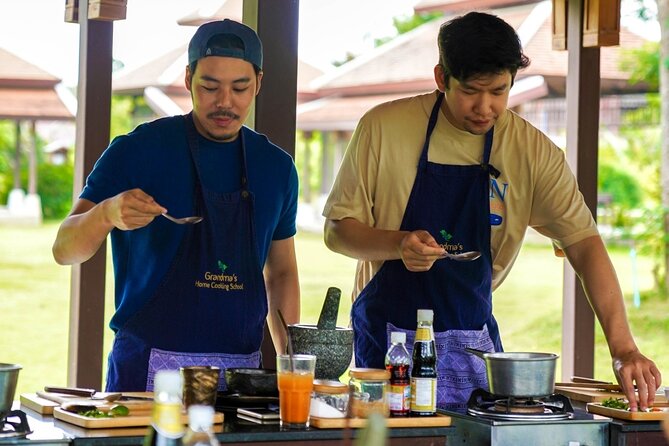
When you arrive at the cooking school, you’re placed at your own station. That’s a big deal. In many cooking classes, the group watches most of the time. Here, you’re expected to work, cook, and taste as you go.
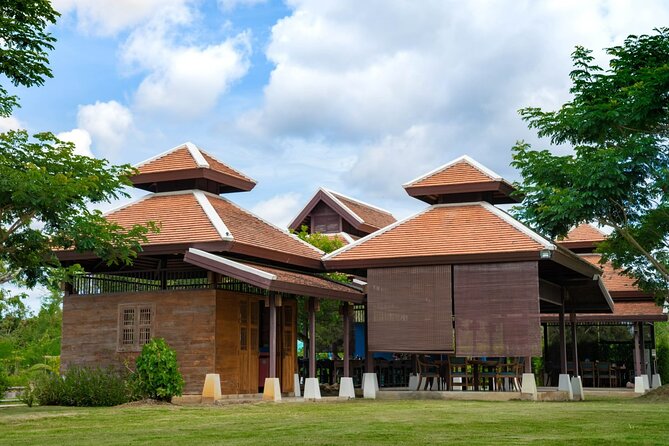
The setting is open-air with a kitchen layout designed for efficiency. You cook in small groups with instructors supporting you step-by-step, so you know what to do at each stage (like prepping ingredients and building sauces/curry components). You’re not guessing.
You’ll also get a welcome drink during the class. Options include Thai milk tea, lemon tea, or butterfly pea flower tea, plus unlimited bottled water and a free herbal drink. It’s a small touch, but it keeps you comfortable while you’re standing at your station and moving through multiple dishes.
What you’ll cook: four Thai dishes with real guidance
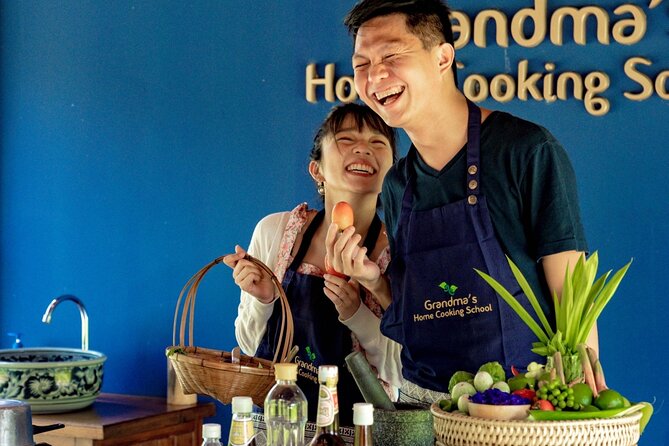
The core promise is four Thai dishes, taught through hands-on guidance. Depending on the session, you may make dishes such as hot and sour soup, green curry, or pad Thai. The class may also include Tom Yam, curry paste, curry, or other traditional options like a coconut-based soup variation.
The best part is that you’re not just learning “how to cook.” You’re learning how Thai cooking flavors get built:
- learning herb and spice roles (not just the ingredient list)
- understanding how sourness, saltiness, sweetness, and heat balance
- seeing how curry paste or noodle sauces become a finished dish
From what’s been shared by past students, instructors like Kiki, Pat, Noi, Joy, and Ryan can run the class with clear instructions and humor. Even if your instructor is different, you can expect the same style: practical, guided cooking that gets you to the finish line without feeling lost.
If you’re someone who’s tried Thai cooking once and felt the sauces were too complicated, this is a great chance to break it down in a structured way.
The meal and the sweet finish
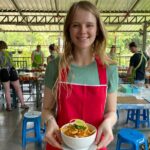
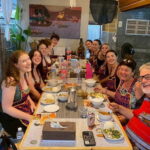
You don’t just cook and hope. You eat what you make. The class culminates with a complimentary serving of mango sticky rice. It’s the perfect close because it gives you a sweet, Thai ending after the savory heat and herb-heavy dishes.
So by the time you’re leaving, you’re not thinking about whether you’ll find lunch later. You’ve already handled that.
You can also read our reviews of more tours and experiences in Chiang Mai


Ingredients you can actually buy again at home
One of the most useful outcomes is knowing what to look for when you shop. The market tour is the bridge, and the farm stop reinforces it.
You’ll learn how to select ingredients during the market visit, then you’ll use farm-fresh items in the kitchen. After that, the digital recipe e-book (delivered as a download using a QR code) helps you recreate the dishes later. This isn’t just a list of ingredients. It’s meant to be usable, so you can cook again without guessing.
A small reality check: if you’re used to Thai food from restaurants, you’ll notice the class includes a broader sense of ingredients than just what a menu calls out. That’s what makes the e-book valuable. You’re less likely to recreate the dish and end up with something that tastes “sort of right.”
Vegetarian-friendly and allergy-ready in practice
If you’re vegetarian, this class is set up to help. Vegetarian cooking is supported through adaptations, so you can still learn the recipes and techniques without being forced into a bland swap.
Allergies are also mentioned as something the team can accommodate. That’s important for peace of mind, because the class includes spice mixes and a range of ingredients that can be tricky to substitute. If you have allergies, tell the provider ahead of time so they can plan appropriately.
Pickup, timing, and what to do with your morning
The tour runs about four hours in the morning. Hotel pickup and drop-off are included within 5 km of Chiang Mai city center. If you’re farther out than that, you may need to arrange an extra meeting option or pay an extra charge.
The meeting point is at Charoen Charoen fresh market (Charoen Charoen ตลาดเจริญเจริญ, ถ.เชียงใหม่-แม่ออน Q334+VGC, Amphoe San Kamphaeng, Chang Wat Chiang Mai 50130). In practice, pickup depends on your location, but this gives you a clear fallback.
One consideration: pickup can feel a bit chaotic for some people because the pickup window is sometimes broad. A simple fix is to be ready right on schedule and keep your phone charged. If you plan your morning around it, you’ll feel much less stress.
Once you’re back, you’ll likely want downtime. You’ll leave full, with new recipe knowledge, and with your brain switched from “what do I eat next?” to “how do I cook this again?”
Price and value: what $38.79 is really buying you
At $38.79 per person for about four hours, this is one of the more “complete” cooking experiences in Chiang Mai. You’re paying for far more than a cooking lesson.
Here’s the value breakdown in real terms:
- transport included (within 5 km)
- guided market visit with an instructor
- organic farm tour with hands-on activities (chickens, eggs, mushrooms, gardens)
- your own cooking station and step-by-step instruction
- four dishes made by you, plus mango sticky rice
- welcome drinks and unlimited bottled water
In other words, the price covers the whole chain: ingredient learning + ingredient handling + cooking + eating. If you like Thai food but want the skills to reproduce it, that’s where the money feels well spent.
Who this class fits best (and who might want a different option)
This tour is best if you:
- want a Thai cooking class that includes a market and farm, not just a kitchen
- like hands-on experiences more than sitting and watching
- enjoy learning ingredients and how flavors are built
- want a strong vegetarian-friendly option
- would benefit from a take-home recipe e-book
You might consider a different option if you hate mornings, get stressed by pickup timing windows, or only want a quick cooking session without the extra context of markets and farms. In that case, four hours plus travel time can feel like more than you bargained for.
Should you book Grandma’s Home Cooking School?
I’d book it if you want a morning that teaches you how Thai cooking works, not just what it tastes like. The market-to-farm-to-kitchen flow is the reason the day feels worthwhile, and the hands-on station setup means you’ll actually cook, not hover.
If you’re vegetarian, you’ll likely feel taken care of, with adaptations mentioned as part of the experience. And if you’re a spice and herb person, this class gives you a practical foundation you can use long after you leave Chiang Mai.
One final tip: come hungry, but also plan to not overdo a huge breakfast beforehand. The class is designed so you eat as you cook, and you’ll finish with sticky rice and mango.
FAQ
How long is the Morning Thai Cooking with Grandma tour?
It lasts about 4 hours (approx.).
Is hotel pickup included?
Yes, hotel pickup and drop-off are included within 5 km of Chiang Mai city center.
What happens on the organic farm tour?
You’ll tour rice fields and herb/vegetable gardens, visit the chicken coop and mushroom hut, and take part in activities like feeding and hugging chickens, collecting fresh eggs, and picking mushrooms.
How many Thai dishes will we cook?
You’ll cook 4 Thai dishes with step-by-step guidance.
Is the cooking class vegetarian-friendly?
Yes. Vegetarian cooking and adaptations are supported.
Is dessert included?
Yes. Mango sticky rice is included as a complimentary dessert served at the end of the meal.
Do you get recipes to take home?
Yes. You receive a digital recipe e-book download using a QR code.
Can I cancel for free?
Yes, free cancellation is available. You can cancel up to 24 hours in advance for a full refund.