REVIEW · CHIANG MAI
Tomyumthai Cooking Class in Chiang Mai
Book on Viator →Operated by Tom Yum Thai Cooking School · Bookable on Viator
A market walk plus a real Thai kitchen.
This half-day Chiang Mai cooking class mixes spice education with hands-on cooking, then pays you back with the meal you make. You can also pick a morning or afternoon slot, and the class caps at a small group so you get plenty of attention.
I especially like the way the chef-led flow keeps things practical: you don’t just watch, you cook step-by-step with a plan for the dishes you’ll choose. I also like that you leave with a recipe book and access to photos, so the flavors don’t vanish when you’re back home.
One heads-up: the cooking setting may mean you remove your shoes, so bring socks and be ready for a home-style kitchen vibe.
In This Review
- Key highlights to expect
- A half-day Chiang Mai Thai cooking class built for real flavor
- Hotel pickup, meeting point, and how to plan your day
- The market walk for Thai vegetables and spices (and why it’s more than sightseeing)
- From the kitchen to six chosen dishes: how the class works
- Chef-led techniques that actually help at home
- Eating what you cook: meal timing, coffee or tea, and portion reality
- Recipe book and online photos: your souvenir that helps you cook again
- Price and value: what $32.61 buys in Chiang Mai
- Who should book this cooking class (and who might not)
- Should you book Tom Yum Thai Cooking Class in Chiang Mai?
- FAQ
- How long is the cooking class in Chiang Mai?
- What dishes will I cook?
- Is hotel pickup and drop-off included?
- What’s included in the meal?
- Is the class alcohol-free?
- How big is the group?
- What if the weather is bad or I need to cancel?
Key highlights to expect
- Market ingredient hunt that teaches you what’s in Thai food and why it works
- Small group size (max 10) for real help, not just generic instructions
- Choose your dishes (six) so the menu matches what you actually want to cook
- Chef step-by-step teaching with lively guidance while you work
- Take-home recipe book + online photo gallery to rebuild the dishes later
- Hotel pickup and drop-off within Chiang Mai Old City in an air-conditioned vehicle
A half-day Chiang Mai Thai cooking class built for real flavor
A good Thai cooking class doesn’t start in a classroom. It starts where Thai cooks start: with ingredients. Here, you begin with a guided market stop, then head to the cooking school kitchen to prepare multiple dishes using the equipment and techniques your instructor shows you.
The big win is the balance. You get the story behind Thai cooking (spices, vegetables, and how flavors are built), but you also get your hands moving right away. Even if you’re not a confident cook, the pacing is designed for you to cook course-by-course and learn through repetition.
And because the class is small, you can ask questions while you’re actively cooking. That matters in Thai cooking, where tiny choices—cut size, heat level, and timing—make a real difference.
You can also read our reviews of more cooking classes in Chiang Mai
Hotel pickup, meeting point, and how to plan your day
The class is set up to be easy to reach. Pickup and drop-off are provided for hotels in Chiang Mai Old City, and the ride is in an air-conditioned vehicle. If your hotel sits outside the pickup zone (it’s limited to downtown/Old City), you may need to make your own way to the meeting point.
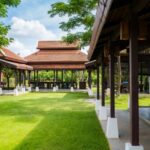
The meeting point is at Tom Yum Thai Cooking School (1, 4 soi 12, Tambon Chang Khlan, Amphoe Mueang Chiang Mai). It’s also listed as near public transportation, which is handy if you prefer to arrive on your own.
The activity runs about 5 hours (approx.) and is offered as a morning or afternoon class. Either way, plan to treat it like a focused half-day: you’ll spend time shopping for ingredients, cooking, and then eating.
Practical tip: if you like getting the most value, avoid eating a big meal beforehand. You’ll be cooking several dishes and then eating them, and you’ll enjoy it more when you’re hungry enough to taste everything.
The market walk for Thai vegetables and spices (and why it’s more than sightseeing)
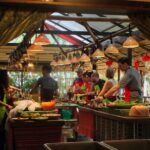
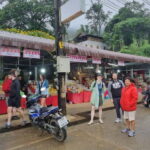
The market stop is where you learn how Thai food gets its personality. Your guide walks you through ingredients you’ll actually use in the dishes you’re making, with an emphasis on Thai vegetables and spices. This is the part that helps you cook later, because you start recognizing ingredients by name and smell, not just by what the final dish looks like.
A couple details that stand out from how the experience plays out:
- You’re not rushed. You’re guided, but you also get time to wander a bit on your own.
- You learn how different ingredients behave in Thai cooking, not just what they are.
If you’ve ever eaten Thai food and wondered why it tastes balanced instead of one-note, the market is where the answer begins. Thai cooking often depends on the combo: aromatics for fragrance, acid for brightness, and herbs for the finish. When you see the ingredients together, the logic starts to click.
Come with curiosity and a light appetite. The market is part education, part sensory immersion—just in a very practical way.
From the kitchen to six chosen dishes: how the class works
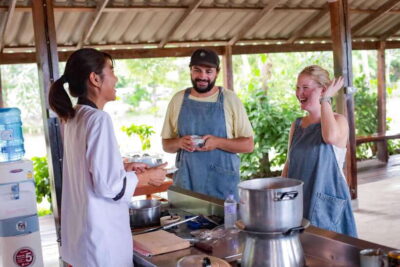
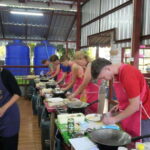
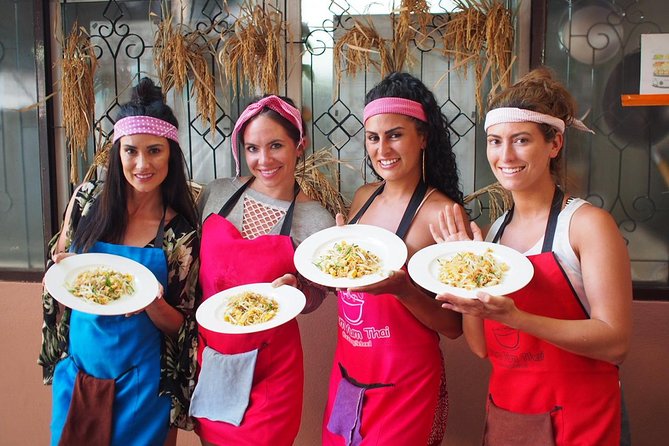
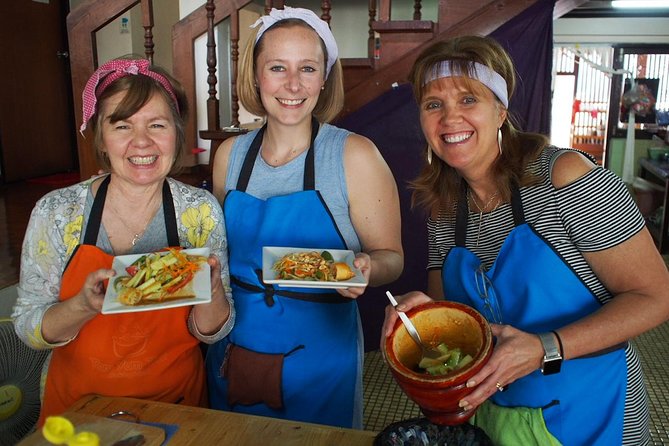
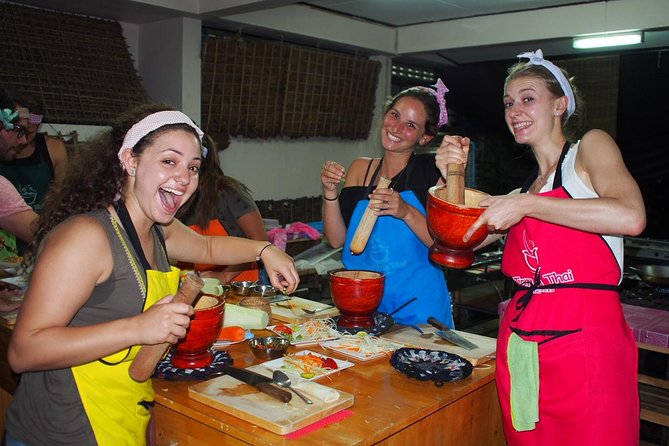
After the market, you head back to the cooking school kitchen to start cooking. The class focuses on preparing six dishes, and you typically work through them with step-by-step instruction from the chef-instructor and their team.
One of the most useful things here is the built-in decision-making. You can choose which dishes you want to cook from the class menu. That’s not a small perk. It means you can steer the class toward flavors you already like (or foods you want to master), instead of being stuck with a preset set that doesn’t match your taste.
From the way the class is taught, you’re also meant to cook in a realistic order—finish one dish, then eat it before you move on to the next. That changes the whole experience. You taste what you made while it’s still fresh, and you can adjust your approach dish-to-dish based on what you’re learning in real time.
If you’re picky or have dietary preferences, you may be able to make swaps. Several participants mentioned being able to change proteins (like pork to chicken) or swap vegetables during cooking. Ask your instructor early so they can guide you without slowing the class down.
Chef-led techniques that actually help at home
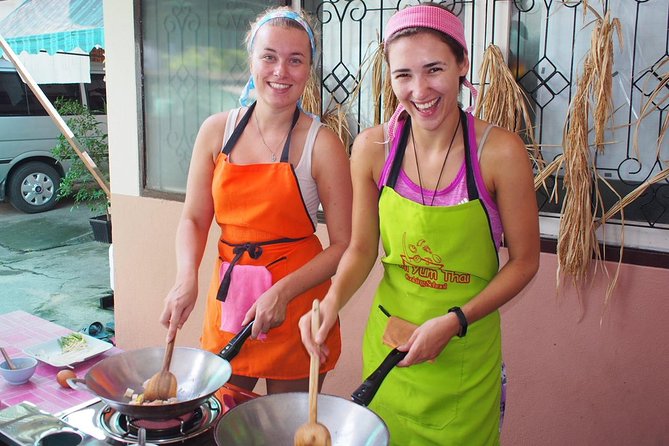
This is one of those cooking classes where the chef’s commentary matters. The instruction is practical and focused on technique—things like how to handle ingredients, how to build flavor, and how to follow the steps so your dish tastes Thai, not just “generic stir-fry.”
You’re taught by an experienced chef-instructor, and the classes often include a mix of teacher personalities depending on the session. Names that appear in the instructor team include Oun and Gae (and other teaching staff may also join). What’s consistent is the teaching style: clear steps, enough patience to keep you moving, and humor that makes the time fly.
A few tips worth carrying with you:
- Cook for timing, not just ingredients. Thai dishes can go from perfect to overdone fast.
- Taste and adjust as you go. You’ll learn where the flavor balance needs help.
- Treat herbs and aromatics as finishing partners, not leftovers.
And because the class is small (max 10), the instructor can steer you when something goes off—like heat too high, cutting inconsistent, or sauce thickness needing a quick tweak.
You can also read our reviews of more tours and experiences in Chiang Mai

Eating what you cook: meal timing, coffee or tea, and portion reality
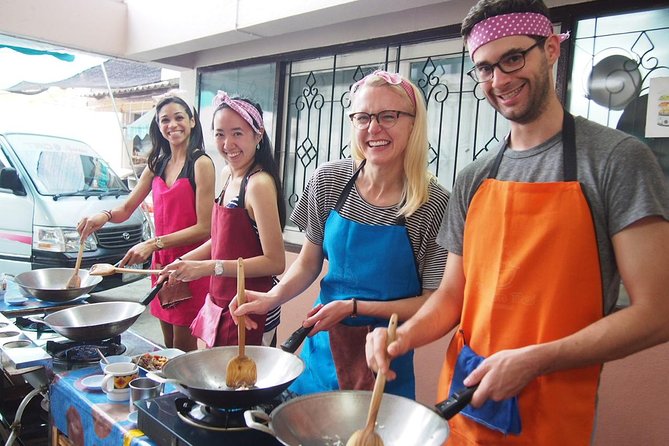
You don’t end up with one sad lunch at the end. The class is designed so you eat what you make across the session. Your meal includes coffee and/or tea and drinking water, and you’ll be served the dishes you cook.
A big value point: the food quality tends to come from freshness. You’re cooking in the moment with real ingredients you picked in the market. That’s the difference between cooking as a demo and cooking as a meal.
Also, come ready to eat. Multiple participants emphasize the fact that the portions and number of courses can be filling. If you only eat a light snack before you go, you’ll enjoy more of what you cook instead of pushing food around the plate.
Alcoholic drinks aren’t included, so if that’s part of your plan, budget for it separately.
Recipe book and online photos: your souvenir that helps you cook again
The take-home part isn’t just a nice gesture—it’s practical. You receive a recipe book to take home, plus access to online photos (including a photo gallery on a Facebook page). That means you can recreate dishes later with reference to what you made and how it looked during the process.
This is especially helpful with Thai cooking, where a dish can look familiar but the details change the taste. Your recipe book becomes your checklist, and the photos help you confirm things like garnish style, color, and consistency.
If you’re the type who forgets steps after a day trip, this is the feature that prevents the class from fading into memory.
Price and value: what $32.61 buys in Chiang Mai
At $32.61 per person, this class is priced like a value-friendly way to learn real technique. But the real question is what that price includes—and it does include the key stuff you’d otherwise pay for or miss in a cheaper class.
Included items:
- Cooking equipment use
- Coffee and/or tea plus drinking water
- Air-conditioned vehicle for pickup/drop-off
- A recipe book
- Photo gallery access
- An English guide
- Pickup and return to your hotel within Chiang Mai Old City
Not included:
- Alcoholic drinks
When you put it together, you’re paying for more than “a meal cooking session.” You’re paying for a guided market ingredient education, hands-on instruction for multiple dishes, and the materials that let you repeat the results later. For many people, that’s the difference between buying a fun afternoon and actually learning something useful.
The small group size also helps value. You’re less likely to get ignored, because the class isn’t packed.
Who should book this cooking class (and who might not)
This is a strong pick if you want:
- A hands-on Chiang Mai cooking class that includes a market stop
- A guided way to learn Thai flavors instead of guessing
- A small group experience with individualized help
- Something you can take home (recipe book and photos)
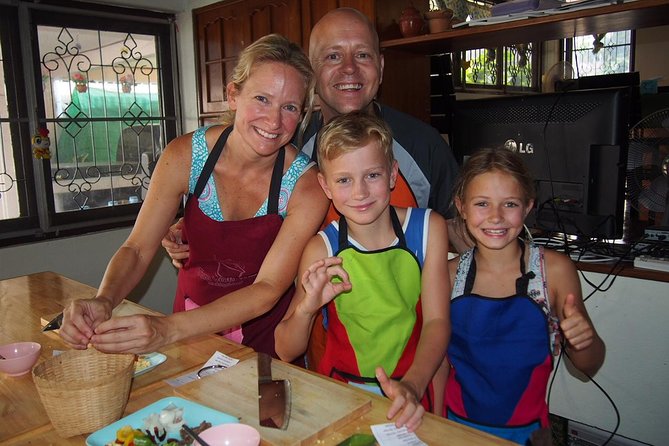
It’s also a good option for families who want a clear structure. Some participants specifically called out that kids were handled well, with patient instruction and step-by-step guidance.
Who might not love it: if you want a casual, no-pressure food stroll, this is still a cooking class. You’ll cook. And if you have mobility or comfort concerns related to a home-style kitchen setup, you should plan for the possibility of removing shoes. Bring socks just in case.
Should you book Tom Yum Thai Cooking Class in Chiang Mai?
Book it if you want the best version of a Thai cooking lesson: market-to-kitchen, small group attention, chef-led steps, and a take-home recipe book plus photos. The $32.61 price point makes it feel accessible, while the structure (market ingredient learning, cooking multiple dishes, then eating what you made) keeps it from feeling like a tourist performance.
Skip it or consider alternatives if you’d rather do a purely observational food tour, or if you’d feel uncomfortable with a home-style kitchen setup where shoes may come off.
If your goal is to learn how Thai flavors are built—then reproduce them—this class is an easy yes.
FAQ
How long is the cooking class in Chiang Mai?
The class runs for about 5 hours (approx.), as a half-day experience.
What dishes will I cook?
You can choose to learn to cook six dishes.
Is hotel pickup and drop-off included?
Yes, pickup and return to your hotel are included within Chiang Mai Old City. Hotels more than 2 miles (3 km) from downtown may not be included.
What’s included in the meal?
You’ll receive the meal you help cook, plus coffee and/or tea, drinking water, and use of all cooking equipment.
Is the class alcohol-free?
Alcoholic drinks are not included.
How big is the group?
The class is limited to a maximum of 10 travelers.
What if the weather is bad or I need to cancel?
You can cancel for a full refund up to 24 hours in advance. The experience requires good weather; if it’s canceled due to poor weather, you’ll be offered a different date or a full refund.