REVIEW · CHIANG MAI
Half-Day Thai Cuisine Cooking Experience in Chiang Mai
Book on Viator →Operated by Oh-Hoo · Bookable on Viator
Thai cooking lessons feel real here, not staged. Chang Cooking runs a hands-on class in a Lanna-style wooden space near Tha Phae Gate, close to the Saturday walking street area, so you can pair it with an evening stroll afterward. What you’re really buying is a guided cooking session that takes common Thai flavors—herbs, spices, sweet-tang notes—and turns them into dishes you can actually make again at home.
What I especially like is the hands-on kitchen setup. You get your own cooking station with the gear you need (knives, woks, utensils), so you’re not waiting around for equipment or standing back like a spectator. I also like that the class centers on a real meal: you choose from a menu of options, cook your picks, then enjoy the feast you made.
One thing to consider: this experience runs with an expectation of good weather, and part of the setup is open-air. If conditions are bad, you may be offered an alternative date or a full refund, so don’t treat it as a “must-do no matter what” slot.
In This Review
- Key things to know before you cook
- Tha Phae Gate convenience: location that fits real days
- Lanna-style kitchens: your station, the right tools, and two room styles
- Picking your menu: how choosing 4 or 6 dishes changes the whole experience
- My practical way to choose (so you don’t overthink it)
- What you learn: herbs, spices, and the logic behind Thai flavor
- Inside the class flow: from prep to your final plate
- Tasting, portion control, and why your meal feels satisfying
- Price and value: does $31.30 make sense in Chiang Mai?
- Who should book this class, and who should rethink it
- Should you book Chang Cooking’s half-day Thai cooking class?
- FAQ
- How long is the Thai cuisine cooking experience?
- How many dishes can I choose?
- Is hotel pickup and drop-off included?
- Where does the class start?
- What languages are the classes offered in?
- How many people are in the class?
- Is there a mobile ticket?
- What’s the cancellation policy if weather is bad?
Key things to know before you cook
- Tha Phae Gate location: easy to get to and convenient for pre- or post-class wandering.
- Own cooking station: knives, woks, and utensils are provided, so you just show up ready to cook.
- Choose 4 or 6 dishes: you control the variety, from curries to stir-fries to desserts.
- Small group size (max 8): teaching can feel more direct and less like a big production.
- Multi-language support: English, Chinese, Japanese, or Thai classes are available.
- Taste-test Thai ingredients: expect guided use of items like tamarind and palm sugar.
Tha Phae Gate convenience: location that fits real days
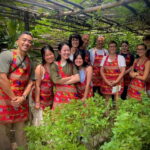
This class starts at Tha Phae Gate, which is one of Chiang Mai’s best “central anchors.” It means you can build your day without complicated transfers. The school is close to the Saturday walking street area, so after class you can stay in the neighborhood instead of hunting for a different plan.
Pickup and drop-off from your hotel are part of the experience. That matters more than it sounds in Chiang Mai, where traffic and short distances can still eat time. With pickup, you can spend your energy on the food instead of the logistics.
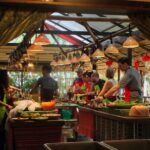
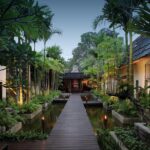
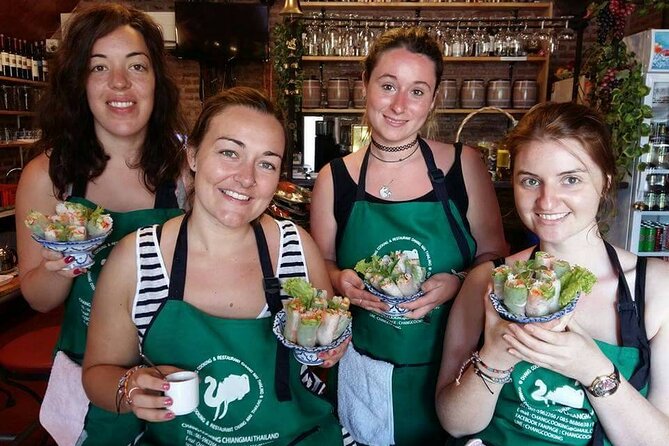
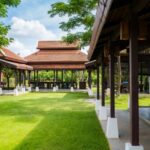
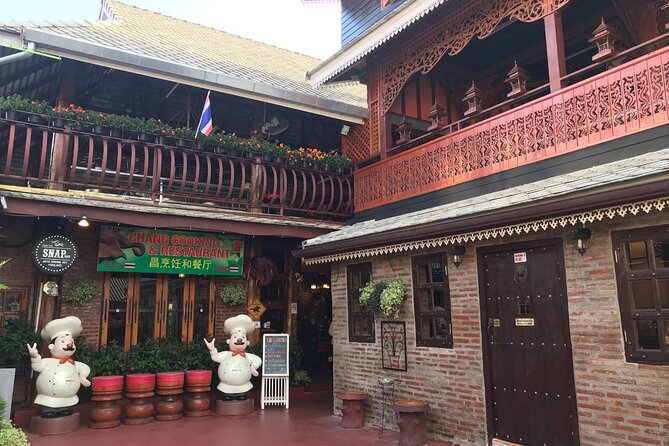
The vibe of the venue helps too. It’s a Lanna-style wooden premise—warm, traditional in look and feel—and it keeps the class from feeling like you’re in a factory kitchen. The instruction is practical, and the space supports that.
You can also read our reviews of more cooking classes in Chiang Mai
Lanna-style kitchens: your station, the right tools, and two room styles
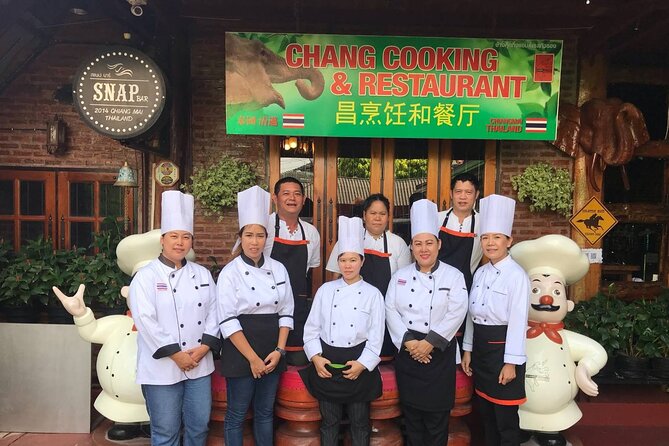
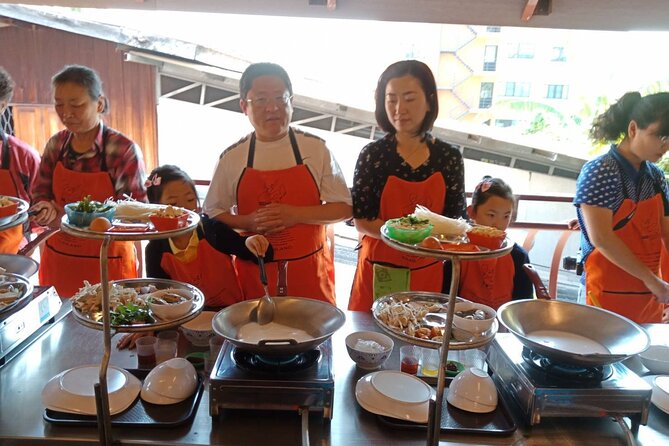
You’ll cook in one of two kitchen setups: a restaurant-style kitchen and an open-air kitchen space on the first floor. That flexibility helps explain why the class can work well in different conditions, but it also links back to the weather requirement.
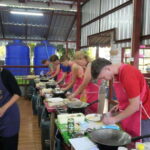
Here’s what makes the hands-on part work: you get your own station. You’re not sharing a burner with three other people while someone else decides what to do. The school provides chef’s knives, woks, and clean utensils, so the class stays focused on learning technique rather than waiting for supplies.
That “show up with enthusiasm” approach is real value. If you’ve never cooked Thai before, you want a class that removes friction. If you have cooked a little, you still benefit because the chef can correct your herb-and-spice logic and help you dial in texture and timing.
Picking your menu: how choosing 4 or 6 dishes changes the whole experience
You get to choose dishes from a menu that spans several categories. Once you pick your set, you’re guided on ingredient choices and then you cook those dishes. The class structure is simple: select dishes, learn how ingredients work, cook, then eat.
You can choose 4 or 6 dishes. That choice is the main lever for how long the class feels and how much variety you’ll taste. If you want a broad “Thai sampler,” go for 6. If you’re time-conscious or want more attention on fewer dishes, 4 is a smart move.
The menu options include:
Deep fry
- Spring roll
- Golden noodle
- Fried Banana
- Fish cake
Salad
- Glass noodle salad
- Fruit salad
- Papaya salad
- Raw spring rolls
Soup
- Tom kha kai
- Yellow chicken soup
- Clear tofu soup
- Tom yam gung
Curry
- Panang curry with chicken
- Khao soi (Chiang Mai noodle)
- Massaman curry with chicken
- Green curry with chicken
Stir fry
- Fried rice
- Pineapple rice
- Pad Thai
- Chicken cashew nut
Dessert
- Mango sticky rice
- Herbal drink
- Khanom krok (coconut cakes)
- Thai jelly
My practical way to choose (so you don’t overthink it)
If you’re new to Thai cooking, I’d aim for one curry, one stir-fry, one soup, and one salad or fried option. That gives you the full Thai “flavor map”: creamy, herbal, sour-tang, sweet, and savory.
A couple of good starter combinations:
- Curry + stir-fry + soup + dessert: more comforting and beginner-friendly.
- Curry + khao soi + salad + soup: more Chiang Mai-specific flavors.
- Deep-fry + pad Thai + papaya salad + herbal drink: a mix of crunch, tang, and balance.
If you already love one category (say, curries), pick more from there—but don’t skip the salads and soups. Thai food is about contrast, not only about taste.
What you learn: herbs, spices, and the logic behind Thai flavor
This isn’t a vague lecture. The class quickly teaches you about the herbs, vegetables, and spices used in Thai food, with real context for why they’re there. That matters because Thai cooking isn’t just about using the right ingredients. It’s about building flavor layers with the right order and proportions.
You’ll also taste ingredients that play big roles in Thai dishes. Two named examples are tamarind and palm sugar. Even if you’ve had Thai food before, tasting these ingredients in a lesson setting helps you understand the sweet-sour balance that shows up across curries, stir-fries, and soups.
Here’s how this kind of instruction pays off later at home. When you know the function of tamarind (tangy depth) and palm sugar (rounded sweetness), you stop guessing. You can adjust instead of starting over each time.
The chefs also guide you through ingredients used in Thai cooking once your dishes are selected. That means you’re learning as you go, not memorizing a list and hoping it sticks.
You can also read our reviews of more tours and experiences in Chiang Mai





Inside the class flow: from prep to your final plate
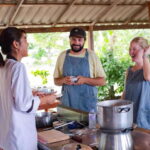
The class feels structured and organized. You’ll choose your dishes first, then you’ll be suggested ingredients for Thai cooking tied to your selection. After that, you cook at your station with chef and assistant guidance.
Expect a fast rhythm. Thai cooking rewards timing: sauces need the right heat, aromatics don’t want to burn, and vegetables need to stay lively, not sad. The lesson style is hands-on enough that you’ll likely do most steps yourself, not just watch and take notes.
One more reason this works well: the class environment supports learning. Your utensils are clean, your station is yours, and you can move through steps without waiting for equipment. That reduces stress and keeps you focused on technique.
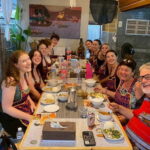
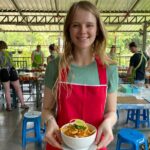
When you finish, you don’t walk away with a poster recipe. You get a feast from what you cooked. That’s the point. You can taste whether your seasoning logic made sense, and that feedback is the best teacher.
Tasting, portion control, and why your meal feels satisfying
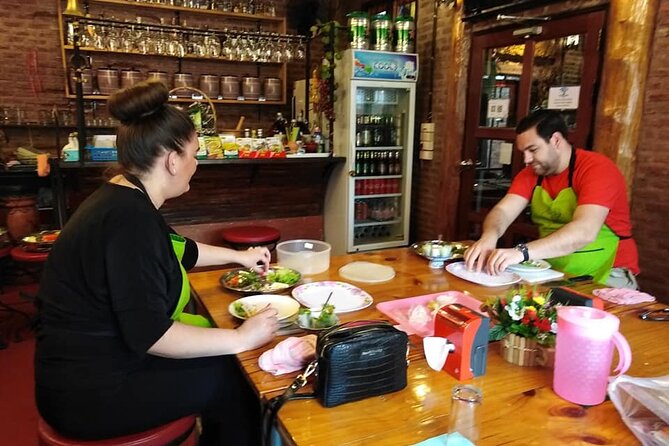
Thai cooking classes often end with a sample. This one is built around an actual meal. You’ll enjoy the dishes you created, which means you’ll learn more than just how to cook. You’ll learn what finished texture and flavor should be like.
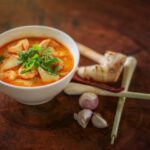
Dishes like tom kha kai and tom yam gung are a great example of why tasting matters. They’re all about balance—creamy versus bright notes, spice versus tang. Eating what you made helps you connect the steps to the outcome.
Desserts are included in the same feast logic too. Options like mango sticky rice and Thai jelly help round out the flavors, especially if your menu leans savory.
Price and value: does $31.30 make sense in Chiang Mai?
At $31.30 per person, the value comes from combining several things that normally cost you extra time or money separately: instruction by Thai chefs, hands-on cooking with provided tools, a menu-driven selection of dishes, and pickup/drop-off.
You also benefit from the small scale. The experience has a maximum of 8 travelers, which helps teaching stay practical. In smaller groups, you can get quicker feedback when something isn’t working—like too much heat, uneven cutting, or sauce thickness.
If you’re comparing this to just paying for a meal, remember you’re not only eating. You’re learning the ingredient logic behind classic Thai dishes—so you get skills you can reuse later. If you’re trying to cook Thai at home, this is a strong deal because it targets understanding, not just copying.
If you want to maximize value, choose 6 dishes and pick a menu that covers different flavor types: curry + soup + stir-fry + one contrasting category like salad or deep-fried items.
Who should book this class, and who should rethink it
This class is a great fit if you want more than restaurant eating. You’ll like it if you:
- are excited by hands-on cooking and want technique, not just photos
- prefer small-group instruction
- want a practical intro to Thai herbs, spices, and sweet-sour balance
- are comfortable choosing from a menu and cooking your selections
It might be less ideal if you:
- have very limited time and can’t spare about 6 hours
- are sensitive to open-air conditions (because good weather is needed)
- expect a full “tour day” with markets and sightseeing stops (this focuses on cooking)
It also makes sense for language variety. Classes are offered in English, Chinese, Japanese, and Thai, so communication is built into the setup.
Should you book Chang Cooking’s half-day Thai cooking class?
If your goal is to leave Chiang Mai with real cooking knowledge, I’d book it. The biggest win is the blend of chef guidance + your own station + choosing your dishes. You’re not passively observing—you’re producing food and tasting the results.
Pick 6 dishes if you want variety and don’t mind a busier class. Pick 4 dishes if you want a calmer pace and more focus per dish. Either way, you’ll come away understanding why Thai food tastes the way it does, especially once you’ve worked with flavors like tamarind and palm sugar.
One last practical tip: plan something flexible around the class time. Since good weather matters, you’ll feel better if your evening has an alternate plan. With that in mind, this is a smart, rewarding use of your Chiang Mai hours.
FAQ
How long is the Thai cuisine cooking experience?
It runs for about 6 hours.
How many dishes can I choose?
You can choose either 4 or 6 dishes from the menu.
Is hotel pickup and drop-off included?
Yes. Pickup and drop-off from your Chiang Mai hotel are offered.
Where does the class start?
The meeting point is at Tha Phae Gate, Tha Phae Road, Chang Khlan, Mueang Chiang Mai, Chiang Mai 50200. The activity ends back at the meeting point.
What languages are the classes offered in?
The class can be offered in English, Chinese, Japanese, or Thai.
How many people are in the class?
The experience has a maximum of 8 travelers.
Is there a mobile ticket?
Yes, the tour uses a mobile ticket.
What’s the cancellation policy if weather is bad?
Free cancellation is available up to 24 hours in advance for a full refund. The experience requires good weather, and if it’s canceled due to poor weather, you’ll be offered a different date or a full refund.